

Rosemary’s pine-scented sprigs and evergreen resilience make it a favorite in gardens, but when frost creeps in, even the heartiest plants need help to survive. If you’ve watched rosemary turn brittle under winter’s weight or struggled with rot after moving pots indoors, you’re not alone—many gardeners face similar challenges. With the right strategies, you can keep your rosemary thriving through the cold months and enjoy fresh sprigs for cooking and crafts well into spring.
Key Takeaways
- 🌿 Plant hardiness: Rosemary is now officially listed as Salvia rosmarinus after a 2017 study reclassified it within the broadened Salvia genus.
- 🌿 Cold tolerance: ‘Arp’ and ‘Hills Hardy’ are two of the most winter-hardy cultivars, surviving in USDA Zone 6 with protection.
- 🌿 Drainage needs: Wet roots in winter cause root rot; improve drainage by mixing horticultural grit into soil at up to 25% by volume.
- 🌿 Indoor light: Give potted rosemary the brightest window possible, ideally a southern exposure with at least six hours of direct sun daily.
- 🌿 Watering tips: Water less than you think—rosemary prefers dry soil in winter and too much moisture is more dangerous than cold.
Meet Rosemary, Now Officially a Salvia
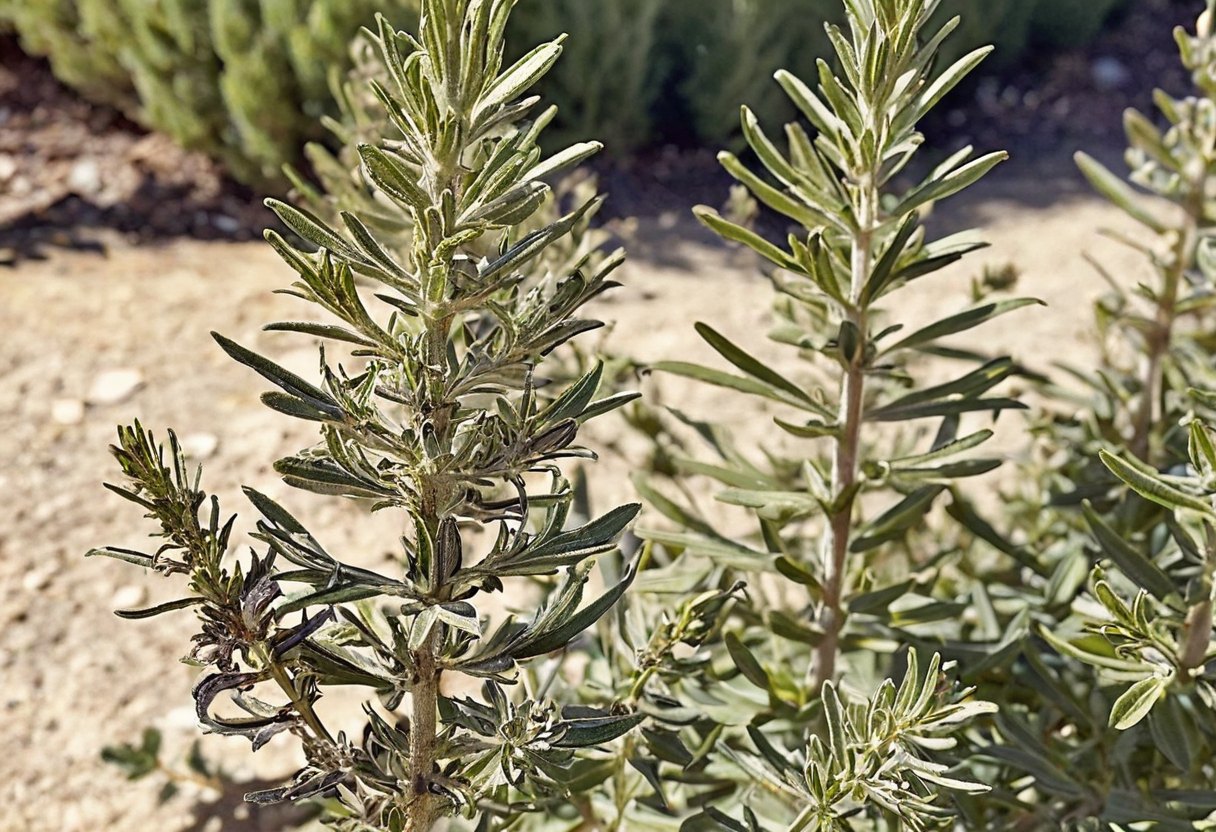
Rosemary, now scientifically named Salvia rosmarinus, has seen its classification shift in recent years. A 2017 phylogenetic study in Taxon concluded that the genus Salvia should be expanded to include five embedded genera, among them Rosmarinus Drew et al., Taxon (2017). This reclassification means rosemary is now recognized under the Salvia genus rather than its previous home.
Missouri Botanical Garden lists Salvia rosmarinus, previously known as Rosmarinus officinalis, as a plant native to the dry scrub and rocky places of the Mediterranean region. It thrives in USDA Zones 8-10 and can grow between 2 to 6 feet tall under full sun with dry to medium moisture Missouri Botanical Garden. This evergreen shrub is valued for its aromatic leaves and resilience in warm climates.
According to NC State Extension, rosemary grows 4 to 5 feet tall and requires at least six hours of direct sunlight daily. It’s well-suited for Mediterranean-style gardens where it can flourish with minimal water NC State Extension Plant Toolbox. Its new scientific name reflects not only its genetic relationships but also a broader understanding of Salvia diversity.
🔍 Tip: When shopping for rosemary, check the label—some nurseries may still use the old Rosmarinus name even as it’s now officially Salvia rosmarinus.
Where Rosemary Can Stay Outside All Winter
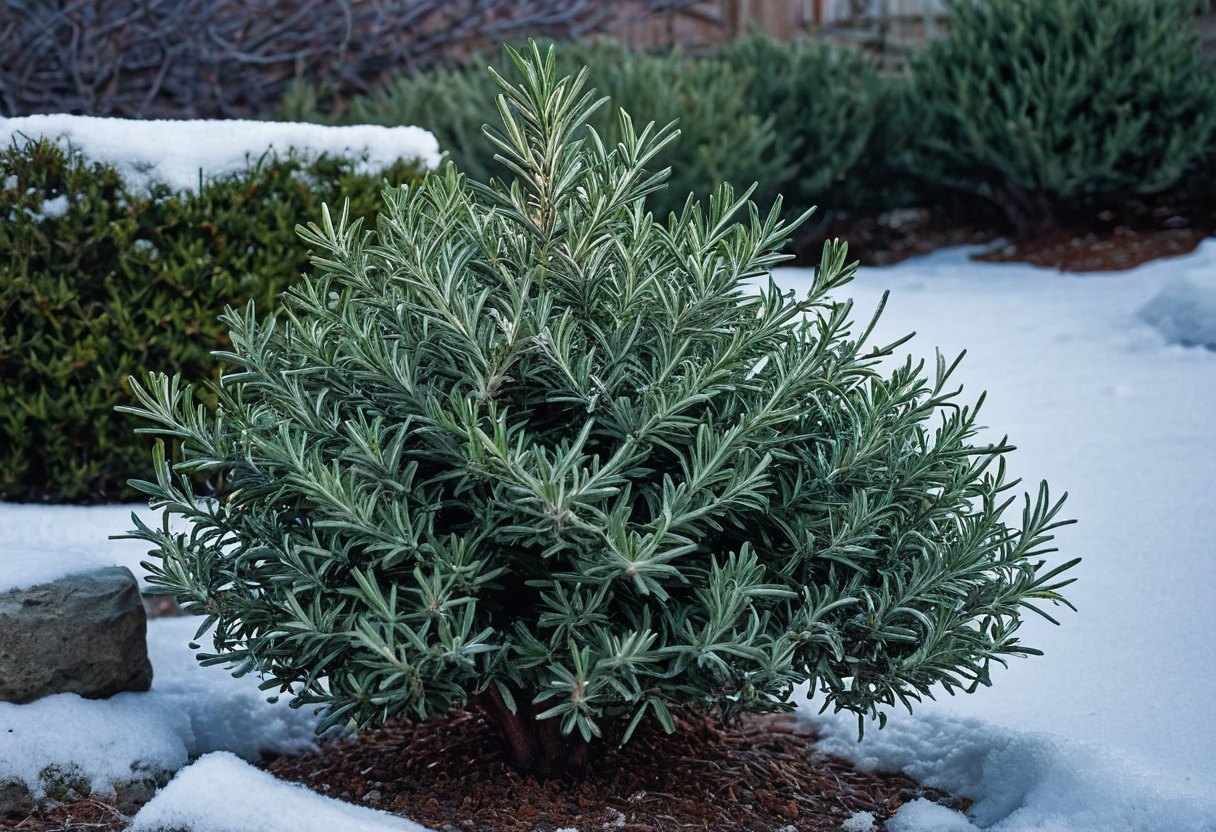
Rosemary can stay outside all winter in USDA zones 8 and above, where it acts as a reliable evergreen shrub University of Illinois Extension. In these warmer regions, mature plants tolerate typical winter conditions without special care, though sudden drops below freezing can cause leaf dieback. The Royal Horticultural Society reports that well-established rosemary may survive temperatures as low as -8 °C (18 °F), but only if sheltered from harsh winds and prolonged frost Royal Horticultural Society. Even so, young or potted plants are more vulnerable to cold stress in these zones.
Zone 7 offers some protection for rosemary, but it’s not always reliable. A horticulturist with the University of Illinois Extension says the species is typically hardy down to zone 7, though many areas in central Illinois—mostly zone 5—are too cold without added protection University of Illinois Extension. Gardeners in transition zones should treat rosemary as a borderline perennial, providing winter mulch or wind barriers to improve survival chances. However, the same care doesn’t always work for topiary rosemary sold around the holidays—these are often not suited for outdoor overwintering even in Tennessee’s milder climate UT Gardens, University of Tennessee.
🔍 Tip: Check your local USDA zone and microclimate before leaving rosemary outside all winter. Sheltered spots near buildings or under trees help protect from wind and extreme cold.
Cold-Tolerant Cultivars: 'Arp' and Its Peers
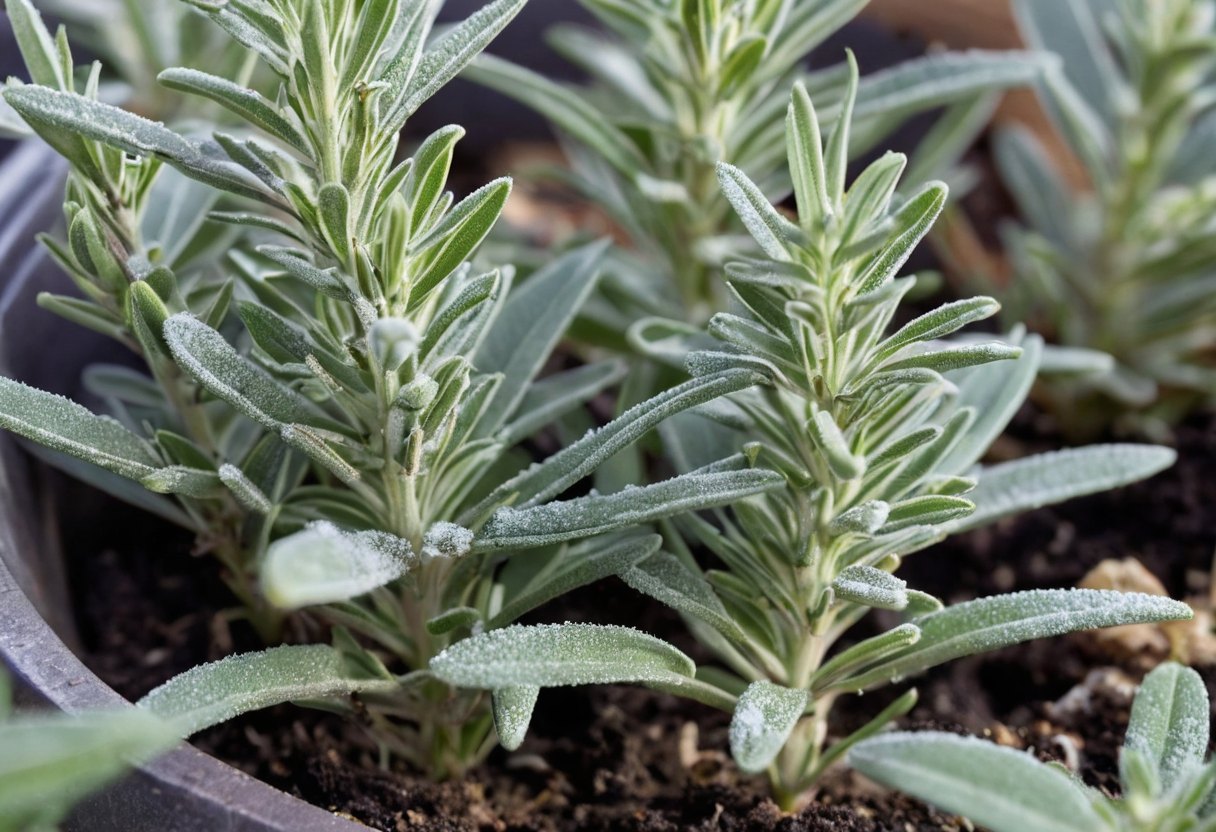
Rosemary can struggle in cold winters unless you choose a cultivar bred for resilience. One top choice is ‘Arp,’ an upright variety noted for excellent winter hardiness that often survives in USDA Zone 6 with proper protection, according to the Missouri Botanical Garden Missouri Botanical Garden. This cultivar grows about 3–4 feet tall and wide, with gray-toned foliage that distinguishes it from many other rosemary types.
The Nebraska Extension in Lancaster County explains that ‘Arp’ originated through Madalene Hill of Arp, Texas Nebraska Extension, Lancaster County. This origin story aligns with its ability to handle cold snaps, making it one of the most winter-hardy rosemary varieties. Similarly, the University of Illinois Extension lists ‘Arp’ and another cultivar, ‘Hills Hardy,’ also known as ‘Madalene Hill,’ among the few that reliably survive Zone 6 winters University of Illinois Extension.
UT Gardens reinforces this, naming ‘Arp’ and ‘Hill Hardy’ as two of the hardier cultivars, with ‘Arp’ described as especially reliable in colder climates UT Gardens, University of Tennessee. These cultivars are often recommended for gardeners in borderline zones who want to avoid annual replanting after freezes.
🔍 Tip: When planting ‘Arp’ or ‘Hill Hardy,’ give them well-drained soil and a sheltered location to maximize their cold tolerance.
Drainage Matters as Much as Temperature
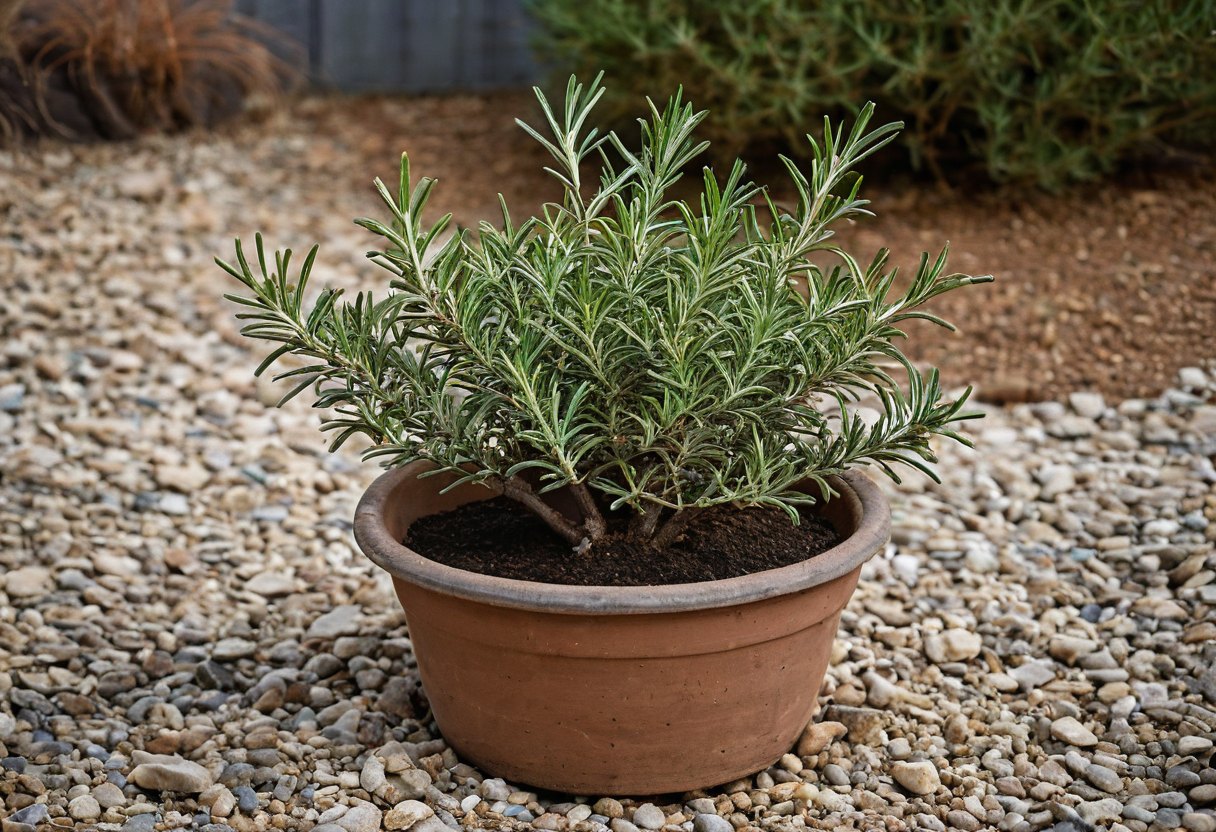
Rosemary is not just a plant that needs warmth; it needs the right kind of warmth. Even if you keep your rosemary in a frost-free environment, wet or poorly drained soil can cause root rot and kill the plant. The biggest threat during winter is excess moisture trapped in the roots, which leads to fungal decay. Missouri Botanical Garden warns that wet, poorly drained soils in winter are usually fatal to rosemary and that it performs poorly in heavy clay Missouri Botanical Garden.
Nebraska Extension echoes this concern, identifying wet, poorly drained winter soil as the biggest threat to rosemary’s winter survival because it leads to root rot Nebraska Extension, Lancaster County. Simply moving your plant indoors is not enough if its pot or planting area doesn’t allow for quick drainage. The Royal Horticultural Society says rosemary hates wet roots, especially in winter, and recommends mixing in horticultural grit at up to 25% by volume to improve drainage Royal Horticultural Society.
🔍 Tip: Always check the soil’s moisture level before watering, and use a pot with at least one large drainage hole.
Protecting Outdoor and Patio Plants in Borderline Zones
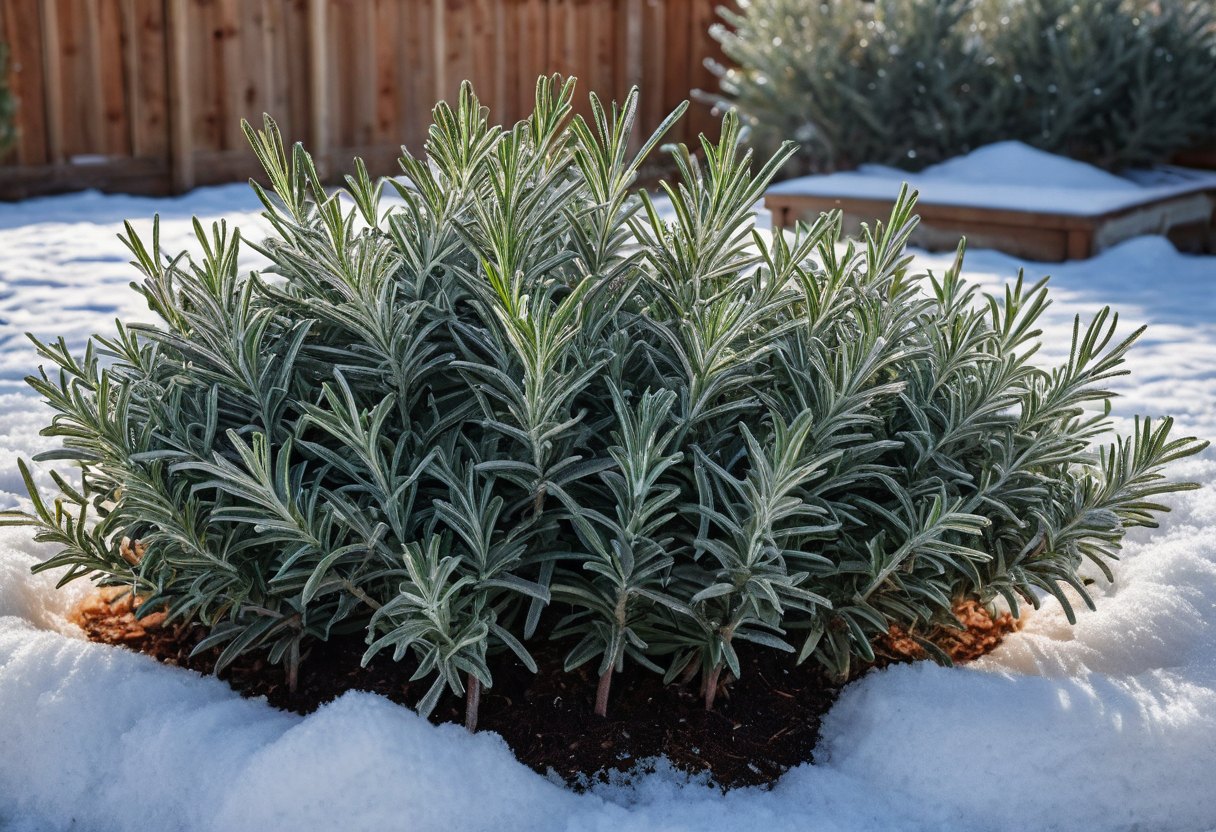
Rosemary grown in containers or borderline winter zones needs extra care to survive cold snaps. The Royal Horticultural Society suggests covering garden rosemary with fleece, hessian (burlap), or an old bedsheet during very cold weather Royal Horticultural Society. Plants in pots are especially sensitive to freezing temperatures; grouping them together or wrapping the containers in old blankets or bubble wrap can provide much-needed insulation Royal Horticultural Society.
For plants brought outdoors after winter, the University of Tennessee’s UT Gardens recommends planting holiday rosemary in a sunny, well-drained spot only after the risk of frost has passed in spring UT Gardens, University of Tennessee. This helps avoid root damage from both cold and wet soil conditions. Avoid overwatering as damp soil can lead to root rot even during cooler months.
🔍 Tip: Mulch around the base with gravel or coarse sand to improve drainage and protect roots from temperature swings.
Bringing Potted Rosemary Indoors
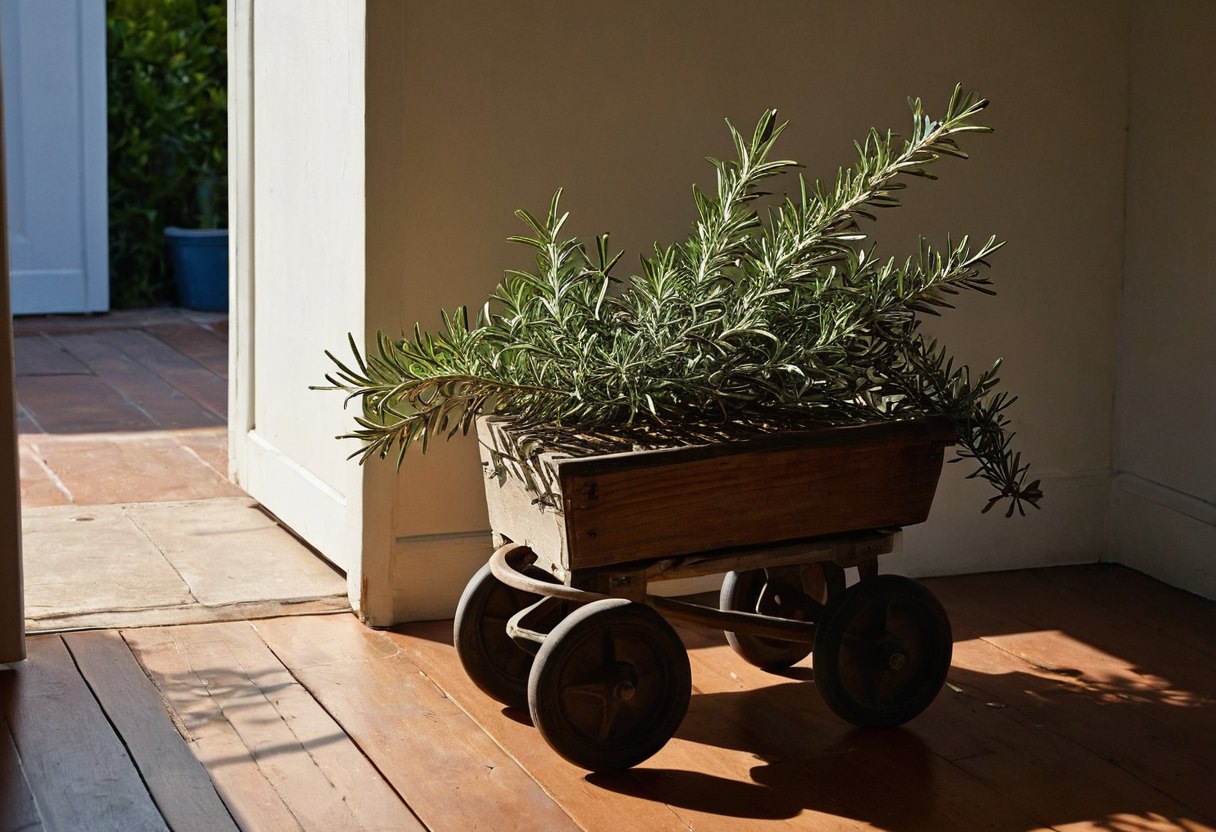
Rosemary grown in containers needs careful handling as temperatures drop. In the Midwest, Illinois Extension advises bringing potted rosemary indoors before the first frost to increase survival chances, since it often fails to overwinter outdoors University of Illinois Extension. Missouri Botanical Garden agrees, suggesting container-grown rosemary be moved inside in fall and returned outside after the last spring frost date for best results Missouri Botanical Garden.
Clay pots are preferred over plastic, as they allow better root aeration and reduce moisture retention. When moving rosemary indoors, check for pests or disease before placing it in your home to avoid spreading problems to other plants.
🔍 Tip: Gradually acclimate potted rosemary to indoor conditions by reducing outdoor time over a week to prevent shock.
Give It the Brightest Spot You Have
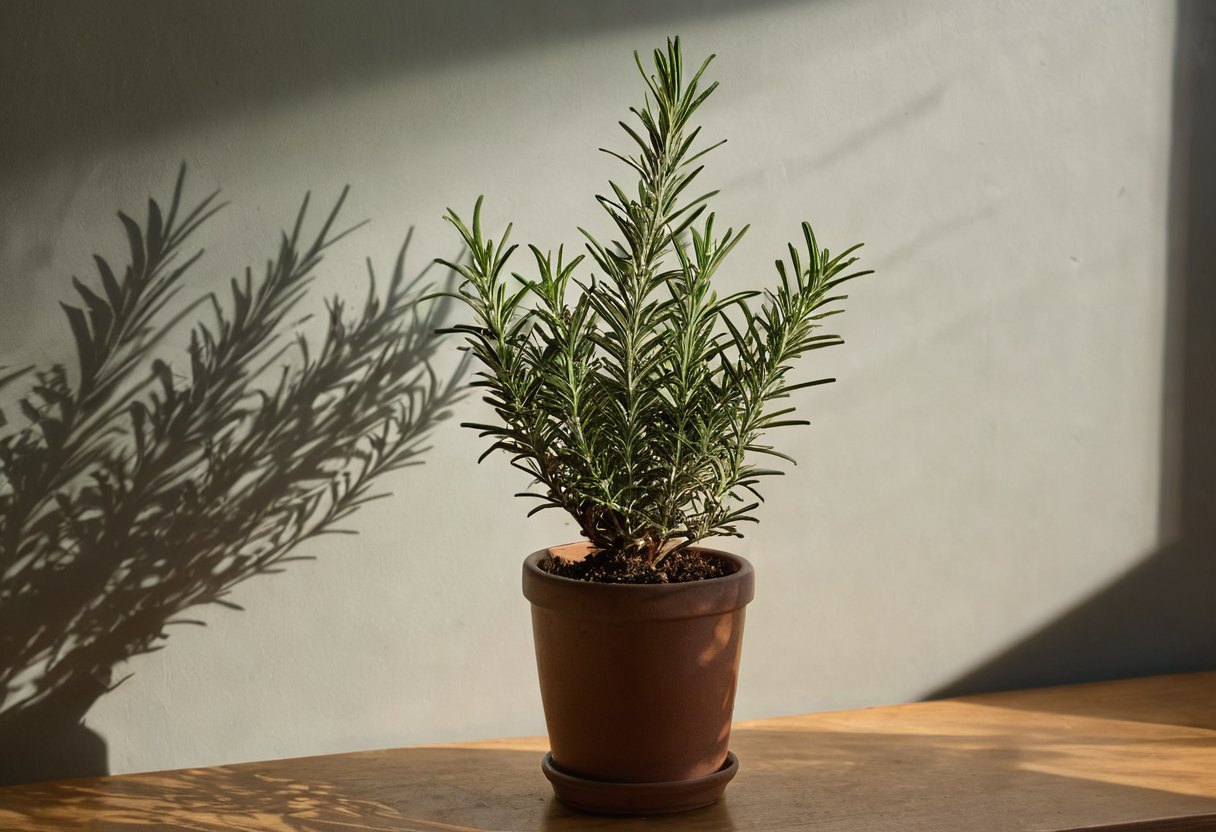
Rosemary needs strong, consistent light during the winter to stay healthy and avoid leggy growth. The best indoor location is a sunny southern window, where it can receive several hours of direct sunlight each day Missouri Botanical Garden. If natural light is limited—for example in a basement or north-facing room—rosemary may struggle, even if the temperature and humidity are suitable University of Illinois Extension.
If your rosemary doesn’t get at least 6 hours of natural light daily, you should consider supplementing with grow lights Missouri Botanical Garden. Position the light about 12 to 15 inches above the plant and keep it on for 10 to 14 hours per day. A bright, sunny window is still preferable if available Nebraska Extension, Lancaster County.
🔍 Tip: Rotate the plant occasionally so all sides get even light exposure and prevent it from leaning toward the window.
Keep It Cool, Not Cozy
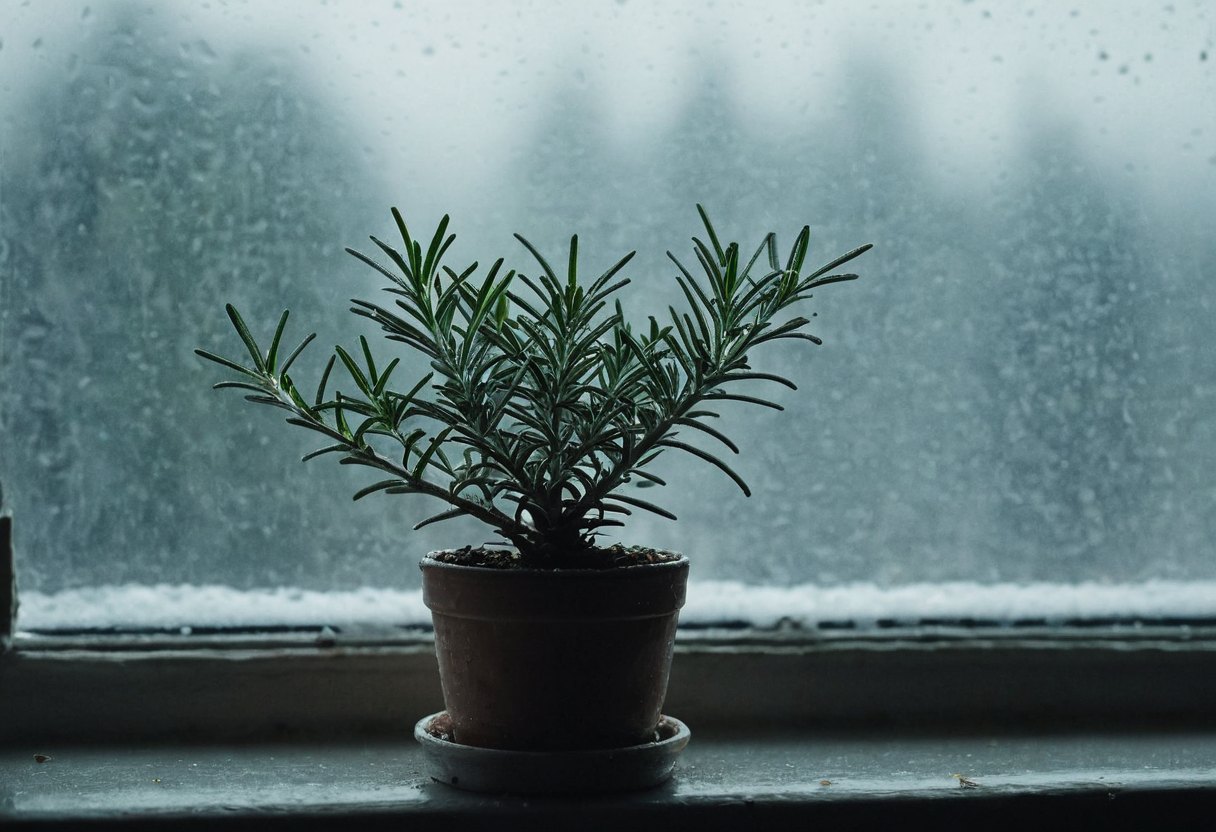
Rosemary thrives when it’s not overprotected in winter. Illinois Extension recommends a temperature range of around 50–60 °F for the best overwintering results, noting that most homes are too warm and dry University of Illinois Extension. A lightly heated sunny porch or a cool, bright room can work well, as long as the plant gets plenty of sunlight and doesn’t get too cozy.
The University of Illinois also advises that rosemary grown indoors prefers a cool, even cold location with strong sun University of Illinois Extension. Nebraska Extension agrees that normal indoor temperatures are acceptable but adds that rosemary will do better in cooler conditions around 50–55 °F if available Nebraska Extension, Lancaster County. This helps prevent the plant from becoming soft and prone to rot.
🔍 Tip: Don’t try to keep rosemary in a warm, humid corner like you would a tropical plant; it needs cool air and good light instead.
Water Less Than You Think
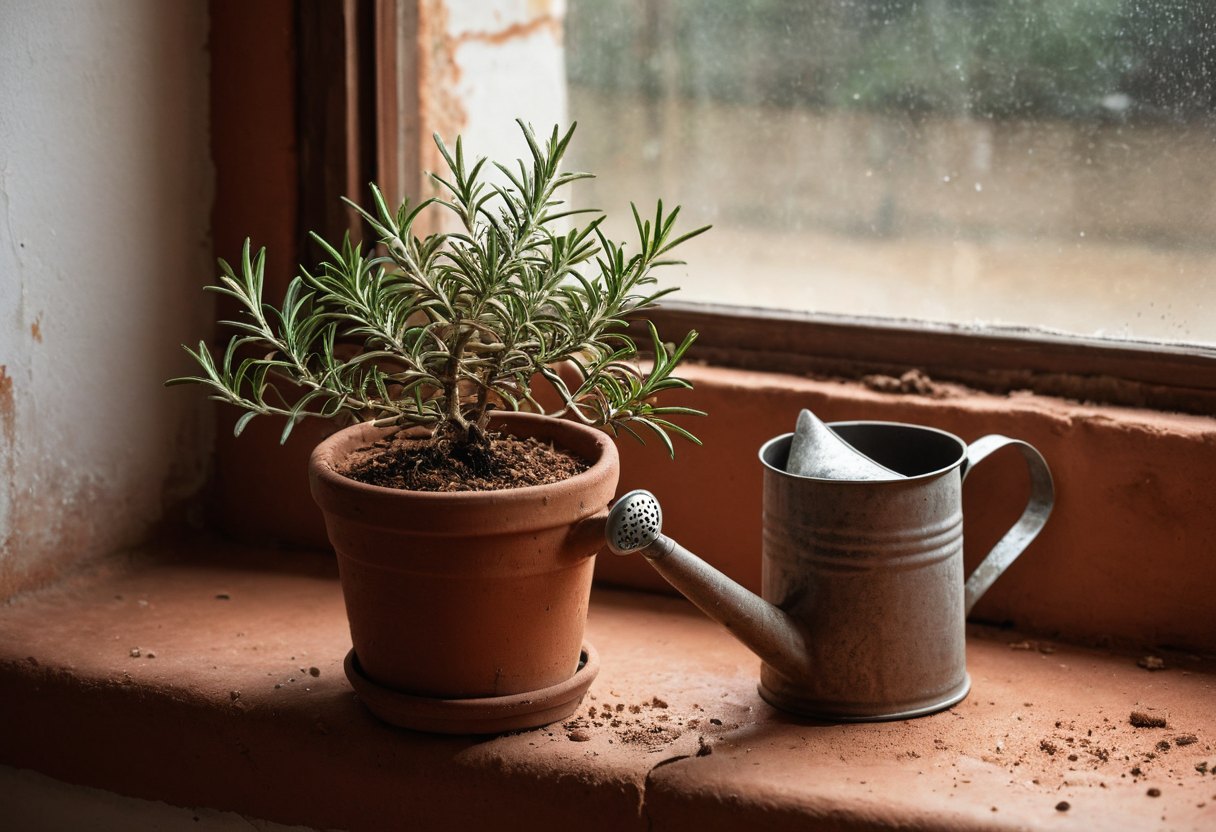
Rosemary doesn’t need frequent watering during winter dormancy. Let the soil surface dry out between waterings, but check a few inches below to ensure it’s not bone-dry throughout Missouri Botanical Garden. Overwatering is the main cause of root rot, especially in cool indoor conditions. A simple test: stick your finger into the pot and feel for moisture before adding more water.
Indoor air can be very dry, but that doesn’t mean you should water more University of Illinois Extension. Instead, use pebble-filled saucers or occasional misting to raise humidity without wetting the soil excessively. Nebraska Extension advises keeping rosemary’s soil evenly moist but not soggy, adjusting frequency based on the plant’s needs Nebraska Extension, Lancaster County.
🔍 Tip: Water only when the top inch or two feels dry to avoid root rot and stress.
Watch for Powdery Mildew and Indoor Pests
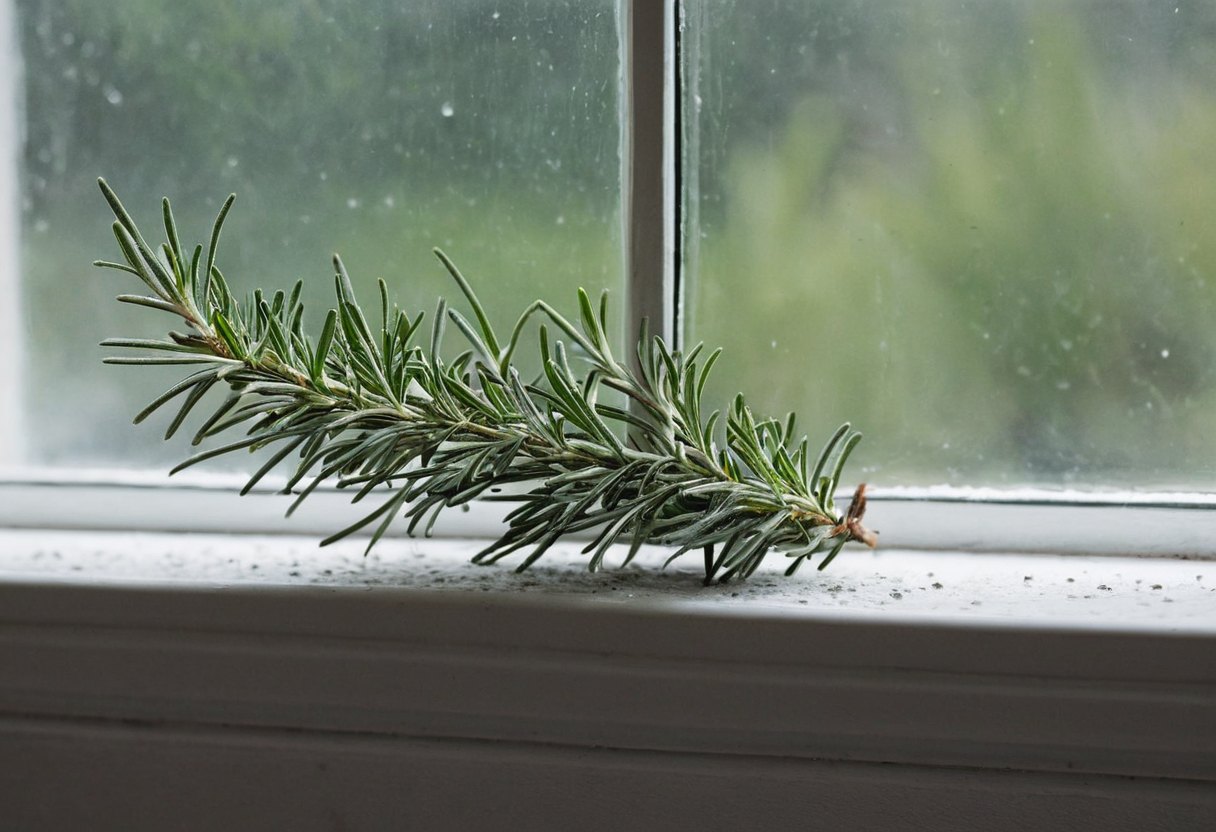
Rosemary overwintering indoors is vulnerable to powdery mildew, especially when humidity and air circulation are not well managed. Missouri Botanical Garden says poor air flow often leads to the disease appearing on rosemary plants in winter Missouri Botanical Garden. You may notice thin white colonies that spread across both sides of leaves, causing distortion and early leaf drop, according to a 2009 study Park, Han & Shin, New Disease Reports (2009). Severe cases can weaken the plant and reduce its chances of surviving until spring.
NC State Extension also highlights that high humidity and stagnant air are key contributors to powdery mildew NC State Extension Plant Toolbox. Along with this, root rot and botrytis can develop in overwatered or overly damp conditions. Keeping the plant dry from below and ensuring good airflow around it can prevent these problems.
Indoor rosemary is also more likely to attract pests like aphids, mealybugs, whiteflies, and spider mites—problems that are rare outdoors Missouri Botanical Garden. These pests can stress the plant further, especially when it’s already under pressure from cold or dry conditions. Check leaves regularly and wipe them gently with a damp cloth to stay ahead of infestations.
🔍 Tip: Use a small fan on low setting near your rosemary to boost air circulation without drying the plant too much.
Harvesting Rosemary Through the Winter
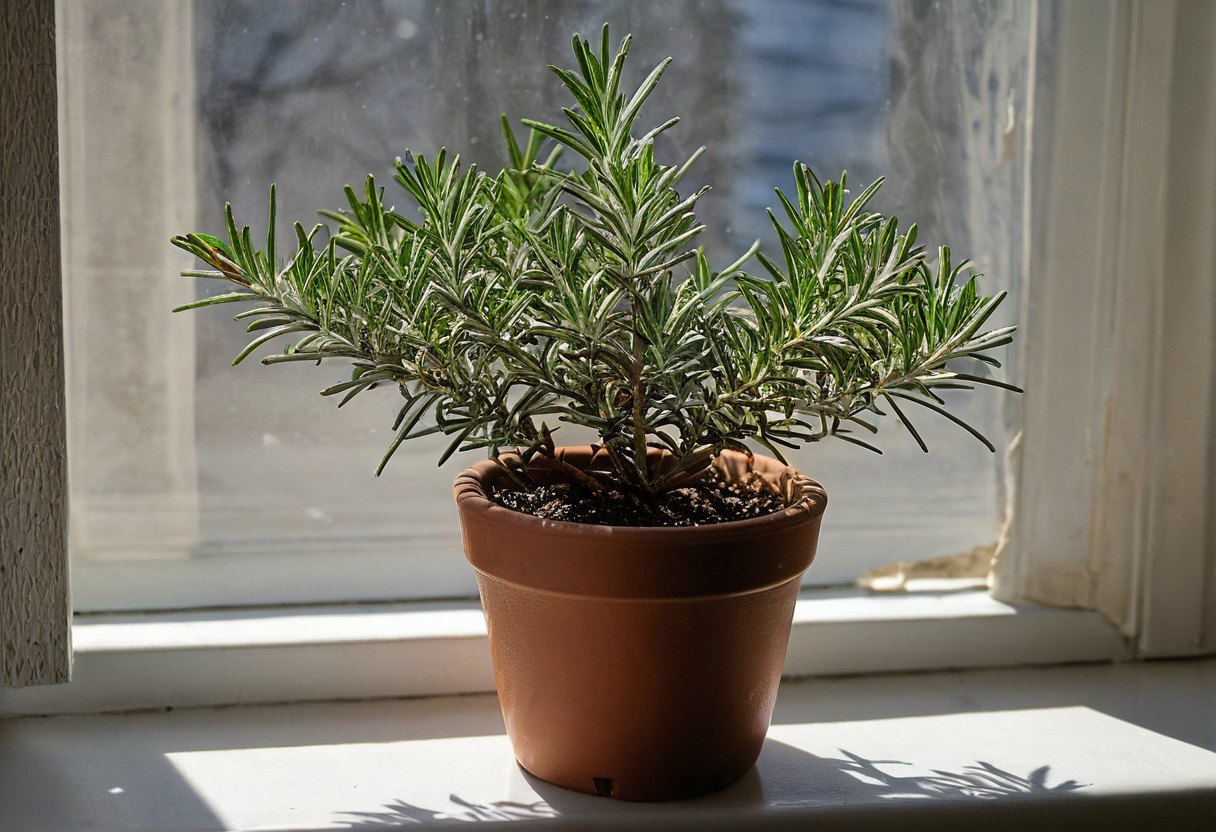
Rosemary can be harvested through the winter if kept healthy and in a suitable environment. The Royal Horticultural Society says rosemary can be harvested year-round, though the soft new growth in late spring and summer has the best flavor Royal Horticultural Society. In colder months, cut only the tender tips to avoid stressing the plant. This approach ensures a steady supply of usable leaves without damaging its structure.
The University of Illinois Extension says the tender tips and foliage can be cut as needed, with regular harvesting also encouraging a compact shape University of Illinois Extension. Winter pruning should focus on shaping rather than heavy cutting. Avoid removing too much at once, especially when temperatures dip or the plant is under stress.
The Royal Horticultural Society advises trimming rosemary lightly after flowering but avoiding cutting back into old wood Royal Horticultural Society. Old wood doesn’t regrow well and can lead to a leggy, unattractive plant. Keep shears sharp for clean cuts that promote healing and continued growth through the season.
🔍 Tip: Harvest in dry weather to reduce the risk of rot, especially if cutting indoors later.
Next Step: Check Your Zone and Move Pots Before the First Hard Frost
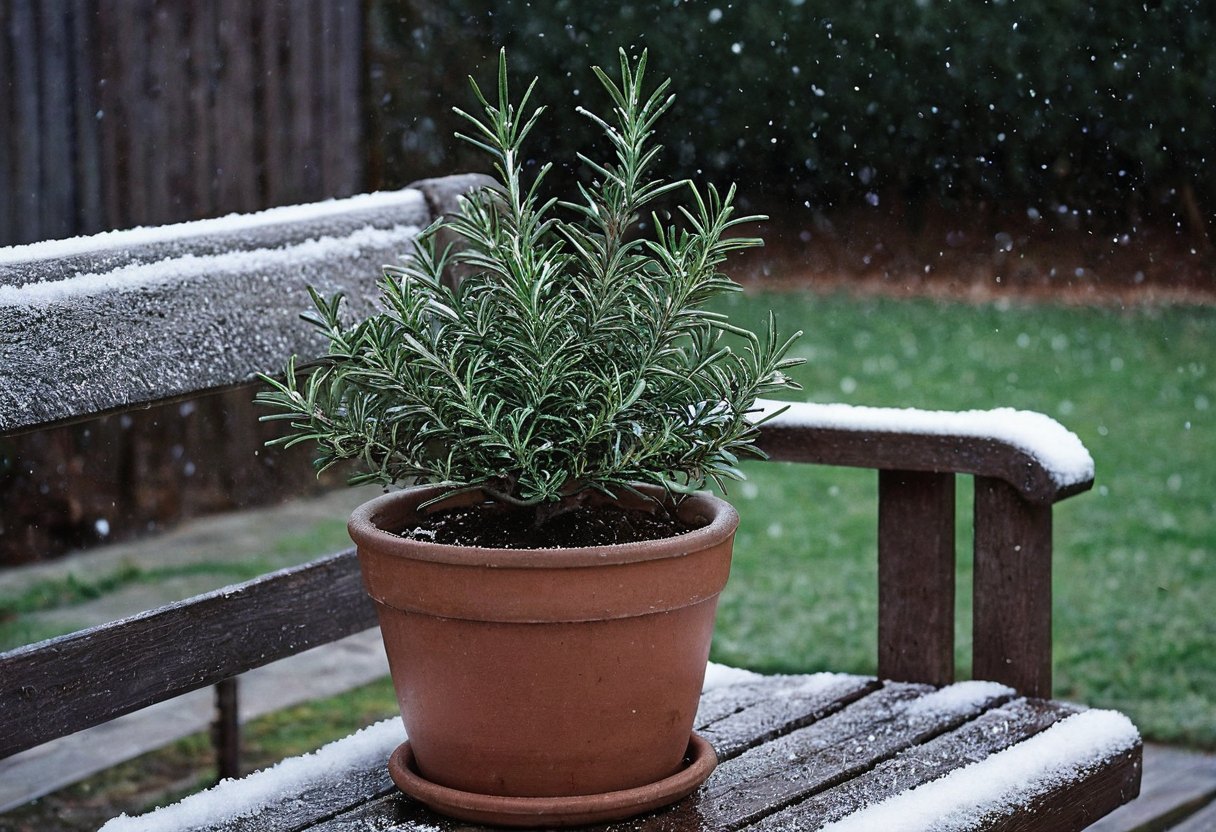
Rosemary grows best in zones 7–10, where it can stay outdoors year-round. If you live north of zone 7, you’ll need to move potted rosemary indoors before the first hard frost, usually in late October or November depending on your area. A sudden drop to 20°F (-6°C) can kill unprotected rosemary plants.
For in-ground rosemary in cold zones, dig it up before the first hard frost, while the soil is still workable. Keep as much of the root ball as you can and pot it in fresh, well-draining potting mix, then give it a week or two in a sheltered spot outdoors before it comes inside.
This week: Mark your calendar to move potted rosemary indoors two weeks before your first hard frost date. Check NOAA Frost Dates to get accurate timing for your area.
Sources
Studies
- Drew, B. T., González-Gallegos, J. G., Xiang, C. L., Kriebel, R., Drummond, C. P., Walked, J. B., & Sytsma, K. J. (2017). Salvia
united: The greatest good for the greatest number. TAXON, 66(1), 133-145. https://doi.org/10.12705/661.7
Further sources
- Missouri Botanical Garden
- NC State Extension Plant Toolbox
- University of Illinois Extension
- Royal Horticultural Society
- University of Illinois Extension
- UT Gardens, University of Tennessee
- Missouri Botanical Garden
- Nebraska Extension, Lancaster County
- Park, Han & Shin, New Disease Reports (2009)


Daniel has been a plant enthusiast for over 20 years. He owns hundreds of houseplants and prepares for the chili growing seasons yearly with great anticipation. His favorite plants are plant species in the Araceae family, such as Monstera, Philodendron, and Anthurium. He also loves gardening and is growing hot peppers, tomatoes, and many more vegetables.
