

When I started gardening, I took every tip as gospel. If someone told me something killed slugs or made tomatoes sweeter, I believed it. No questions asked.
Turns out, a lot of that advice was… not great. Some of it was harmless. Some of it wasted hours. A few things probably made my plants hate me a little.
So here’s a list of garden myths I’ve had to unlearn the hard way — so you don’t have to.
1. You Can’t Grow Vegetables in the Shade
Oh yes you can. Just not the drama queens.
This myth refuses to die. It’s clinging on like aphids to your kale. Somewhere along the line, “vegetable gardening” became synonymous with “grow tomatoes in full sun or go home.” But that’s only part of the story. Some plants love the spotlight. Others would rather hang out in a hoodie behind the shed.
Leafy greens — think spinach, lettuce, arugula, Swiss chard — are the introverts of the garden. They actually prefer partial shade, especially in hot weather. Too much sun and they’ll bolt faster than you can say “bitter salad.”
Root crops like beets, carrots, and radishes? They’re surprisingly chill too. They won’t sulk in dappled shade. Just give them decent soil and don’t crowd their personal space.
The only thing you need to skip is trying to grow sun-loving divas like tomatoes, peppers, or cucumbers in deep shade. That’s just asking for tears and mildew.
So no, you don’t need a south-facing plot and twelve hours of blazing light to grow your own food. Sometimes, the best veggies come from the shadiest corners of the yard.
2. Epsom Salt Fixes Everything
If gardening forums were a pharmacy, Epsom salt would be the snake oil. People sprinkle it around like fairy dust — for yellow leaves, sad tomatoes, grumpy roses, bad vibes. Got a problem? Epsom salt it. Don’t even check what’s wrong. Just salt and hope.
Here’s the thing. Epsom salt is magnesium sulfate. And yes, magnesium is important for plants — it helps with chlorophyll production, which basically means “green stuff happens.” But unless your soil is actually lacking magnesium (and how would you know unless you tested it?), you’re just adding extra minerals that your plants don’t need. Or worse, that they hate.
Overdoing it can throw off the soil’s nutrient balance and mess with how your plants absorb calcium and potassium. It’s like feeding a tired friend six espressos and wondering why they start crying about a sitcom from 1994.
If you suspect a deficiency, get a soil test. It’s not glamorous, but it’s wildly helpful. Otherwise, save your Epsom salts for sore muscles and dramatic baths — where they belong.
3. Add Gravel for Better Drainage
This one sounds logical. Too logical. That’s the trap.
For decades, gardeners were told to put gravel or rocks at the bottom of pots “to improve drainage.” It feels like it should work. Water hits the gravel, flows right through, no soggy soil. Right?
Wrong. What actually happens is the exact opposite. Water doesn’t just drop through layers like it’s falling down stairs. It stops. It pauses. It hangs out awkwardly at the boundary between the potting soil and the gravel — creating a perched water table, which is basically a fancy way of saying “mini swamp.”
Your plant’s roots sit in that swamp. They sulk. They rot. And you end up wondering why your supposedly “well-draining” pot smells like wet socks.
The better move? Use high-quality potting mix all the way down, and make sure your container has a drainage hole. That’s it. No gravel, no rocks, no architectural landscaping happening inside your flowerpots.
Unless your goal is to stress out a succulent, skip the pebbles.

4. You Should Prune in Fall
Autumn rolls in, the leaves start dropping, and suddenly every gardener turns into Edward Scissorhands. Shears come out. Shrubs get hacked back. It’s a vibe — but not a good one.
Fall pruning might feel productive, but it’s often a terrible idea. Why? Because many plants are getting ready to go dormant, not party. Cutting them back right before winter is like throwing open the windows in January and wondering why everyone gets pneumonia.
When you prune, plants try to grow. New growth shows up, all soft and optimistic, and then boom — the first frost hits and turns it into brown mush. Meanwhile, the plant’s energy reserves are depleted just when it needs them most.
And that’s not even counting the flowering chaos you might cause. Some shrubs bloom on old wood, meaning if you cut them back in fall, you’re basically canceling next spring’s flower show. No refunds.
Want to prune? Do it in late winter or early spring, when the plant is still asleep and not trying to impress you with fresh leaves. Or better yet, check the actual needs of the plant in question. Not every shrub wants the same haircut.
Autumn is for slowing down, mulching, and drinking tea. Not for accidental plant manslaughter.
5. Organic Means Safe — Always
Slap the word “organic” on something and suddenly it’s wholesome, harmless, practically edible. But gardening isn’t a farmer’s market brochure. Just because something is natural doesn’t mean it won’t wreck your plants — or your ecosystem.
Take neem oil. It’s organic. It’s a lifesaver against pests. And it can also annihilate bees if sprayed at the wrong time. Diatomaceous earth? Totally natural. Also shreds the soft bodies of every insect it touches, good or bad. It’s not picky.
The idea that organic equals safe is comforting, but it’s a shortcut — and shortcuts in gardening usually backfire. Every product, natural or not, does something. That’s the point. The trick is knowing *what*, *when*, and *how much*.
Read labels. Spray responsibly. Don’t coat your plants in “just in case” potions every weekend like you’re prepping for medieval pest warfare. Sometimes, letting nature do its thing is the better option — especially if you’ve already got ladybugs clocking in on pest control duty.
Organic is great. Blind trust in it? Not so much.
6. More Fertilizer = Better Growth
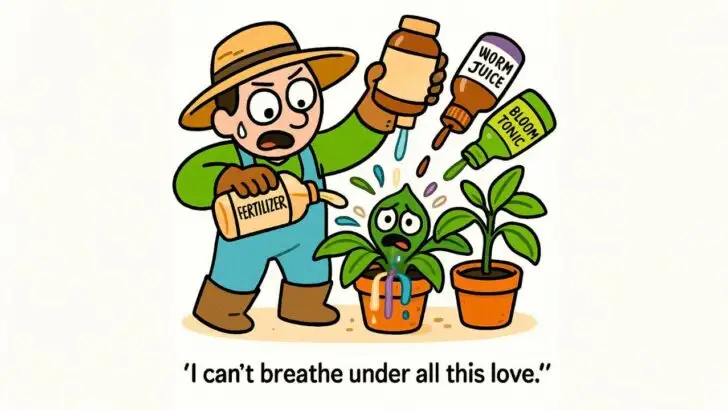
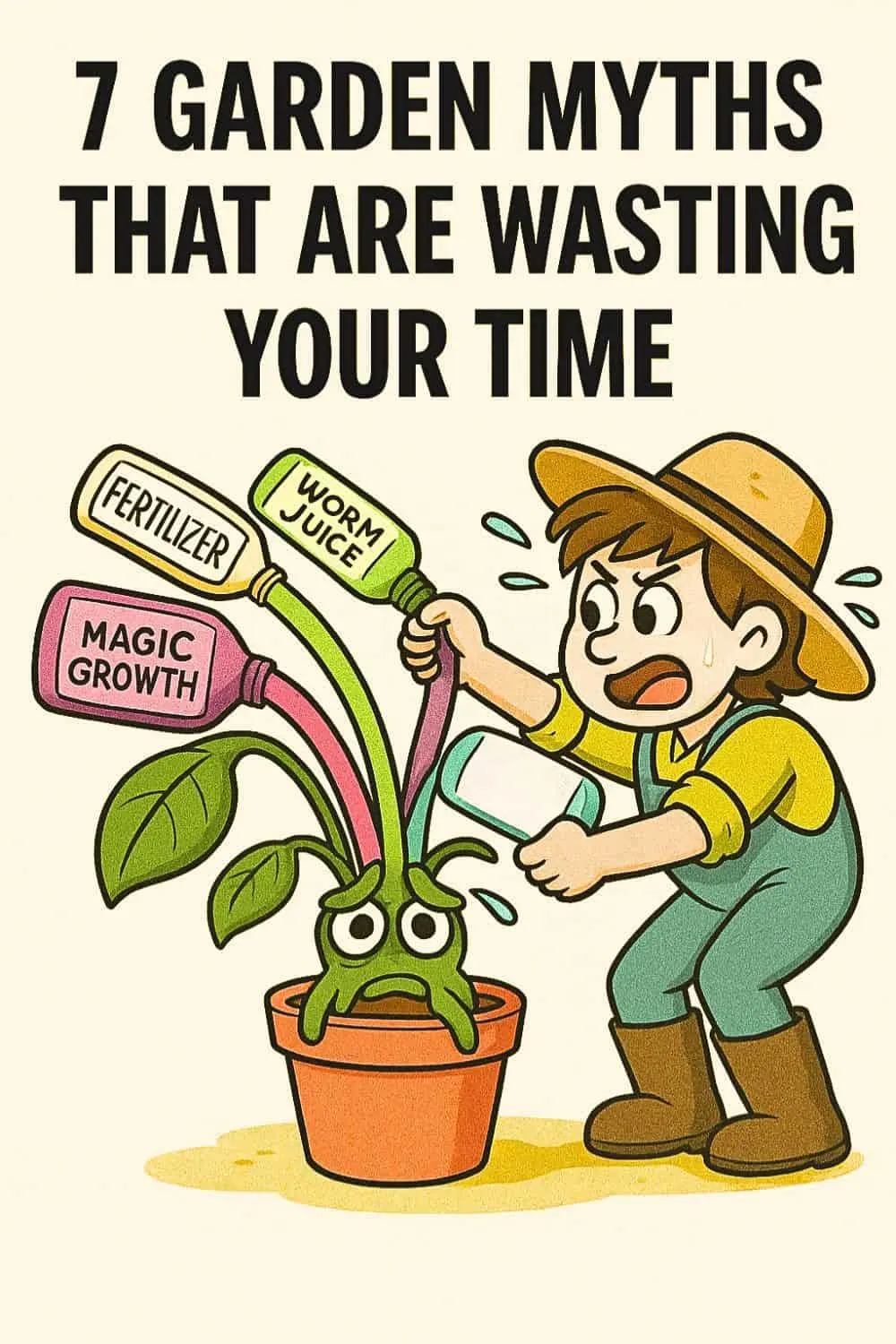
There’s something dangerously satisfying about feeding your plants. A little scoop here, a sprinkle there. Feels like love. Feels like progress. But more isn’t better — it’s just more.
Plants aren’t teenagers. You can’t just throw calories at them and expect a growth spurt. Over-fertilizing stresses them out. It burns roots, messes with nutrient uptake, and can lead to lush green leaves with zero flowers. Basically, you end up with a jacked-up, non-blooming bush that looks like it drinks energy drinks and listens to angry podcasts.
Plus, all that extra fertilizer? It doesn’t just disappear. It leaches into groundwater, messes with nearby ecosystems, and makes you the unintentional villain in a slow-motion environmental drama.
So, unless you’ve got a plant screaming for nitrogen (and plants don’t scream, they sulk), stick to the schedule. Use the right type. Read the label. Be the calm, responsible adult in the relationship.
Feeding is good. Overfeeding is a horticultural guilt trip waiting to happen.
7. You Can’t Compost Citrus or Onion Peels
This myth has been passed around like a half-peeled mandarin at a kid’s birthday party. “Don’t compost citrus!” they say. “Don’t compost onions!” Why? No one knows. Something about worms being sensitive. Or acid. Or ghosts. Hard to say.
Here’s the actual truth: you *can* compost citrus and onions. They break down just like everything else. They might take a little longer, and yes, in massive quantities they could throw off the pH for a bit — but unless you’re dumping crates of oranges into your bin, it’s not a big deal.
Chop them up if you want them to decompose faster. Mix them with a healthy balance of greens and browns. Keep your pile aerated. That’s it. Worms will be fine. Your compost won’t implode. And you won’t summon any citrus-based compost spirits.
The only thing you really need to keep out of your compost is glossy magazine pages, meat, and regret. Everything else? If it rots, it rocks.
I Had to Unlearn a Lot
I’ve been gardening for years, and I still catch myself falling for this kind of stuff. Advice from old books, random tips from neighbors, the occasional YouTube rabbit hole — it piles up. Before you know it, you’re out there apologizing to your lavender for pruning it in October and wondering if your compost bin is haunted by citrus.
If you’ve done any of the things on this list, welcome to the club. You’re in excellent company. We’ve all been there, staring at a sad plant and wondering if it’s us or them. (Spoiler: sometimes it’s both.)
The nice thing is, your garden doesn’t care about your past mistakes. Plants are weirdly forgiving. You fix the soil, give them a little time, and most of them bounce back without holding a grudge.
So if a few of these myths sounded familiar — good. That means you’re paying attention. And honestly, that’s the most important tool in any gardener’s shed. Not the shovel. Not the pruners. Just a healthy amount of curiosity and the guts to say, “Wait, does that actually make sense?”
Keep growing. Keep questioning. And maybe stop giving your succulents gravel trauma.
Daniel has been a plant enthusiast for over 20 years. He owns hundreds of houseplants and prepares for the chili growing seasons yearly with great anticipation. His favorite plants are plant species in the Araceae family, such as Monstera, Philodendron, and Anthurium. He also loves gardening and is growing hot peppers, tomatoes, and many more vegetables.