

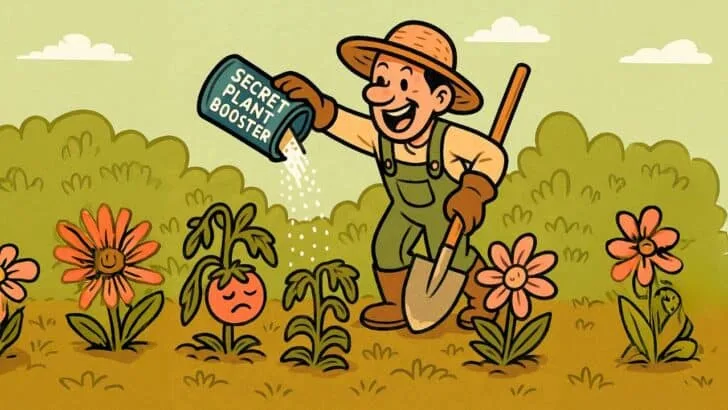
There’s a bag of white crystals under my sink that’s been there for years. Not the exciting kind. The gardening kind. I bought it during my “let’s fix everything with a sprinkle of something” phase, after reading one too many magical-sounding garden tips from strangers on the internet.
I started adding it to everything. Tomatoes. Peppers. Roses. Even my compost pile got a pinch now and then, like I was seasoning a very complicated soup. It felt like I was in on something. Like I knew a secret only the real gardeners knew.
But nothing really changed. My plants didn’t grow faster. My tomatoes didn’t throw a party. A few of the leaves got weird and quiet. One pepper plant looked like it needed a nap.
This “tip” is everywhere. It’s in books, blogs, and passed around in garden groups like it’s holy knowledge. And yet? Most people don’t actually know what it does. Or if it does anything at all.
Let’s talk about the most persistent, overhyped gardening fix I’ve ever tried. Epsom salt.
What Even Is Epsom Salt?
Despite the name, it’s not salt. You can’t cook with it. You shouldn’t taste it. It won’t make your fries better.
Epsom salt is magnesium sulfate — a mix of magnesium, sulfur, and oxygen. It was originally discovered in the town of Epsom, England, where people noticed that soaking in the local spring water helped with aches and pains. Eventually someone said, “If it’s good for sore legs, maybe it’s good for roses too.”
And just like that, a gardening legend was born.
In theory, it makes sense. Magnesium helps plants produce chlorophyll. Sulfur is part of several essential plant processes. If your soil is lacking in either, plants can look yellow, weak, or just sort of annoyed with you.
The problem? Most soil isn’t lacking magnesium. And most gardeners don’t check before adding more. They just sprinkle and hope.
What Happens When You Use It Anyway?
At first? Usually nothing. Which is part of the problem. You add it, nothing explodes, and you figure it must be working. But over time, things can get weird.
Too much magnesium can throw off your soil’s nutrient balance. It competes with calcium and potassium, two things your plants actually need to not fall apart. If your plants were a band, magnesium is the guy who keeps stealing the mic from everyone else.
The result? Leaf curl. Blossom end rot. Sad fruit. Plants that look like they’re doing fine but keep underachieving like gifted kids without structure.
And all of this can happen while your soil tests show “totally normal” nutrient levels — because the problem isn’t what’s there, it’s how it’s being absorbed. It’s like trying to eat a meal while someone keeps pulling the chair out from under you.
Why This Myth Won’t Die
Because it sounds nice. That’s it. That’s the whole reason.
It’s cheap, it’s easy, and it feels like something. You get to sprinkle, pour, “treat” your plants. No complicated measuring, no scary chemical names. Just a friendly white powder with spa-day vibes.
Plus, if someone online says it worked for them, and their tomato plant is the size of a toddler, it’s hard not to believe it. Especially when half the gardening world is shouting, “Try Epsom salt! It fixed my peppers!” and none of them mention whether they ever tested their soil first.
This is how bad advice spreads: a few people see success (often unrelated), the tip gets repeated a thousand times, and suddenly it’s gardening gospel. It’s folk wisdom meets internet echo chamber.
When Epsom Salt Might Actually Help
Okay, to be fair: it’s not all bad. If your soil is truly low in magnesium — and you’ve confirmed that with a soil test — Epsom salt can help. It’s fast-acting, easy to apply, and does what it says on the tin.
You might also see a benefit with magnesium-hungry plants like tomatoes, peppers, or roses, *if* there’s a proven deficiency. In that case, a diluted Epsom salt solution (about 1 tablespoon per gallon of water) can give them a quick fix.
But — and this is the big asterisk — it’s only helpful if your plants actually need it. Otherwise, you’re just giving them a supplement they didn’t ask for, and hoping it turns them into garden overachievers. It won’t.
What I Learned (The Hard Way)
I wanted it to work. I really did. It felt good to do something — to mix up a little solution and imagine my plants perking up like they’d just had a green smoothie. But gardening doesn’t reward guesswork. It rewards attention.
Now I test my soil. I ask questions. I don’t reach for the nearest bag of something just because someone on a forum swears it made their cucumbers self-aware.
If you’re using Epsom salt and it’s working for you, great. If you’ve tested your soil and know what’s missing, even better. But if you’re just sprinkling and hoping? Your plants might not need a miracle. They might just need you to slow down and listen.
Gardening already has enough mysteries. Let’s not add more salt to the pile.
Daniel has been a plant enthusiast for over 20 years. He owns hundreds of houseplants and prepares for the chili growing seasons yearly with great anticipation. His favorite plants are plant species in the Araceae family, such as Monstera, Philodendron, and Anthurium. He also loves gardening and is growing hot peppers, tomatoes, and many more vegetables.