

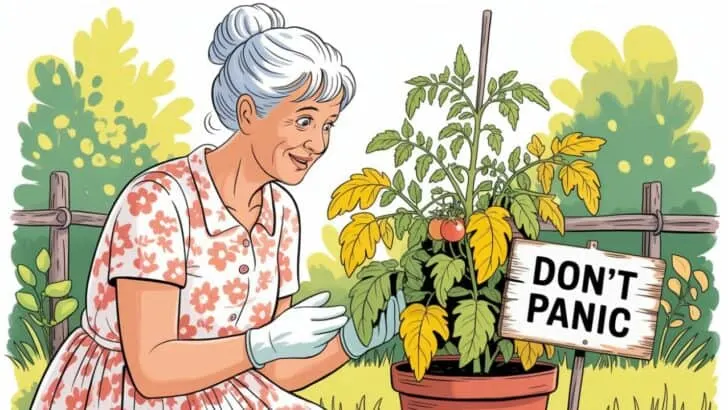
You wait all spring for your tomato plants to finally look like something. And just when they do — boom — yellow leaves. Not one. Not two. A whole bottom row, fading like an old newspaper.
First reaction? Panic. Then maybe some guilt. Then the temptation to Google 43 different diseases and convince yourself the whole plant has five of them. Don’t. You’re not doing anything wrong.
Yellow tomato leaves in June are common, fixable, and (almost always) not the end of the world. And if you’re over 65 and tired of the guessing game, this guide will give you the clear answers without the fluff, the guilt, or the pressure to start mixing compost tea at sunrise.
Let’s go over the real reasons your tomato leaves might be turning yellow — and what to do that actually works.
🌿 Key Takeaways
- Transplant shock and old age are the two most common causes of yellowing — not disease.
- Overwatering is more dangerous than underwatering. Let the soil dry out a little.
- Nutrient deficiency causes yellowing with green veins. Feed wisely, not heavily.
- Fungal disease usually shows up with spots. Prune, don’t panic.
- Heat stress is real. Shade and mulch help more than fussing does.
- Tiny pests can suck the life out of your plant — check under the leaves before blaming yourself.
- If the top of the plant looks healthy, you’re doing fine. Don’t let one yellow leaf ruin your day.
1. They’re Just Adjusting After Being Planted
If your tomatoes were recently moved from a pot into the ground — or even just from one pot to another — the yellowing is probably transplant shock. The bottom leaves fade first. They don’t perk up. They just give up and die. It’s nothing personal.
What to do: Nothing dramatic. As long as the top growth looks good and the new leaves are green and healthy, the plant is settling in just fine. You can gently remove the yellow leaves if they’re bothering you, but don’t go overboard pruning.
Good to know: Older leaves near the base naturally die off as the plant puts energy into new growth. Think of it like your tomato going through a closet and getting rid of clothes it doesn’t wear anymore.
Bonus tip: Water at the base, not the leaves. Deep soak once or twice a week — no spritzing, no guesswork. And don’t feed it yet. Let it settle before you start adding fertilizer to the mix.
2. You’re Overwatering (And It Shows)
If your tomato leaves are turning pale yellow and feel a little soft, your plant isn’t thirsty — it’s drowning. Tomatoes like water, but they don’t want to swim in it. Overwatering is one of the top reasons for yellowing leaves, especially when you’re trying to be “extra careful” during a hot spell.
What to do: Stick your finger into the soil about an inch deep. If it feels wet, skip watering that day. Wait until the top inch is dry before you water again. Deep watering twice a week is plenty for most established tomatoes. Skip the daily splash.
Good to know: Constantly wet soil starves the roots of oxygen. That means stunted growth, root rot, and yes, yellow, floppy leaves. If your plant looks more miserable after watering, that’s your cue to stop for a few days.
Bonus tip: If your garden bed doesn’t drain well, switch to raised beds or big containers next year. And don’t forget mulch. It keeps the moisture where it belongs without turning your soil into soup.
3. It’s a Nutrient Deficiency
This is the one that tricks people. The leaves turn yellow, but the veins stay green. That’s usually a sign your tomato plant is hungry — and not for water. Most likely, it’s lacking nitrogen, magnesium, or iron. It’s not your fault. Nutrients wash out fast with watering, and tomatoes are heavy feeders.
What to do: Use a balanced, water-soluble fertilizer made for tomatoes. Look for something with a little boost of nitrogen (the first number on the label). Apply early in the day, and don’t overdo it. More isn’t better. Just steady and consistent.
Good to know: Older leaves tend to yellow first with nitrogen issues. If newer growth looks fine, your plant’s trying to redistribute nutrients. Help it out before it gives up and drops the lower leaves entirely.
Bonus tip: Avoid fertilizing when the plant is stressed from heat or drought. That’s like handing someone a protein shake during a heatwave. They’ll just get queasy. Water first, feed later — in that order.

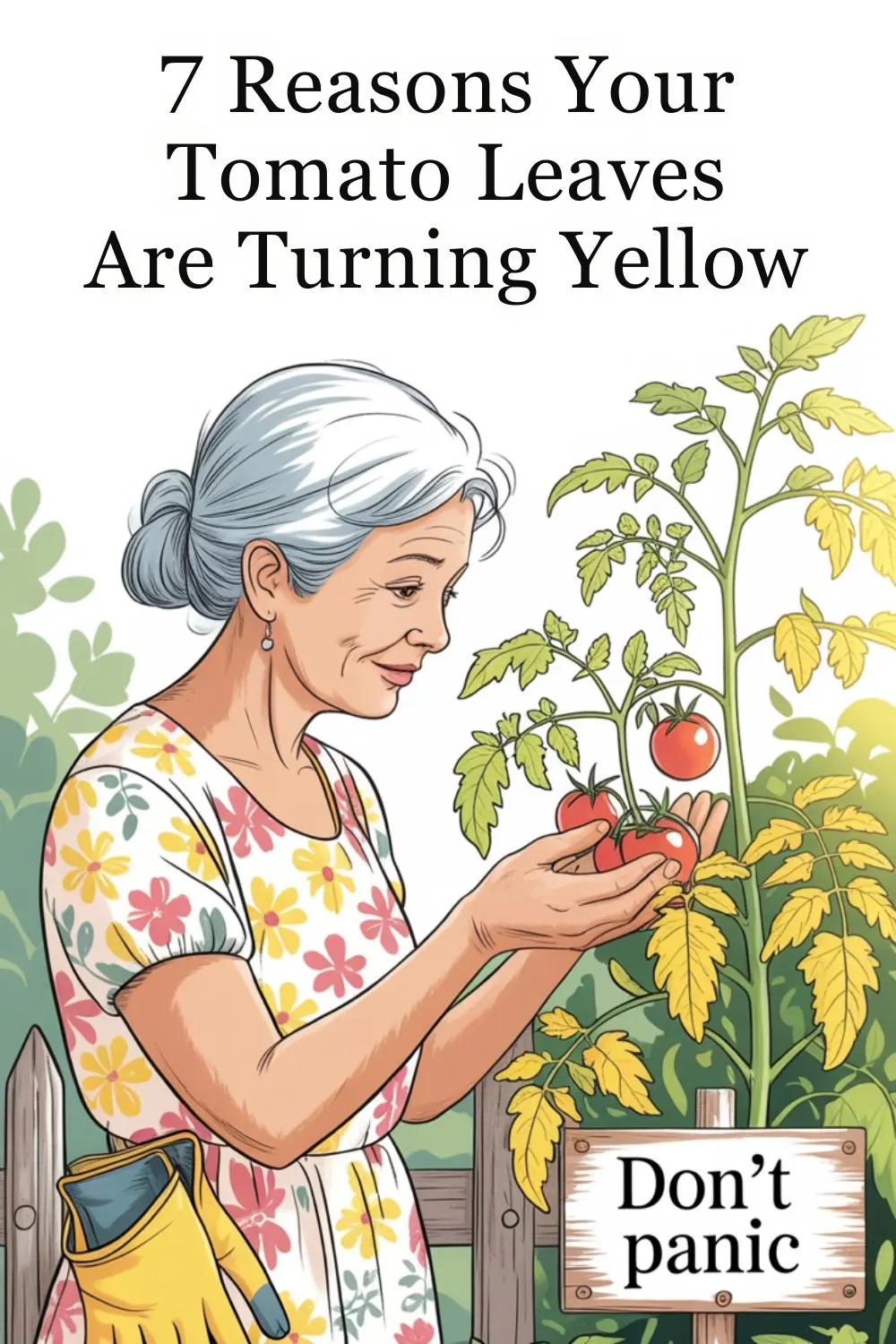
4. It’s a Disease (But Probably Not the One You’re Thinking Of)
Most people jump straight to blight. The word alone sounds dramatic. But not all yellowing is a disaster. Yes, tomatoes can get fungal diseases like early blight, septoria leaf spot, and fusarium — but these don’t usually start with one sad leaf in June. And definitely not on a healthy young plant that’s otherwise doing fine.
What to do: Check the pattern. Are the yellow leaves spotted or blotchy? Are they curling? Is the problem spreading upward fast? If yes, snip off the affected leaves with clean pruners and toss them (don’t compost). Water at the base. Avoid wetting the leaves. And give the plant some airflow — no one likes being smothered in damp heat.
Good to know: Fungal diseases often show up after a stretch of rain or overwatering. If you’re in a humid area and your tomatoes are packed in tight, that’s a perfect storm. But one or two yellow leaves on the bottom? Not a crisis.
Bonus tip: Don’t go spraying everything the minute you see spots. Most fungicides are preventative, not a cure. Focus on spacing, airflow, and consistent watering. Your tomatoes need calm energy, not chemical chaos.
5. Heat Stress Is Real
Tomatoes love the sun — until they don’t. When the temperature climbs past 90°F for several days, even the toughest plants start to show it. Yellow leaves, wilting in the afternoon, stalled growth — it’s all part of the tomato version of “too hot to function.”
What to do: Don’t panic and overwater. Give your plants shade during the hottest part of the day if they’re in containers. For garden beds, use shade cloth or even a beach umbrella for a few hours in the afternoon. Keep watering consistent, early in the day.
Good to know: Tomatoes will often stop setting fruit when it’s too hot. That’s normal. It’s not you. It’s biology. The plant will kick back into gear when the weather settles down.
Bonus tip: If you’re struggling with the heat yourself, your tomatoes probably are too. Use that as your rule of thumb. If it’s too hot for you to garden comfortably, they’re not in the mood to grow either. Everyone gets a break.
6. It’s Just the Plant Getting Older
Sometimes, yellow leaves are just part of the deal. Especially near the bottom of the plant. As tomatoes grow taller and bushier, the older leaves at the base stop getting light, stop being useful, and eventually call it quits. It’s not a crisis. It’s housekeeping.
What to do: If the rest of the plant looks healthy and you’re getting flowers or fruit, just prune off the yellow leaves near the base. It helps with airflow and keeps the plant focused on what matters — new growth and fruit.
Good to know: Older tomato varieties and indeterminates (the ones that grow and grow) shed bottom leaves more noticeably. It’s like your tomato is streamlining its workload. Respect the efficiency.
Bonus tip: Keep the base of the plant clean. Remove yellow leaves before they turn mushy. It helps prevent disease and keeps things looking tidy — which, let’s be honest, feels good even if the tomatoes don’t care.
7. It’s a Pest Problem (and You Probably Missed It)
Sometimes it’s not the water, the sun, or the soil. It’s tiny bugs. Spider mites, aphids, or whiteflies can suck the life out of your tomato leaves — literally. The damage usually starts as pale speckles or yellowing near the edges, then spreads if they’re left alone.
What to do: Flip over the leaves. Look for clusters of tiny dots, webbing, or sticky residue. If you see bugs, hose them off gently or use insecticidal soap — in the evening, not under full sun. Repeat every few days until you stop seeing movement.
Good to know: Most pest problems sneak in during hot, dry spells when plants are already stressed. The bugs know when your tomato’s defenses are down. That’s why healthy, well-watered plants get fewer infestations.
Bonus tip: Don’t overreact. A few bugs aren’t the end of the world. Stay consistent. A tired gardener with a spray bottle can do more damage than a handful of aphids ever could.
Your Tomatoes Are Fine. You Can Stop Worrying Now.
Yellow leaves aren’t a crisis. They’re a message — and usually a pretty gentle one. Your plant is just asking for something small: less water, more breathing room, a little time to adjust, maybe fewer bugs chewing on its legs.
And if you’re out there panicking over every leaf, don’t. Tomatoes are tougher than they look. They’ll drop what they don’t need and keep growing — as long as you don’t try to fix everything all at once.
So take a breath. Prune what needs pruning. Ignore what doesn’t. And maybe pour yourself a cold drink while you’re at it. Tomato season is just getting started.


Daniel has been a plant enthusiast for over 20 years. He owns hundreds of houseplants and prepares for the chili growing seasons yearly with great anticipation. His favorite plants are plant species in the Araceae family, such as Monstera, Philodendron, and Anthurium. He also loves gardening and is growing hot peppers, tomatoes, and many more vegetables.