

You’ve done everything right. You’re watering in the morning. You’re not drowning the roots. You’ve got mulch, compost, shade cloth, maybe even a calendar with little reminders. And yet — your plants still look tired. Droopy. Faintly resentful, like you’ve asked them to go for a jog in wool sweaters.
So what gives? Is it the heat? Bad soil? Watering too little? Too much? Some cursed tomato variety that hates joy?
Or — and stay with me here — is it your hose?
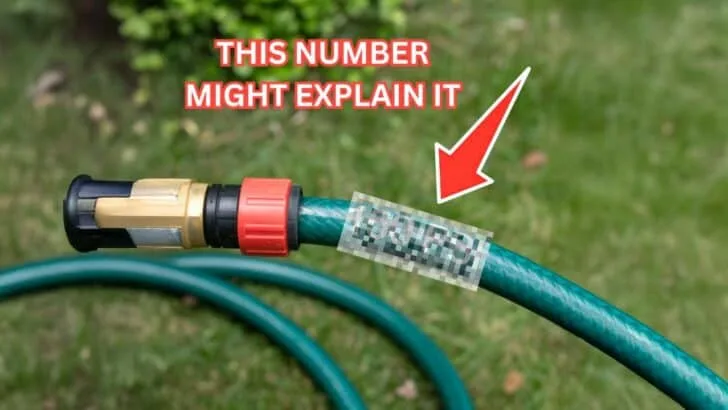
Not the fact that it’s kinked. Not that it leaks at the nozzle. Not even that it has a weird smell when it gets hot (though, yeah, ew). No, this is something else. Something sneakier. There’s a number stamped on the side — a number that most gardeners ignore — and that number might explain everything.
The Hose Number That Controls Everything
Alright. Time to meet the culprit: it’s the PSI rating and the diameter of your hose. Yep — those two little numbers quietly control how much water your plants actually get. Most hoses have them printed right on the side, usually in tiny, faded lettering that looks like it was added just to feel important. But they matter. A lot.
PSI stands for pounds per square inch, and it tells you how much water pressure the hose can handle. The diameter tells you how wide the hose is inside — usually ½”, ⅝”, or ¾”. Both affect your flow rate, especially if you’re using nozzles, sprinklers, or soaker hoses. The wrong combo can mean you’re out there watering for 20 minutes and only getting a slow trickle where your plants actually need it.
Let’s say you’ve got a ½” hose with a low PSI rating. By the time that water travels 50 feet and makes it through your spray head, it might have the force of a polite dribble. Meanwhile, your plants are baking in 90°F sun, waiting for a drink that never
How to Check Your Hose (And What the Numbers Mean)
If your hose still has the packaging, you’re golden. Flip it over and look for something like “5/8 in. diameter – 200 PSI burst pressure”. If it’s been in service for a while, check along the side of the hose itself. Most decent hoses have the specs printed or stamped somewhere along the length. You may need to uncoil a bit — or squint like you’re reading microfilm — but it’s there.
Here’s what you’re looking for:
- Diameter: ½”, ⅝”, or ¾”. The bigger, the better for flow.
- PSI: Usually ranges from 150 to 400. Higher PSI = better pressure and more durability under sun, heat, and heavy watering loads.
If you’ve got a long hose (50 ft or more), a skinny diameter and low PSI can seriously choke your water flow — especially on hot summer days when municipal pressure is already low. That’s why your sprinkler barely spins. That’s why your soaker hose looks like it gave up on life. That’s why you’re standing there watering… and your tomatoes are still angry.
💡 Bonus Tip: Quick Hose Test
If you’re not sure about your hose’s flow rate, try this:
- Take a 5-gallon bucket
- Time how long it takes to fill it at full blast
- Under 30 seconds? You’re doing great.
- Over a minute? Your hose might be too narrow, too long, or too weak.
It’s not lab science — but it’s good enough for your backyard.
How to Fix It Without Replacing Your Entire Setup
If your hose is underperforming, don’t panic. You don’t need to buy some military-grade firefighter rig. But you do want to make sure your gear matches the job. Here’s what actually matters when choosing (or upgrading) your hose and attachments:
- Go wider if possible: A ⅝” hose is the sweet spot for most home gardens. A ¾” hose is ideal for long distances or high-output watering like filling raised beds fast.
- Look for at least 250 PSI burst pressure: Especially if you’re using nozzles, wands, or running your hose in summer heat. Low PSI hoses collapse under pressure — literally.
- Avoid budget “light-duty” hoses: They kink, restrict flow, and wear out faster. They’re fine for washing your car, not feeding your tomatoes.
- Check your nozzle: Some nozzles throttle water on their own. Try removing it and running the hose open — if the flow improves, the nozzle’s the problem, not the hose.
🧰 Quick Hose Buyer’s Guide
- Best for average gardens: ⅝” hose, 50–75 feet, 250+ PSI
- Best for long distances: ¾” hose, 100+ feet, heavy-duty rating
- Best nozzle type: Dial or thumb-control models with adjustable flow
- Bonus: Look for hoses labeled “no kink” — they’re not perfect, but they save your sanity
If your hose flops, fizzles, or needs babying to work — it’s time for an upgrade. Your plants (and wrists) will thank you.
Watering Tips That Make Your Hose Actually Worth Using
Now that your hose isn’t choking your flow, it’s time to make every drop count. Because let’s face it — bad watering habits waste just as much water as a bad hose. Here’s how to use your newly optimized setup like a pro:
- Water early in the day: The best time is before 9 a.m., when the sun is low and evaporation is minimal. Afternoon watering just feeds the air.
- Water deep, not often: Shallow watering encourages weak roots. Let the water soak at least 6 inches deep — then wait.
- Soak the base, not the leaves: Wet foliage invites disease. Aim low. Your hose should not be pressure-washing your tomatoes like they’re at a car wash.
- Don’t rely on feel alone: Dry soil on top doesn’t always mean dry roots. Stick your finger in, or better yet, use a moisture meter.
🚿 Pro Tip: Use a Watering Wand
Swapping your standard nozzle for a watering wand lets you direct flow exactly where you want it — gently, and at ground level. It’s easier on your back, better for your plants, and surprisingly fun. Bonus points if it has adjustable pressure control.
Your Hose Was Holding You Back This Whole Time
It’s weird, right? We stress over soil, sun, and pests — but we almost never question the thing we use every single day to keep everything alive. A hose is just a hose… until it’s not.
That tiny number on the side? It’s the difference between a lazy sprinkle and a deep, game-changing soak. It’s why your plants look dry even after you water. It’s why your soaker hose trickles like a sad soda fountain. It’s why your sprinkler barely spins unless you hold it at a weird angle and whisper to it.
But now you know. And once you know, you can do better. Swap the hose. Upgrade the nozzle. Water early, water smart. It’s not just about pressure — it’s about power. Your plants are thirsty, and you’re finally showing up with the good stuff.
And hey — if you’re still using that sad little ½” hose from 2013? Retire it. With honors. Then toss it in the garage, buy a real one, and take back your garden.
🌿 Key Takeaways
- 💧 Hose diameter and PSI directly affect how much water your plants actually get.
- 🔍 Check the side of your hose or original packaging for specs — look for ⅝” or ¾” and 250+ PSI.
- 🚫 Low-pressure, narrow hoses can quietly ruin your watering — especially over long distances.
- 🪴 Upgrade your nozzle and watering habits to match your hose’s power and your garden’s needs.
- 📅 Water early, deeply, and at the base to make every drop count and avoid disease.
- 🧪 Try the bucket test — if your hose takes more than 1 minute to fill 5 gallons, it may be underperforming.


Daniel has been a plant enthusiast for over 20 years. He owns hundreds of houseplants and prepares for the chili growing seasons yearly with great anticipation. His favorite plants are plant species in the Araceae family, such as Monstera, Philodendron, and Anthurium. He also loves gardening and is growing hot peppers, tomatoes, and many more vegetables.