

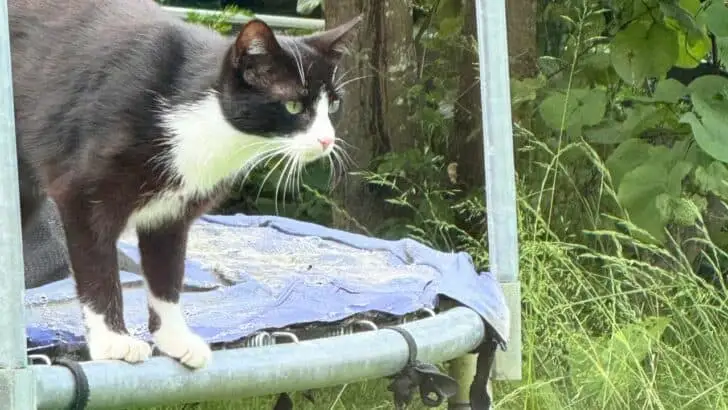
I love cats. I love gardening. And I really thought the two could peacefully coexist — until I caught my own cat making intense eye contact while squatting in the kale bed like she was claiming it for her kingdom. That’s when I realized something important.
To a cat, a garden isn’t a carefully nurtured patch of life. It’s a five-star outdoor litter box. Soft mulch? Perfect. Fresh soil? Irresistible. Raised beds? Prime real estate with excellent views.
But don’t worry — this isn’t an anti-cat rant. I’d never betray my own fluffball like that. This is about gently helping our feline friends find other places to handle their business, while keeping your garden safe from “surprises.”
🐾 Key Takeaways
- 🚫 Mulch deterrents like pinecones or citrus peels can keep cats from digging where they shouldn’t.
- 🌱 Skip the catnip in your main garden beds — unless you like flattened plants and wild zoomies.
- 🌿 Give cats their own garden corner with safe plants and soft soil they’re actually allowed to roll in.
- 👣 Use paths, barriers, or ground cover to gently steer your cat away from delicate areas.
- 🐈 Remember: they’re not trying to ruin your garden — they just think it’s theirs too.
1. Freshly Dug Soil = Fancy New Litter Box
If you just planted something, there’s a good chance your cat sees that spot as their new favorite bathroom. Fresh soil is soft, inviting, and oh-so-diggable. And unlike your actual litter box, it doesn’t get scooped regularly. Bonus!
I’ll admit it — I’ve watched my own cat prance across five feet of gravel just to proudly do her business in the one newly planted container on the patio. She has taste. And no shame. But it turns out this is a common cat instinct — soft, loose earth is cat gold. Especially if it smells like compost. (Aromatherapy?)
The good news? You can make your beds much less appealing — without making your cat feel like you’ve betrayed them personally.
🐾 How to Protect Fresh Soil
- Use twiggy sticks or short skewers: Place them upright every few inches in newly dug soil to make it harder to squat comfortably.
- Lay down chicken wire or mesh: Just for a couple of weeks, until the soil settles or the plants fill in.
- Try pine cones or thorny prunings: Cats hate scratchy foot traffic. Scatter around your most vulnerable spots.
- Create a cat-friendly corner: Offer an alternative — a soft patch of sand or a designated area with mulch that’s easy to dig, far from your beds.
2. Cats Love to Nap in the Wrongest Possible Spot
Is that a tray of lettuce seedlings you just babied for three weeks? Cool. Your cat will now flatten all of them in a single satisfied nap. This is not hypothetical. I once lost an entire patch of calendula to a nap so luxurious, I almost didn’t have the heart to move her. Almost.
Cats are heat-seeking missiles with fur. Freshly watered soil? Warm paving stones? A newly mulched flower bed? All five-star cat resorts. And they always pick the one spot that ruins the most effort. It’s not personal. It’s just… exquisitely timed chaos.
Thankfully, you can redirect that nap instinct without sparking a feline feud.
😴 How to Stop the Nap Flops
- Create an irresistible nap zone: Use a soft mat or old towel in a warm, sunny corner. Add a box if you want to guarantee interest.
- Use garden cloches or mesh over new seedlings: Even a wire basket turned upside down can keep paws off until plants get stronger.
- Keep freshly watered spots covered temporarily: Cats love damp warmth. Dry mulch or even a board laid down can help until it cools.
- Sprinkle crushed citrus peels around nap zones: Most cats hate the smell. It’s garden-safe and mildly effective, unless your cat is weirdly into oranges.
3. Digging? No, They’re Just “Landscaping”
If you’ve ever walked outside and found your marigolds excavated with surgical precision, congratulations — your cat has entered her landscaping era. Raised beds, soft soil, newly planted herbs? All fair game. My own cat once removed an entire thyme plant, laid in the crater like royalty, and looked at me like I was the one being unreasonable.
Cats dig for fun, for toilet business, and occasionally just to show you they can. But that doesn’t mean your seedlings have to suffer.
🪴 Tips to Foil the Furry Excavator
- Lay down sticks, chopsticks, or forks between plants: This breaks up the digging zone without hurting paws.
- Use pinecones or prickly clippings as mulch: Cats hate stepping on anything spiky or uneven.
- Cover bare soil with chicken wire or mesh: Let your plants grow through, and the cat won’t be able to dig it up.
- Plant dense ground covers in tempting areas: If there’s nowhere to dig, the appeal fades fast.
4. Cat Hair in the Herb Bed
It floats. It clings. It mysteriously accumulates in your oregano like you’re running a part-time feline salon next to your basil. I love my cat deeply — but I’ve harvested more mint with whiskers than I care to admit. She naps by the chives. She sheds like it’s her full-time job.
And look, cat hair isn’t toxic. But it’s also not a spice. You want fresh parsley, not fur parsley. And while I’ve learned to laugh (and lint-roll), there are easier ways to keep the fluff out of your thyme.
🐾 How to Keep Fur Off the Flavors
- Use garden cloches or mesh covers over herbs that are frequent cat lounging zones.
- Grow herbs in elevated planters or hanging baskets where your cat won’t curl up mid-shed.
- Offer cozy alternatives like a shady cat bed nearby — redirect the lounging, keep the mint clean.
- Do a quick fluff-check at harvest — rinse well, and maybe skip the fur-garnished garnish.
5. The Zoomies Are Real
Every cat owner knows the sound: a sudden thundering of paws, a rustle through the bush beans, a flying leap off the tomato cage. It’s not a squirrel. It’s zoomies. And while it’s deeply entertaining to watch, your poor garden beds may not survive the stampede.
Zoomies at 7 a.m.? Understandable. Zoomies through your carrot seedlings? Heartbreaking. I’ve personally lost a lettuce patch to one such sprint. My cat didn’t even look back. Just full parkour mode. Zero regrets.
🏃♀️ How to Zoomie-Proof Your Garden
- Use low fencing around fragile areas: Even short barriers help slow down mid-sprint cats.
- Build sturdy paths with mulch or pavers: Direct zoomie traffic somewhere less tragic.
- Create designated “cat tracks”: Leave open running lanes around your garden so they can sprint without destruction.
- Distract with playtime indoors: A tired cat is a less destructive cat. Feather wands save gardens.
6. Digging Up the Catmint (Again)
I planted it for her. She dug it up anyway. Every. Single. Time. If you’ve ever lovingly tucked a catmint plant into your border thinking, “This one’s for you, my fluffy queen,” only to find it mauled, half-eaten, and upside down by morning… you’re not alone.
Cats adore catmint and catnip — sometimes a little too much. What starts as a sweet gesture turns into a backyard rave. They roll in it, chew it, sleep on it, then come back for round two after it starts to recover. Your garden becomes a feline disco with casualties.
🐱 How to Grow Catmint Without the Chaos
- Use wire cloches or cages around young plants until they’re well established.
- Grow extra plants — one for her to destroy, one for the bees, one for the photo ops.
- Space them out — a single plant gets demolished faster than a few spread out across the garden.
- Try valerian or lemongrass as milder alternatives if the mint gets out of hand.
7. Burying Their “Treasures” in Your Soil
Here’s the truth: I love my cat. I even love her weird little habits. But I do not love unearthing a mystery turd in my garden bed while planting kale. Cats are tidy creatures — they want to bury their business. And to them, freshly turned garden soil is basically a deluxe restroom with room service.
Not only is this gross, it’s also a health hazard. Cat waste can carry parasites like toxoplasmosis, which is especially risky if you’re growing food crops. Plus, once one spot becomes “the spot,” they’ll keep coming back to it like it’s their personal bathroom suite.
🚫 How to Dissuade Garden Bathroom Breaks
- Lay down prickly deterrents like pine cones, sticks, or bramble trimmings — cats hate poky feet.
- Try citrus peels or coffee grounds — many cats dislike the smell.
- Use motion-activated sprinklers to gently discourage repeat offenders.
- Designate a “cat-safe corner” with soft sand and shade, far from your veggies.
8. Turning Raised Beds into Sun Loungers
My cat thinks I built those raised beds just for her. And honestly, I get it. They’re warm. They’re elevated. They’re basically thrones in the sun. But there’s a fine line between “cozy perch” and “flattened lettuce seedlings.”
Cats love high ground and sunny spots, and raised beds tick both boxes. To them, it’s the perfect napping spot. To us? It’s a tragic squash of tomorrow’s salad mix. I’ve lost more basil starts to lazy loafing than to snails or slugs.
☀️ How to Keep Cats Out of Raised Beds
- Use garden hoops or mesh covers — they’re light, easy, and double as pest control.
- Add upright sticks or skewers spaced every 6 inches — comfy for plants, annoying for paws.
- Offer a dedicated cat spot nearby — a little basket with a blanket in the sun works wonders.
- Lay down temporary chicken wire until seedlings are established.
Your Garden Can Still Be a Cat Haven (Without the Chaos)
I’ll say it again — I love my cat. I really, really do. But I also love my garden. And there’s no reason those two things can’t coexist in harmony. With a few smart tweaks, some gentle boundaries, and maybe a designated “VIP lounge” just for your feline friend, you can protect your plants and keep your cat feeling like the queen (or king) of the yard.
At the end of the day, your cat isn’t being bad — they’re just being a cat. Curious, clever, sometimes infuriating, always lovable. And with a little planning, your garden can stay safe, your cat can stay happy, and you can keep your sanity — and your seedlings — intact.


Daniel has been a plant enthusiast for over 20 years. He owns hundreds of houseplants and prepares for the chili growing seasons yearly with great anticipation. His favorite plants are plant species in the Araceae family, such as Monstera, Philodendron, and Anthurium. He also loves gardening and is growing hot peppers, tomatoes, and many more vegetables.