

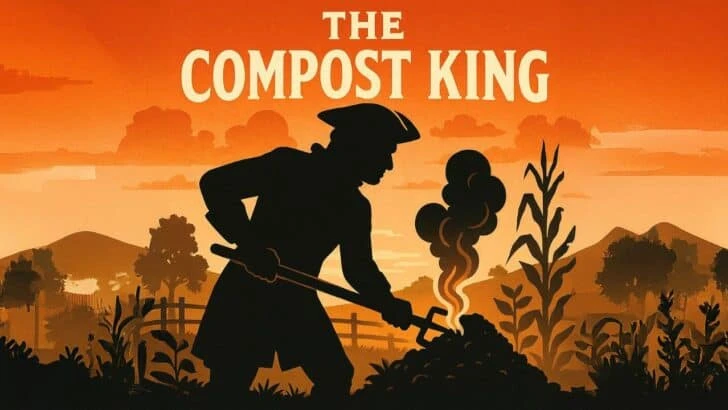
You’ve probably heard the fireworks. You’ve definitely seen the flags. And if you’re lucky, there’s something on the grill already.
But there’s one Fourth of July tradition almost no one talks about. It has nothing to do with parades or hot dogs, and everything to do with dirt under your nails.
Long before gardening was a weekend hobby, it was an act of survival. A quiet kind of rebellion. And as it turns out, the people who shaped America were shaping something else too — rows of crops, beds of beans, even compost piles that could rival your own.
And no, this isn’t some sweet little side note. This is a full-blown garden plot twist.
🌱 Key Takeaways from the Founding Fathers
- 📜 America’s first leaders were gardeners too — and they took it seriously, from compost piles to crop rotations.
- 🌽 Historical gardens weren’t ornamental — they were productive, practical, and experimental.
- 🧠 Ideas like soil health, seed saving, and native planting go way back — and still work today.
- ✍️ Journaling and observation mattered — Jefferson’s notes remind us to learn from every season.
- 🌟 Gardening is patriotic — when you plant something, you’re continuing a legacy that helped build a nation.
George Washington’s Garden Wasn’t Just for Show
Forget the portraits of powdered wigs and stiff poses — George Washington was knee-deep in manure more often than you’d think. At Mount Vernon, his gardens weren’t built for bragging rights. They were designed to feed people, replenish soil, and keep the whole operation running without a single chemical bag in sight.
Washington believed that good land management was key to a nation’s future. He rotated crops like a boss, fenced off plots to keep wildlife at bay, and was an early fan of native species. And yes, he composted. Relentlessly. If it came from the earth, he believed it should go back to the earth.
He even wrote about how farmers were the most “valuable citizens” — not just because they grew things, but because they understood the rhythm of life. That’s something we could all use a little more of this summer.
- ⚖️ Rotate crops seasonally — tomatoes don’t want their old spot back
- 🛡️ Use fencing to protect young plants from rabbits and deer
- 🍂 Start a small compost pile — even kitchen scraps count
- 🌿 Choose native species — they’re heat-smart and pest-wise
Thomas Jefferson: Seed Hoarder Extraordinaire
Thomas Jefferson didn’t just write the Declaration of Independence — he also wrote obsessive garden notes. At Monticello, his sprawling estate, Jefferson planted more than 350 varieties of vegetables. If he’d lived today, he’d have a full YouTube series and a “Garden Haul” playlist.
He traded seeds with friends around the world, experimented with growing zones, and recorded what worked (and what flopped) in daily journal entries. He was a big believer in trial and error — and he never got too proud to admit when his peas failed.
In many ways, Jefferson was the original garden influencer: enthusiastic, slightly over-the-top, and completely addicted to getting new seeds in the ground. He wasn’t chasing perfection — just possibility.
- 📝 Keep a quick journal of what you plant and when — even sticky notes count
- 🌍 Don’t be afraid to try something unusual — Jefferson grew okra, sesame, and even artichokes
- 🎁 Swap seeds with neighbors or friends — he did it by horseback, you can do it by mailbox
John Adams and the Simple Garden Life
John Adams wasn’t interested in pomp, powdered wigs, or being the face of the revolution. After all the politics, he retreated to his Massachusetts farm and dug straight into the dirt. Literally. He believed hard work on the land built good character — and he practiced what he preached.
His garden was nothing flashy: beans, potatoes, onions, a few fruit trees. But for Adams, growing your own food wasn’t just about survival. It was about dignity, independence, and staying grounded — both mentally and physically.
In one letter, he wrote that he’d rather be tending his orchard than sitting in Congress. And honestly? Same. His practical, no-frills approach makes him the founding father of small-space, low-fuss gardening. No showboating, just good harvests.
- 🥔 Focus on staples like potatoes, beans, and onions — easy and reliable
- 🌳 Fruit trees (like apple or pear) are long-term friends — plant once, enjoy for years
- 🧤 Even if you only have a patio or balcony, grow with care and intention
Benjamin Franklin and Composting Wisdom
Ben Franklin might’ve been the guy flying kites in storms, but in the garden, he kept both feet on the ground — and in the compost pile. Long before “regenerative agriculture” became a buzzword, Franklin was telling his fellow Americans: feed the soil, not just the plant.
He wasn’t a full-time farmer, but he understood that good soil was the foundation of everything. In his writings, he pushed for smart land use, the importance of manure, and warned against stripping the land bare. “Waste nothing” wasn’t just a financial motto — it was a composting philosophy.
Franklin’s real genius? He made soil stewardship sound downright patriotic. And today, every time you toss kitchen scraps into the bin or layer leaves on your garden beds, you’re nodding to good ol’ Ben.
- 🍂 Turn yard waste and kitchen scraps into gold — compost feeds everything
- 💩 Don’t fear manure — just use it aged and in moderation
- 🌱 Healthy soil = resilient plants = less work for you
🐎 James Madison: The Eco-Minded Founder
He wasn’t the loudest voice in the Revolution, but when it came to the land, James Madison had plenty to say — and most of it still holds up today. While others were focused on liberty and governance, Madison was quietly sounding the alarm about soil depletion, erosion, and deforestation. In 1818, he gave a speech warning that American agriculture was heading toward a cliff if it didn’t start thinking long-term.
He believed that the health of a nation rested on the health of its soil. “The earth is given as a common stock for man to labor and live on,” he once said — and he meant it literally. Madison spoke out against farming practices that stripped the land bare and advocated for methods that would “nourish the soil as it nourishes us.”
Today, that sounds a lot like regenerative gardening, doesn’t it?
- Try no-dig or low-till methods to reduce soil erosion
- Rotate crops to avoid exhausting your garden beds
- Add compost and organic matter to feed the soil, not just the plants
- Grow native plants whenever you can — Madison would approve
🌺 Martha Washington’s Garden Spirit
While George was off leading revolutions, it was Martha who kept Mount Vernon thriving. She wasn’t just a hostess — she was the behind-the-scenes force ensuring the gardens, orchards, and kitchen plots kept producing. She organized planting schedules, managed enslaved laborers in the garden, and made sure the household stayed fed year-round. She knew what thrived in Virginia soil and made sure it was planted, harvested, preserved, and used wisely.
Though she didn’t leave behind manuals or diaries filled with gardening advice, Martha’s impact was rooted in practical knowledge: use what you have, grow what works, and make the most of every harvest. She turned produce into preserves, herbs into medicine, and flowers into beauty — all from the backyard.
- Plan your garden with meals and preservation in mind
- Keep a small herb patch for kitchen and health needs
- Don’t be afraid of “ordinary” crops — beans and turnips fed revolutions
- Grow for beauty too — she adored flowers like sweet peas and hollyhocks
🌱 What This All Means for Your Garden Today
The Founding Gardeners weren’t just playing around with pretty hedgerows and bean rows. They were onto something. Compost wasn’t a trend — it was survival. Crop rotation wasn’t a theory — it was what kept soil from collapsing. And saving seeds? That was basically patriotism with a shovel.
Today, we’ve got raised beds, online seed swaps, and community compost bins. But the ideas are the same. Your garden can be a place of independence — from supermarkets, from waste, from tasteless tomatoes. You can garden like it matters because it does matter. Every time you build your soil, feed your family, or grow something that nourishes your neighborhood, you’re part of something that started long before us. And it’s still growing.
- Compost like Franklin — start with your kitchen scraps, end with black gold
- Plan like Washington — rotate crops, fence off pests, and grow what thrives
- Experiment like Jefferson — test new varieties and track what works
- Keep it simple like Adams — beans, potatoes, and good soil go a long way
💬 Gardening Through the Generations
There’s something quietly powerful about planting a seed on the same land that others once worked with calloused hands and big dreams. Whether it’s your backyard, your balcony, or a single pot on a windowsill, it connects you to something bigger — something that started with compost heaps in Mount Vernon and seed trials in Monticello.
These founding fathers weren’t perfect. But in the garden, they were just like us — hoping, experimenting, failing, and trying again. They were building more than a nation. They were tending to the soil that fed it. And today, whether you’re growing heirloom tomatoes or just getting your hands dirty for the first time, you’re doing the same.
This July, take a moment to garden like it matters. Because it really does.
Daniel has been a plant enthusiast for over 20 years. He owns hundreds of houseplants and prepares for the chili growing seasons yearly with great anticipation. His favorite plants are plant species in the Araceae family, such as Monstera, Philodendron, and Anthurium. He also loves gardening and is growing hot peppers, tomatoes, and many more vegetables.