

Your garden’s already a science lab — you just haven’t been wearing the goggles.
These simple experiments don’t require fancy gear or lab coats. Just curiosity, a few household items, and maybe a little dirt under your nails.
And the best part? They actually show you how things work in your soil, your space, and your microclimate — not just what the seed packet says.
🧪 Key Takeaways
- 🧯 Simple experiments can reveal a lot — no fancy tools needed
- ☀️ Every yard is different, even just a few feet apart
- 🌱 Real data beats guesswork when it comes to soil, sun, and watering
- 🍌 Decomposition, drainage, and light exposure are easy to measure with household items
- 📋 Knowing your conditions helps you garden smarter, not harder
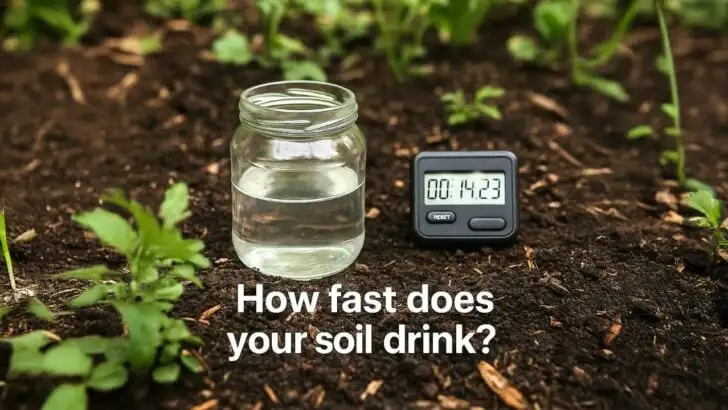
1. The Drainage Test (a.k.a. The Jar Test)
Want to know if your soil drains like a dream or holds water like a sponge? This super simple test shows you how quickly water moves through your soil — and it’s one of the fastest ways to understand what your plants are really dealing with underground.
Just dig a hole about 12 inches deep and fill it with water. Let it drain completely, then refill it again and time how long it takes to disappear. That number tells you more than a hundred soil charts ever will.
💡 Why it matters
- If it drains too fast, your soil may be sandy and dry out too easily — not great for thirsty crops like cucumbers or hydrangeas.
- If it drains too slowly, roots may suffocate or rot, especially after heavy rain.
- This tells you whether you need compost, raised beds, or plants that don’t mind wet feet.
- Try it in different spots — one yard can have three different drainage zones.
2. Sun Mapping with a Paper Plate
Most people just guess how much sun a spot gets. But your tomatoes don’t care what you “think” — they want hours. This trick gives you actual data using something as simple as a paper plate.
Place a white paper plate (or a piece of cardboard) in the area you’re testing. Then check it once every hour between 8am and 6pm. Write down whether it’s in full sun, partial shade, or full shade. Add up the sunny hours, and you’ve got a reliable sunlight score for that spot.
☀️ Why it matters
- “Full sun” means 6 or more hours — but some beds only hit 4, even when they feel bright.
- Sunlight shifts throughout the season. This shows you what your garden gets now.
- You’ll stop putting sun-hungry plants in shady corners and wondering why they look miserable.
- This trick is also perfect for container gardeners who move pots around. Know where to park them.
3. Water-Wicking Test with a Sponge
Ever wonder why two identical pots dry out at totally different speeds? It often comes down to what’s mixed into the soil. This quick experiment shows how a simple addition — like a sponge — can change how long your plants stay hydrated.
Take two containers with the same soil and the same kind of plant (or just use empty pots for testing). In one, mix in pieces of an old sponge or some perlite. Leave the other plain. Water both equally and check the moisture level each day for the next several days.
💧 Why it matters
- Helps you see how soil amendments really work — not just what the bag claims.
- Shows which containers dry out too fast in summer and might need extra help.
- Gives you more control over watering — especially for fussy or shallow-rooted plants.
- Great for balcony gardens or heatwave planning. This one’s a game changer.
4. The Banana Peel Breakdown Test
People love to toss banana peels into the garden — some swear it boosts potassium, others say it’s just slug bait. But how fast do they really break down? This experiment shows you what happens in your specific climate and soil.
Try three methods: toss one peel on top of the soil, bury another a few inches deep, and place a third one into your compost pile. Check on each weekly and note which one disappears fastest (and which starts to rot in place).
🍌 Why it matters
- Teaches you how well your soil digests organic matter — which affects everything from mulch to green manure.
- Helps you decide whether burying kitchen scraps is helping or just creating a fruit fly buffet.
- Gives real-life insight into how fast your compost is working.
- Fun experiment to do with kids or curious gardeners. Low mess, big payoff.
5. Mulch Temperature Check
Everyone says mulch keeps roots cool — but how much cooler, exactly? This experiment gives you hard numbers, not guesses, and shows why mulching isn’t just about looks or weed control.
Stick a soil thermometer (or any probe-style thermometer) a few inches into bare soil. Then do the same under a layer of mulch nearby. Check both spots during the hottest part of the day — ideally over several days in a row. Track the difference and prepare to be surprised.
🌡️ Why it matters
- Reveals just how much protection mulch gives during heatwaves or dry spells.
- Helps you understand why some plants thrive while others bake in the same bed.
- Guides better mulch choices — some materials insulate better than others.
- Useful for gardeners in extreme climates or anyone planting shallow-root crops.
6. The Clay Jar Moisture Test (Olla-Style Hack)
This experiment borrows from ancient irrigation wisdom. Clay pots — unglazed and porous — slowly release water into the soil around them. It’s a passive watering system that shows just how much your plants will self-regulate if you give them the chance.
Bury a small unglazed terracotta pot (with the bottom sealed) near your plants. Fill it with water, then check moisture levels in the surrounding soil each day. Notice how the area stays evenly moist — no puddles, no dry spots.
🪣 Why it matters
- Shows how much water your soil can retain when moisture is slowly released at root level.
- Great way to learn about passive watering in hot climates or for vacation-proofing your garden.
- Can help identify areas where soil texture prevents even water distribution.
- You’ll use less water overall — and your plants won’t stress from sudden soaking and drying.
7. The Newspaper Weed Barrier Test
Can you stop weeds with yesterday’s news? Turns out, yes — and this test shows how effective (or not) your recycled paper layers are at smothering unwanted growth without harming your soil below.
Pick two weedy spots. In one, apply a thick layer of newspaper and water it down. Leave the other spot as-is. Check both areas over the next few weeks and compare weed growth, soil moisture, and plant health nearby.
📰 Why it matters
- Teaches how well biodegradable barriers suppress weeds compared to nothing or synthetic fabric.
- Reveals how different mulching methods affect soil moisture and temperature.
- Helps reduce plastic use in the garden — and makes recycling feel instantly useful.
- If it works, you just found a free, effective way to prep beds and pathways.
Your Garden’s Been Trying to Tell You
You don’t need a microscope or a master gardener badge to understand your soil, your sun, or your roots. Just a few weird objects from around the house, a notebook, and a little curiosity. That’s all it takes.
These experiments aren’t complicated, but they’re sneaky powerful. They help you stop guessing and start gardening based on what’s actually happening in your yard. Once you’ve measured your sunlight or tracked how fast a banana peel breaks down, it’s hard to go back to playing it by feel.
So go ahead. Get nerdy with your dirt. Your plants will thank you — probably by not dying this time.


Daniel has been a plant enthusiast for over 20 years. He owns hundreds of houseplants and prepares for the chili growing seasons yearly with great anticipation. His favorite plants are plant species in the Araceae family, such as Monstera, Philodendron, and Anthurium. He also loves gardening and is growing hot peppers, tomatoes, and many more vegetables.