

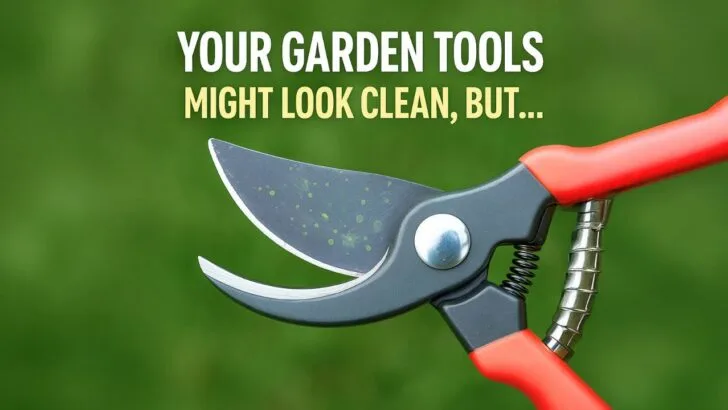
I used to think my garden tools were spotless. I wiped them down, hung them neatly, even gave my secateurs the occasional oil bath. Felt responsible. Felt like I was doing it right.
Until I lost an entire row of peppers to something I couldn’t see — something lurking in the blade of my beloved clippers. That’s when I realized: your garden tools might look clean, but they could be quietly sabotaging your plants.
And it’s not just the obvious stuff like rust. Nope. There’s a whole cast of invisible characters tagging along for the ride — spores, eggs, salts, even toxic buildup. Sound dramatic? Maybe. But so is sudden leaf wilt with no warning.
Here are 11 things your garden tools might be hiding, and how they’re messing with your garden’s vibe — one silent infection at a time.
🌿 Key Takeaways
- 🛠️ Dirty tools = silent spreaders of fungal spores, viruses, and insect eggs
- 🔪 Dull blades crush instead of cut, weakening stems and inviting infections
- 💧 Leftover moisture breeds bacteria — don’t leave tools wet and muddy
- 🪓 Every cut matters in plant health — clean, sharp, and intentional pruning only
- 🚿 Simple hygiene goes a long way — rinse, dry, sanitize, and store smart
- 🌱 Your garden deserves respect — treat your tools like plant life depends on them (because it does)
1. Dried Sap from Diseased Plants
You pruned that sick tomato plant last summer — but did you sanitize your shears afterward? If not, odds are they’re still wearing a crust of dried sap teeming with pathogens. That invisible residue clings to blades and handles like gossip at a garden club. And the next time you clip a healthy stem? You’re basically playing Plant Plague Tag.
2. Soil Clumps Hiding Fungus or Nematodes
See that dried mud caked on your shovel or trowel? It’s not just dirt. It’s a time capsule — and possibly a biological hazard. Hidden inside those crusty clumps could be fungal spores, root knot nematodes, or bacterial hitchhikers from last season’s blight. Every time you move that tool from bed to bed, you’re scattering potential problems like confetti at a pest parade.
3. Rusty Blades That Cut More Than Just Plants
That old pruner with the orange grip? If it’s rusted, it’s not just ugly — it’s dangerous. Rusted blades don’t slice, they tear. And torn stems are like open wounds on your plants. That kind of damage makes it way easier for bacteria, mildew, or rot to get in. Not to mention, it slows healing and stresses the plant more than a clean cut would.
4. Hidden Sap, Spores, and Sticky Residue
You wipe your hands after pruning, but when was the last time your tools got the same love? Sap, mildew spores, and even microscopic pests cling to blades and handles like gum on a shoe. They dry invisible — but the next time you snip a stem, boom. You’re transferring disease straight into the next plant. It’s like using the same bandage on five people.
5. Soil Caked into Every Crevice
That dry dirt on your trowel? It’s not just dirt. It’s a clump of fungi, bacteria, and sometimes even nematodes hitching a ride. And when it stays packed into tool joints or blade edges, it messes with performance too. Cuts get sloppy. Digging gets harder. Before you know it, you’re dragging pathogens from bed to bed like a gardener’s plague cart.
6. Rust That’s More Than Just Ugly
Rust isn’t just cosmetic — it eats away at your tools and weakens them from the inside out. More importantly, those rusty edges can carry tetanus bacteria and make cuts in plants (or you) more prone to infection. A rusty blade tears instead of slices, leaving ragged wounds that take longer to heal and are more likely to get infected.
7. Hidden Sap and Sticky Residue
That shine on your pruners? It’s probably not just morning dew. Sap and plant juices can gum up your blades, trap pathogens, and attract dirt like a magnet. Sticky tools aren’t just annoying — they’re perfect breeding grounds for fungal spores and bacteria, which you’ll then unknowingly transfer from plant to plant.
8. Rust in All the Wrong Places
A little rust might seem harmless, even rustic. But on garden tools, it’s a slow death sentence — not just for the metal, but for your plants too. Rust weakens cutting edges, damages precision, and flakes into soil. Those flakes? They can scratch roots or create micro-wounds that make your plants more vulnerable to disease.
9. Sticky Sap or Unknown Gunk
If your tools come out of storage with sticky residue or unidentifiable gunk, it’s not just gross — it’s a red flag. Sap buildup, pest secretions, or decaying plant matter can carry pathogens that hitch a ride straight into your next pruning session. It’s one of the sneakiest ways diseases spread from one plant to the next — and most gardeners don’t catch it until it’s too late.
10. Dull Blades That Rip Instead of Slice
If your pruners feel more like they’re tearing through stems than slicing cleanly, it’s time for a blade check. Dull tools don’t just make gardening harder — they leave ragged wounds that take longer to heal. That’s a welcome mat for pests and pathogens, especially in humid weather or tight-growing beds.
11. Hidden Rust That Spreads Disease
That faint orange dust on your shears? It’s not just unsightly — it’s a slow-moving disaster. Rust isn’t just metal decay; it can harbor fungal spores and bacterial hitchhikers, especially if your tools live outside or in damp sheds. One snip with a rusty blade can infect an entire row of tomatoes or roses before you even realize what happened.
The Hidden Garden Threat You Can Actually Control
We spend so much time picking the right plants, the best soil, and the sunniest spots — and yet the real villains might be sitting right there in the shed. It’s wild how a forgotten smear of sap or a crusted blade can sneak in and start a garden-wide domino effect. But here’s the good news: awareness is everything. Now that you know what might be lurking in your toolset, you’re in the perfect position to stop problems before they start.
Clean tools. Sharp blades. A little prevention now, a healthier garden all season long. Simple, powerful, and honestly… kind of satisfying.


Daniel has been a plant enthusiast for over 20 years. He owns hundreds of houseplants and prepares for the chili growing seasons yearly with great anticipation. His favorite plants are plant species in the Araceae family, such as Monstera, Philodendron, and Anthurium. He also loves gardening and is growing hot peppers, tomatoes, and many more vegetables.