

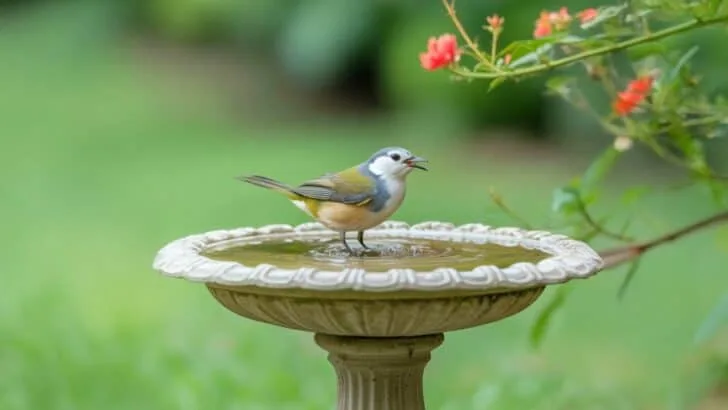
The garden feels quieter now. The big blooms are fading, the bees aren’t as frantic, and the mornings carry just a hint of cold. But if you listen, there’s still movement. Wings in the background. Rustling in the shrubs. A flicker of life that isn’t ready to leave yet.
Birds know the season’s turning. Some are getting ready to leave. Others are settling in for the long haul. And what you do this week decides whether your yard stays full of song, or goes silent.
This isn’t about fancy feeders or exotic species. It’s about offering what birds actually need in August. Clean food. Safe water. A reason to stay. If you want your garden to stay wild and alive this fall, it starts now.
Clean Your Feeders — They’re Probably Disgusting
If you haven’t cleaned your bird feeders in a few weeks, there’s a good chance they’re growing something you don’t want to think about. Moldy seed, wet clumps, bacteria. Birds don’t just avoid it. It can actually make them sick.
In August, feeders get gross faster. The heat and humidity speed up decay, and what looks like a snack could be a hazard. It’s not enough to top them off. You’ve got to empty them, scrub them, and start fresh.
Hot water is enough for most jobs. A little vinegar if you’re feeling thorough. No soap, no bleach. Let them dry completely before refilling. If it smells musty or clumps together, toss the seed. It’s not worth the risk.
Healthy birds come back. Sick ones don’t. You’re not just feeding them. You’re setting the standard for who sticks around.
🧼 Feeder Fix Checklist
- Empty feeders completely — no topping off old seed
- Scrub with hot water or diluted vinegar
- Let them dry fully before adding new seed
- Toss anything clumpy or moldy without guilt
Offer Water — It Matters More Than You Think
In August, food isn’t always the limiting factor. Water is. Puddles dry up. Streams slow down. Birdbaths get slimy or forgotten. And without clean, shallow water, many birds simply move on.
You don’t need a fancy fountain. A pie tin, a shallow bowl, even a terra cotta saucer can work. The key is to keep it shallow, steady, and safe. Add a flat stone or a small brick so birds have a perch. And clean it every couple of days, especially in hot weather.
If you add just one thing to your garden this week, make it water. You’ll see more action than you expect. Birds remember where they find a drink. They tell each other. And they come back.
💧 Water for Wildlife
- Use shallow dishes or trays filled with clean water
- Add a flat stone or perch for safe landing and drinking
- Scrub birdbaths every few days to prevent algae and bacteria
- Place in partial shade to keep the water cool and fresh
Don’t Deadhead Everything — Let Some Seeds Stand
Deadheading makes sense in July. It keeps the garden neat and the blooms coming. But in August, not everything needs a trim. Some flowers are ready to give back in a different way. Their petals are spent, but the seeds are full of promise — for birds, not just for next year’s garden.
Finches love coneflowers. Chickadees pick apart black-eyed Susans. Sparrows swarm old sunflowers. What looks like decay to you is a buffet to them. And the more you leave standing, the more visitors you get.
This doesn’t mean letting the whole place go wild. Just choose a few key plants and let them finish their cycle. Let them dry out. Let the seeds ripen. Let the birds do what they’ve been doing for thousands of years.
Clean gardens are quiet gardens. If you want life, leave a little mess.
🌻 Let the Seeds Feed
- Leave seed heads on coneflowers, sunflowers, and black-eyed Susans
- Drying stems attract finches, sparrows, and chickadees
- Letting plants go to seed supports the entire food chain
- A little end-of-season mess keeps the garden alive
Tuck in a Shrubby Corner for Shelter
Birds don’t just need food and water. They need cover. A place to duck into when the wind picks up. A low branch to hide on when a hawk sweeps past. Somewhere quiet where they can rest without being seen.
If your garden is wide open, it may look beautiful to you — but to a bird, it feels exposed. Adding even one dense, messy corner can change everything. A pile of brush. An untrimmed hedge. A patch of tall grass you forgot to mow. These aren’t mistakes. They’re invitations.
You don’t need to redesign your yard. Just stop tidying one part of it. Let the wildness gather. Birds know how to find it. They’ll take care of the rest.
🪹 Shelter Makes a Garden Livable
- Leave one corner untamed with shrubs, brush, or tall grasses
- Dense cover gives birds safety from predators and weather
- Even small patches can make a big difference for local and migrating species
Avoid the Late-Summer Pesticide Spray
It’s tempting. The bugs are back, the leaves are chewed, and the instinct to fix it with a bottle is strong. But spraying now doesn’t just hit the pests. It takes down the birds’ entire food supply with them.
Late summer caterpillars, beetles, and soft-bodied insects are crucial fuel for migrating birds. Even the annoying ones. When you spray them, you’re cutting off the protein pipeline at the exact moment birds need it most.
That includes so-called natural and organic sprays. If it kills bugs, it affects the birds who rely on them. There’s a time and place for intervention. Right now, restraint is better.
Let a few holes happen. Let a few beetles be. You’re feeding the entire system when you leave the smallest things alive.
🦋 Let the Bugs Be
- Avoid chemical and organic sprays during late summer
- Insects are a vital food source for migratory and nesting birds
- Even pests have a purpose in a functioning garden ecosystem
Your Garden Isn’t Just Yours
It’s easy to forget. You plant the flowers, water the beds, pull the weeds. You do the work, so it feels like it belongs to you. But the moment the birds show up, it becomes something more.
A rest stop. A food source. A safe place to land when the wind picks up and the sky feels too big.
The birds that pass through your garden in late summer may not stay forever. But what you give them now matters. A little water. A few seeds. One clean feeder. One corner left untamed.
They’ll remember. And next year, they might come back a little sooner. Or bring more with them.
🌿 Key Takeaways
- 🧼 Clean your feeders with hot water and let them dry completely
- 💧 Offer shallow water with a perch and clean it every few days
- 🌻 Let some seed heads dry to provide natural food sources
- 🌾 Leave a shrubby corner or brush pile for shelter and rest
- 🦋 Skip the sprays so birds can feast on caterpillars and bugs


Daniel has been a plant enthusiast for over 20 years. He owns hundreds of houseplants and prepares for the chili growing seasons yearly with great anticipation. His favorite plants are plant species in the Araceae family, such as Monstera, Philodendron, and Anthurium. He also loves gardening and is growing hot peppers, tomatoes, and many more vegetables.