

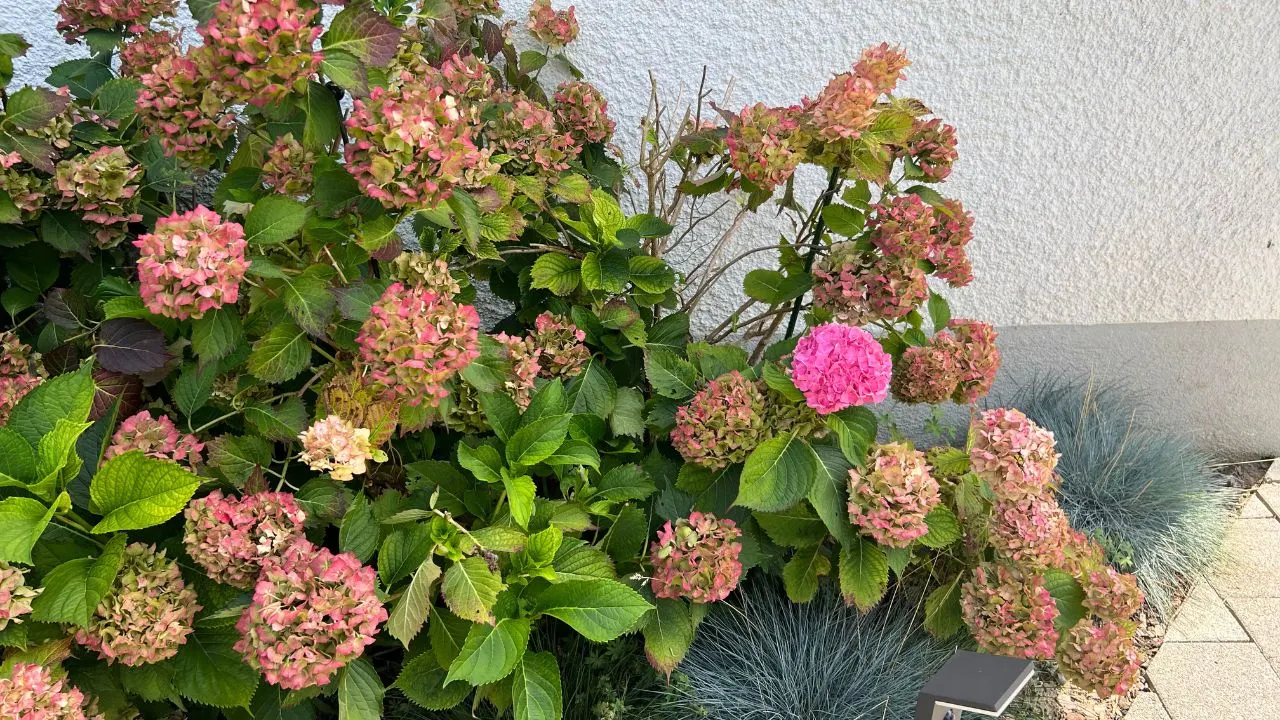
Today I stood in front of my hydrangea, coffee in hand, and finally admitted it was done for the year. The blooms that once looked like scoops of ice cream in a florist’s window are now wilted, browned, and clinging to the stems like they are too tired to let go.
I brushed my hand over one and a few papery petals floated away. It was that quiet little signal every gardener knows — the season for these flowers has closed. The question now is whether to grab the pruners or leave them be. And the answer, it turns out, depends a lot on where you live.
2. Why Timing Matters for Hydrangea Pruning

My Hydrangeas Are Done for This Year :=)
Bigleaf hydrangeas (Hydrangea macrophylla) have their own clock. They bloom on old wood, which means the stems that flower next summer are already growing now. While the current blooms are fading, the plant is busy setting buds for next year. If you cut at the wrong moment, you could remove an entire season’s worth of flowers with one snip.
Pruning at the right time is like threading a needle. Do it too early and you shorten the show for this year. Too late, and you snip away next year’s color. The sweet spot is right after the blooms fade but before the buds for next year are fully set. That window shifts depending on your hardiness zone, which is why timing is everything.
- Old wood bloomers – Bigleaf hydrangeas carry next year’s blooms on stems grown this year.
- Buds form early – In cooler zones, buds are set by late July. In warmer zones, they can form into late August.
- Deadheading vs. pruning – Removing spent blooms at the top is safe anytime. Cutting into stems should be done within the safe window for your zone.
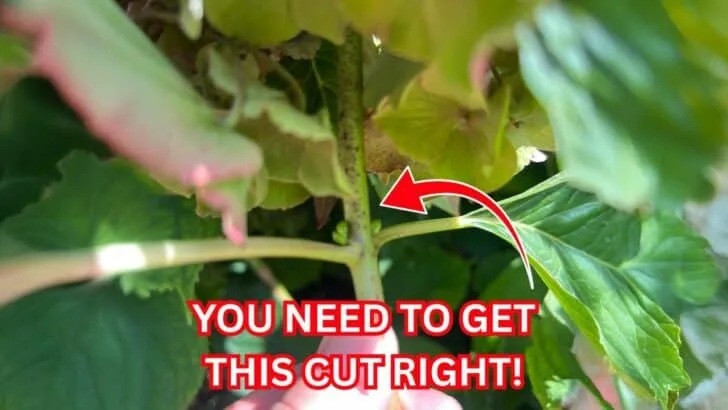
- Bonus tip – If you are unsure whether buds have formed, cut just above the first set of clearly visible buds to avoid accidental flower loss.
3. Zone by Zone Timing Guide
Hydrangea timing shifts with climate, which is why your zone matters more than the calendar date. The buds for next summer form on this year’s stems and that process speeds up or slows down depending on how warm your season runs. Mid August sits right on the edge for many gardens, so the safest plan is to follow zone specific cues.
In zones 3 to 5 the bud set is early and usually finished by late July. Pruning now will likely remove next year’s flowers even if the plant looks messy. Treat this as the tidy up stage and save real pruning for right after next year’s bloom.
In zones 6 to 7 you still have a short window to shape the plant without losing much. Prune as soon as blooms fade and keep cuts conservative so you do not over thin the old wood. In zones 8 to 9 there is still time to prune through late August but plan to stop by early September before buds fully harden.
🗺️ What to do by zone
- USDA 3–5 window closed Keep flowers for fall interest or deadhead lightly. Remove only dead or crossing stems at the base. Plan structural pruning right after next year’s bloom.
- USDA 6–7 last call Prune this week or next. Cut flowering stems back to just above the first visible healthy buds. Remove at most one third of the oldest stems for shape and airflow. Stop by the end of August.
- USDA 8–9 still time Light shaping and thinning are safe through late August. Finish by early September. After that switch to deadheading only so you do not clip off forming buds.
Bonus tip: If you are unsure, scratch test for buds. Find the first node below a spent bloom with plump green bud bumps and cut just above that point. When in doubt, deadhead now and prune for shape right after next year’s flowers fade.
4. Where to Cut for Maximum Blooms

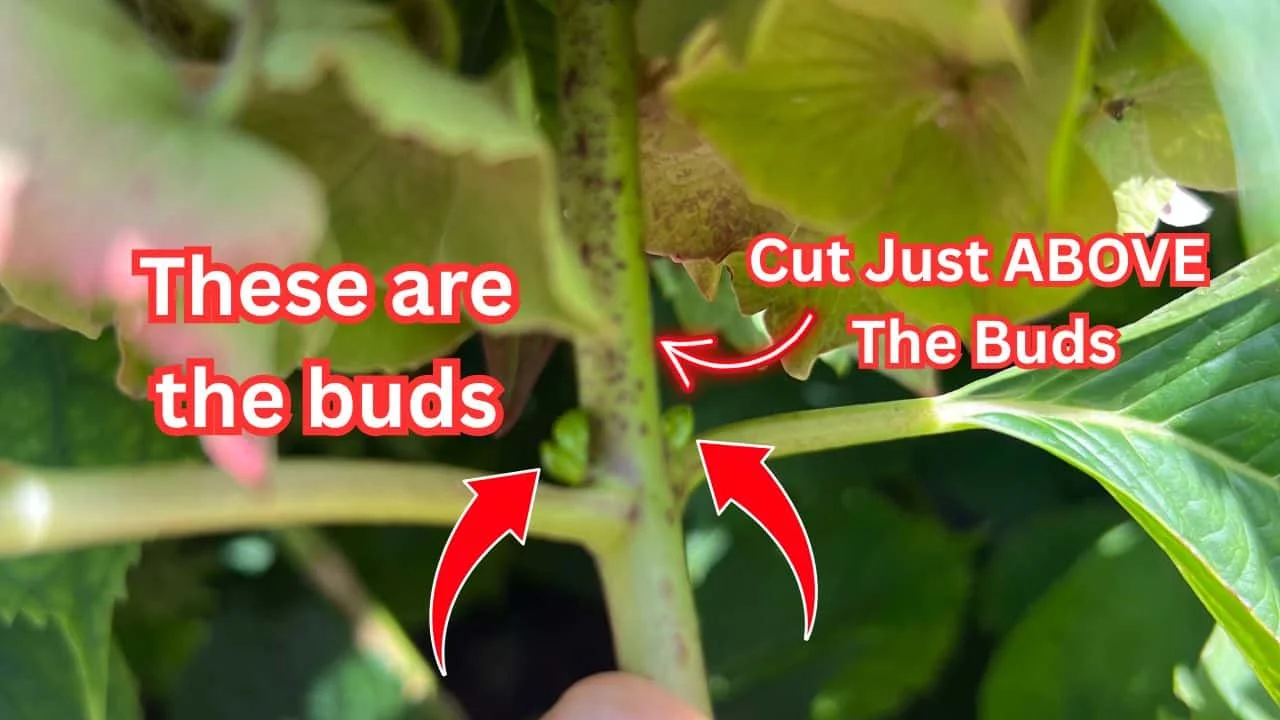
The safest way to prune bigleaf hydrangeas is to start at a spent bloom and follow the stem down until you find the first set of healthy buds. These buds look like small green swellings tucked where the leaves meet the stem. Cutting just above them gives the plant the best chance to put on a strong display next year.
If the first set of leaves has no visible buds, keep moving down the stem. Sometimes buds form slightly lower, especially if the plant was stressed or shaded. Even if they are not visible yet, lower nodes may still push out buds in the coming weeks.
While you are pruning, remove any dead, crossing, or spindly stems completely at the base. This improves airflow and helps light reach the interior of the shrub, which in turn supports healthier growth and bud formation.
✂️ Step by step cut guide
- Locate a spent bloom and trace the stem downward.
- Find the first set of healthy buds and cut about 0.25 inches above them.
- If no buds are visible at the first set of leaves, move to the next set lower down.
- Remove any dead, damaged, or crossing stems at their base.
- Make clean cuts with sharp, sanitized pruners to prevent disease.
Pro tip: Avoid cutting more than one third of the plant in a single season. This keeps enough old wood intact for next year’s bloom while still refreshing the shrub’s shape.
5. Common Pruning Mistakes to Avoid
Bigleaf hydrangeas reward careful timing and technique. The most common mistake is cutting all stems down to the ground, which removes every bud that could bloom next year. This leaves you with a summer full of leaves but no flowers.
Another frequent error is waiting until fall or early spring to prune. By that point, buds are already set and will be lost with every snip. Some gardeners also remove too much wood at once, which weakens the shrub and reduces its ability to bloom consistently.
Lastly, misidentifying your hydrangea type can lead to the wrong approach entirely. Bigleaf hydrangeas bloom on old wood, while smooth and panicle hydrangeas bloom on new wood. Knowing which one you have is the first step to pruning success.
🚫 Mistakes That Cost You Blooms
- Cutting all stems down to the ground.
- Pruning in fall or early spring when buds are already set.
- Removing more than one third of the plant at once.
- Failing to identify your hydrangea type before pruning.
Bonus tip: When in doubt, skip heavy pruning and focus on deadheading and removing damaged stems. You can always shape the plant next season, but you cannot get cut-off buds back.
My Bloom-Saving Plan for Hydrangeas
Standing in front of my hydrangeas right now, I can see the story of this summer written in their blooms. Some heads are still full and colorful, others are fading into papery browns. The stems are sturdy, the leaves still glossy, and the buds for next year are quietly forming in the joints.
Because of that, I will not be making any drastic cuts. A light prune to shape the plant, a few snips to remove spent blooms, and the rest will be left untouched. This way, I keep as many buds as possible while tidying up the overall shape.
I will also take a few minutes to remove any dead or crossing stems at the base. This keeps air moving through the center and helps prevent mildew and rot once the cooler, wetter weather arrives. For me, it is about giving the plant enough breathing space without taking away next year’s flower show.
- ✂️ Light prune only — focus on shaping and removing spent blooms.
- 🌱 Keep as many green, healthy stems as possible to preserve buds.
- 🍂 Remove dead, weak, or crossing stems from the base.
- 💧 Water deeply once a week if rain is scarce to reduce plant stress.
- 🪴 Add a light layer of mulch to stabilize soil temperature going into fall.
Bonus Tip: Take close-up photos of bud positions now. They will help you spot and protect them when pruning next year.
Protecting Next Year’s Hydrangea Show
Hydrangeas may look like they are winding down, but they are already writing next year’s story in the buds along their stems.
Every cut you make now either protects or erases that future display. Use the right timing, look for healthy buds, and keep a light hand on the pruners.
Treat these final weeks as the start of the next season, not the end of this one. A few minutes of well timed care now can reward you with months of color next summer and spare you a flowerless year.
🌿 Key Takeaways
- ⏳ Timing is critical – Prune bigleaf hydrangeas right after blooms fade but before buds fully set.
- 🔍 Look for buds – Cut just above healthy green buds to protect next year’s flowers.
- ✂️ Light hand on pruners – Remove no more than one third of old stems in a season.
- 🌱 Zone matters – In colder zones, bud set is earlier; in warmer zones, you have more time.
- 🚫 Avoid common mistakes – Don’t prune in fall or spring and don’t cut all stems to the ground.


Daniel has been a plant enthusiast for over 20 years. He owns hundreds of houseplants and prepares for the chili growing seasons yearly with great anticipation. His favorite plants are plant species in the Araceae family, such as Monstera, Philodendron, and Anthurium. He also loves gardening and is growing hot peppers, tomatoes, and many more vegetables.