

Some gardeners swear by fish emulsion. Others hoard worm castings like they’re made of gold. But there’s a new player making its rounds in backyard circles and online garden groups — and it’s coming straight out of the rice pot.
Yes. Rice water. That cloudy, starchy liquid most people dump down the drain without a second thought? Turns out, some gardeners are watering their plants with it — and not just once. They’re fermenting it. They’re spraying it. They’re whispering sweet nothings to it while it bubbles away in mason jars.
It sounds unhinged. It might be. But the real question is: Does it actually work?
Grab a bucket, and maybe a nose plug, because this one’s about to get weird in the best possible way.
🌿 Key Takeaways
- 🌾 Rice water is full of gentle nutrients like potassium, phosphorus, and starch that benefit soil microbes.
- 🧪 Fermented rice water adds beneficial bacteria that can boost plant growth — just don’t overdo it.
- 💧 Use it sparingly — every 2–4 weeks is enough. Too much can cause root rot or mold.
- 🏺 Always dilute fermented rice water to avoid burning plant roots with concentrated funk.
- 🌿 Great for veggies, houseplants, and seedlings — but not ideal for succulents or moisture-haters.
- 👃 It might smell weird, but it works. Compost any leftovers and keep your nose out of it.
What Even Is Rice Water?
Let’s not overthink it. Rice water is exactly what it sounds like — the leftover water from rinsing or boiling rice. But instead of chucking it down the sink like a law-abiding citizen, some gardeners are bottling it like it’s garden moonshine.
When you rinse your rice (and please, rinse your rice), all those cloudy swirls you see in the water? That’s starch. Plus trace amounts of things like magnesium, phosphorus, potassium, and nitrogen — the exact stuff your plants crave but will never thank you for because they are ungrateful green goblins.
You can use plain rice water (the kind left over from a rinse) or go full chaos mode with fermented rice water, which you leave in a container for a few days until it smells slightly tragic. The fermented kind has more microbial life, which means better soil action — and also a higher chance of being asked to explain what that smell is when guests come over.
So in short, it’s cloudy water that looks like milk, smells like regret, and might just be the best thing you’re not using in your garden yet.
Why Rice Water Might Actually Work
Now, look. This isn’t snake oil. We’re not sprinkling moon dust and chanting over begonias. Rice water works because it gives plants a gentle hit of the good stuff — nutrients, starch, and friendly microbes — without the harshness of commercial fertilizers.
First up: nutrients. Rice water contains trace amounts of nitrogen, phosphorus, and potassium. Not in huge, mind-blowing quantities. But enough to perk up a houseplant or give your tomatoes a little morale boost.
Then there’s the starch. That cloudy gunk acts like a slow-release food source for soil microbes. You know, the microscopic dirt gremlins that break things down and make nutrients more available to your plants. Feed them, and they pay you back in stronger roots and better growth. Starve them, and they turn to nihilism.
And finally: fermentation. If you let rice water sit for 2–3 days, it starts to grow beneficial bacteria and yeasts. These tiny weirdos help improve soil structure, boost nutrient uptake, and make your plants feel like they’re living in five-star organic spa conditions.
Does it work miracles? No. Will it help a little? Yes. Especially in sad, tired soil or with fussy houseplants that hate everything else you try.
How to Actually Make It (Without Creating Swamp Juice)
You’ve got two options here. The quick and clean way, and the slightly feral, possibly bubbling way. Both work. One just has more personality.
Option 1: The Easy (Non-Fermented) Version
- Take 1 cup of uncooked rice.
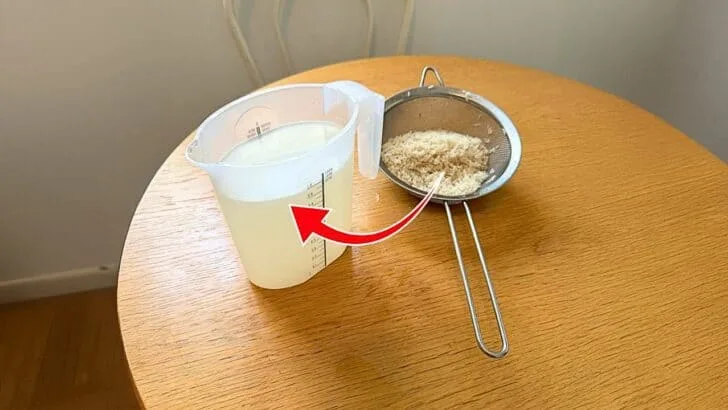
- Rinse it in 2–3 cups of water. Swirl it around for 30 seconds until the water turns cloudy.
- Strain out the rice. Keep the water.
- Let it cool if needed, then water your plants with it.
That’s it. No rocket science. Use it within 24 hours or things get weird fast.
Option 2: The Fermented “Science Project” Version
- Start with the same cloudy rinse water as above.
- Pour it into a jar or container with a loose-fitting lid (don’t seal it tight or you’re asking for pressure and regret).
- Let it sit at room temperature for 2 to 3 days.
- Check once a day. It should start to smell slightly sour, like yogurt or defeat. That means it’s ready.
- Dilute it before using: about 1 part fermented rice water to 4 parts regular water.
Now go water something. Avoid leaves and just stick to the soil. Your plants will think they’ve hit the jackpot. Your nose may not agree.
When It Works (And When It’s a Hot Mess)
Rice water can be a low-key game changer — but only if you use it like a reasonable person. This is not a “more is better” situation. It’s a “some is cute, too much is chaos” kind of deal.
✅ It works well for:
- Houseplants with sad, compacted soil
- Outdoor plants in poor or overworked beds
- Seedlings that need a gentle start (diluted only!)
- Tomatoes, peppers, herbs, and leafy greens
- Any gardener who whispers “grow, you little goblin” while watering
❌ It doesn’t work — or backfires — when you:
- Use it daily like a magic potion (don’t)
- Pour it over the leaves and create a mildew spa
- Let it sit in the soil and turn to sludge
- Forget to dilute the fermented stuff and nuke your roots with funk
- Use it on succulents, cacti, or anything that hates moisture drama
In short, it’s a light snack, not a full buffet. Use it once every 2–4 weeks at most. And if your plants start looking confused, give them plain water for a bit and let them rethink their life choices.
Give It a Go — Your Plants Might Love It
Look, you don’t have to become the neighborhood rice water evangelist. You don’t need a fermentation station next to your tomatoes or a spreadsheet tracking microbial populations. But if you’ve got some rice in the pantry and a few sad plants giving you the side-eye, it’s worth trying once.
I’ve used it on my peppers. I’ve used it on my indoor ferns. I’ve even used it on a half-dead basil plant that was clearly done with life. And guess what? Most of them perked up like they’d just gotten a motivational speech and a multivitamin.
Is it a miracle? No. But it’s free, easy, and kind of fun. Worst case, your compost pile gets an extra drink. Best case, you unlock a secret growth boost your plants didn’t know they needed.
And yes, it smells weird. But so do most of the best things in gardening.


Daniel has been a plant enthusiast for over 20 years. He owns hundreds of houseplants and prepares for the chili growing seasons yearly with great anticipation. His favorite plants are plant species in the Araceae family, such as Monstera, Philodendron, and Anthurium. He also loves gardening and is growing hot peppers, tomatoes, and many more vegetables.