

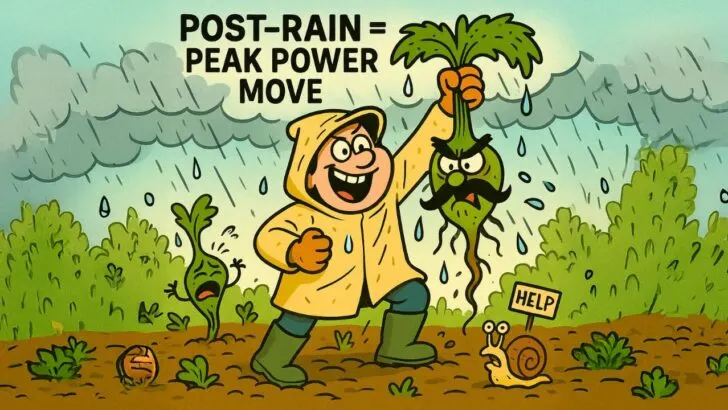
There’s something magical about the garden right after a rain. Everything smells better, the soil feels alive, and the plants look like they just came back from a spa weekend. But here’s the thing — that soggy, peaceful moment is not just good for admiring. It’s prime time for getting a lot of jobs done faster, easier, and with way less effort.
Moist soil pulls apart like cake. Weeds slide out without a fight. Roots settle in with zero drama. And if you know what to tackle when the ground is soft, you’ll save your knees, your back, and at least an hour of wrestling with dry dirt later in the week.
This isn’t about rushing outside the second the rain stops. It’s about knowing which jobs are better with a little mud on your boots and making the most of a window the weather just handed you. Let’s look at the garden chores that are way easier — and a lot more satisfying — once the skies have done their part.
🌧️ Key Takeaways
- 🌱 Pull weeds after rain when roots slide out clean with little effort.
- 🪴 Transplanting is smoother in moist soil with less shock to the roots.
- 🔪 Edging beds is easier and cleaner while the ground is soft.
- 🌼 Divide perennials post-rain for minimal resistance and happy regrowth.
- 🧽 Clean tools and pots while dirt is damp and scrub-free.
- 🌿 Add compost when the soil is open and ready to absorb it.
- 🌊 Check drainage issues while puddles are still visible.
- 🌸 Plant new additions while soil is loose and welcoming.
- 🐌 Catch pests like slugs while they’re out in the open after rain.
- 🍂 Reshape mulch before it dries into crusty clumps.
- 📝 Take notes right after rain while the garden’s feedback is still fresh.
1. Pull Weeds While They’re Begging to Let Go
Right after a rain, weeds lose their grip on life. Their roots are loose, the soil’s soft, and suddenly that dandelion that’s been mocking you for weeks comes out with a gentle tug. No tools, no digging, no muttered curses — just clean removals and a satisfying sense of victory.
It’s also the best time to get the whole root, especially for deep-rooted troublemakers like dock, thistle, or crabgrass. Dry soil tends to snap the top and leave the root behind. Wet soil practically hands it over.
2. Transplant Without the Tantrums
Transplanting in dry soil is like trying to rehome a plant during an earthquake. The roots get stressed, the soil falls apart, and everything acts offended for days. But after a rain? The ground is soft, forgiving, and perfect for a smooth transition.
Whether you’re moving a perennial, tucking in new seedlings, or finally planting that poor nursery pot you forgot on the porch, moist soil helps roots settle fast and bounce back quicker. No transplant shock. No dramatic wilting. Just a clean move and a fresh start.
3. Edge Beds While the Soil Still Listens
Trying to edge a garden bed in dry soil is a fast way to ruin your mood and your shovel. But after a rain? The soil slices like cake. You can get clean lines, sharp edges, and that tidy, magazine-cover look in half the time with a lot less sweat involved.
It’s also the perfect moment to reshape beds that have gotten a little sloppy, widen paths, or finally carve that curve you’ve been staring at for weeks. Wet soil gives you precision without the fight.
4. Divide Perennials Without a Fight
When the soil is wet, dividing perennials feels like slicing a good cake. The clumps lift easier, roots separate cleaner, and your shovel doesn’t bounce off the ground like you’re mining for treasure. If you’ve got daylilies, hostas, or iris looking overcrowded, post-rain is your golden window.
This also gives your transplants a better shot at settling in. The cooler, moist conditions reduce stress and keep everything upright instead of flopping over like it’s auditioning for garden tragedy of the year.
5. Clean Pots and Garden Tools the Easy Way
You could scrub dried soil off pots and tools for an hour. Or you could wait until after a rain, when everything is already soft, loose, and practically cleaning itself. Post-rain cleanup is faster, smoother, and far less annoying than dealing with crusty messes in the middle of July.
It’s also the best time to sanitize tools if you’ve been battling disease or just want to start the second half of the season fresh. Your hands and wrists will thank you, and your garden won’t be silently judging your rusty trowel anymore.
6. Add Compost Without Wrestling with Dry Soil
Trying to mix compost into dry, cracked soil is like massaging lotion into a brick. But after a rain, the soil opens up and welcomes it in like a long-lost friend. You can top-dress garden beds or work compost gently into the first few inches of damp soil — no tilling, no battling clumps, no waiting for the hose to catch up.
This is also a great way to give your plants a boost mid-season without stressing them out. The nutrients work their way down naturally as the soil stays soft and moist, especially if you follow up with mulch.
7. Spot and Fix Drainage Problems Before They Get Ugly
You don’t really know where the trouble spots are until it rains. That corner that looks fine when dry might be turning into a swamp. A bed you thought was level is suddenly holding water like a bathtub. Post-rain is the best time to walk your garden and see where the drainage is helping — or hurting — your plants.
Catch it now, and you can redirect water, raise beds, or add organic matter before roots start rotting and mosquitoes throw a pool party. It’s like running a garden diagnostic without lifting a shovel. Yet.
8. Tuck in New Plants While the Soil’s Playing Nice
If you’ve been holding off on planting that flat of marigolds or a few extra herbs, this is your moment. Post-rain soil is soft, cooperative, and makes planting feel like scooping into a perfectly baked brownie. You barely need a trowel — just a quick scoop, a gentle pat-down, and you’re done.
It’s especially helpful if your hands aren’t as strong as they used to be or if your soil usually turns to concrete in the summer heat. After a rain, it all works in your favor.
9. Catch Slugs and Other Pests While They’re Still Out in the Open
Rain doesn’t just wake up your plants. It also calls out the creepy crawlies. Slugs, snails, and other garden freeloaders come out in full force during and right after wet weather. The good news? This is the perfect time to catch them red-handed — or slimy-footed — before they sneak back into hiding.
They’re slower, more visible, and often gathered in groups after a storm. A quick walk around with a flashlight or early morning mug of coffee can help you stop the damage before it starts. No pesticides needed, just timing and a bucket with a lid.
10. Reshape Mulch Before It Dries Into Clumps
Once mulch gets baked dry, it’s like trying to rake gravel. But right after a rain? It’s soft, easy to move, and actually stays where you put it. That makes this the best time to fix bald spots, even out thick layers, or pull mulch back from stems that are starting to rot.
It’s also the moment to top off thin areas before weeds start thinking they’ve got a chance. Damp mulch hugs the soil better and locks in moisture longer — it’s basically mulch in its most cooperative mood.
11. Take Garden Notes While Everything’s Fresh
After a rain, your garden is basically showing you all its secrets. You’ll spot which areas flood, which plants perked up the most, where mulch held and where it didn’t, and whether your raised beds are doing their job. This is the time to jot things down — not next week when it’s all a blur.
Keeping notes doesn’t have to be fancy. Just grab a notebook or use your phone and scribble what worked, what didn’t, and what you want to tweak. It’s the easiest way to get better every season without repeating last year’s headaches.
It’s Not Just Rain. It’s Free Labor.
Most folks run inside when it rains, but the smart ones? They wait for that sweet spot right after, when the soil’s soft, the weeds are trembling, and the whole garden’s basically saying, “Alright, let’s get some things done.”
I used to see rainy days as lost gardening time. Now, I know they’re just setting me up for easy wins. I’ve pulled weeds faster, planted smoother, and even fixed drainage issues just because I caught them at the right time — not because I worked harder.
Even if you only pick one or two of these to try, I promise you’ll feel the difference. And if nothing else, go take a walk around your garden while it’s still dripping and squishy. It’s one of the best times to fall back in love with the whole mess.


Daniel has been a plant enthusiast for over 20 years. He owns hundreds of houseplants and prepares for the chili growing seasons yearly with great anticipation. His favorite plants are plant species in the Araceae family, such as Monstera, Philodendron, and Anthurium. He also loves gardening and is growing hot peppers, tomatoes, and many more vegetables.