

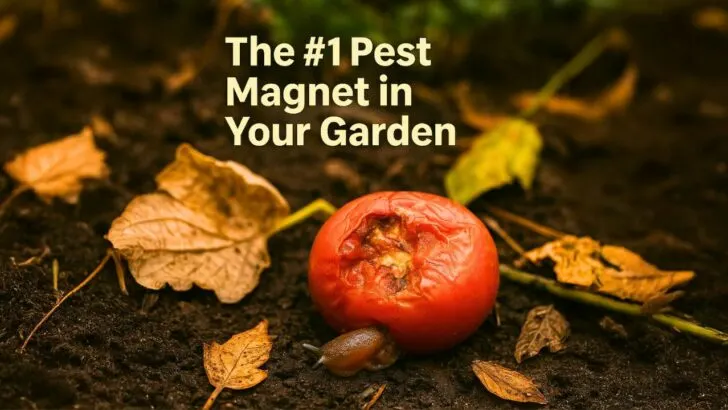
It starts small. A yellowed leaf here, a soft tomato there. You tell yourself it’s fine. Nature will handle it. It’s “organic.” It’ll break down, right?
So you leave it. The wilted leaves. The half-rotten squash. The tomato that split and dropped in last night’s rain. A few days pass. More leaves join the pile. And somewhere nearby, the pests start showing up like they got a group text.
Suddenly, you’ve got slugs. Aphids. Earwigs. Maybe even a squirrel with a hobby. Your healthy plants? Looking less healthy by the hour.
And it all goes back to one habit most gardeners don’t even realize is causing the problem.
🌿 Key Takeaways
- 🪰 Leaving dead plant matter in the garden attracts pests like slugs, aphids, and fruit flies.
- 🦠 Rotting leaves and fruit spread disease — especially fungal infections and bacterial rot.
- 🔍 Do regular quick scans to remove wilted leaves, broken stems, and fallen fruit before they become a problem.
- 🪤 Trap crops like nasturtiums and radishes can lure pests away from more valuable plants.
- 🚷 Create a “clean zone” around your plants by clearing 6–12 inches of space near the base for better airflow and fewer hiding spots.
- 🧽 Small habits, like a weekly tidy-up, help prevent bigger problems — without requiring hours of work.
🍂 The Habit? Leaving Dead Plant Matter Around
We all do it. A leaf wilts, a flower droops, a tomato gets pecked by a bird — and it stays there. Maybe it’s out of sight. Maybe you’re saving it for compost. Maybe you just didn’t feel like hauling it to the bin today.
But here’s what that dead plant matter actually does: it acts like a neon sign for garden pests. To us, it looks like decay. To slugs, aphids, earwigs, and ants? It’s an invitation. It’s soft. It’s warm. It’s easy to chew. And best of all, no gardener seems to care that it’s there.
Rotting leaves and stems hold moisture, which creates the perfect microclimate for bugs to hide, feed, and multiply. Some even lay eggs inside the debris, setting you up for a bigger infestation in just a few weeks. And if you’ve got fruit sitting on the soil? Double trouble. Fruit flies, ants, hornets, and rodents get involved too.
🍁 Quick Cleanup Tip: Get into the habit of doing a 3-minute scan every time you water. Toss wilted leaves, fallen petals, and overripe fruit into your compost pile or bin immediately. It’s like brushing your teeth — unexciting, but it prevents all kinds of expensive problems later.
The pests aren’t showing up randomly. You’re feeding them — without realizing it. And once they’ve moved in, they rarely leave on their own.
🦠 It’s Not Just Bugs. It’s Disease Too.
That mushy tomato you left under the vine? It’s not just feeding slugs. It’s cultivating fungal spores. The wilted bean leaves sitting in the mulch? Perfect hiding spot for powdery mildew. And the soft, sunken zucchini you meant to deal with tomorrow? It’s already leaking bacteria into your soil.
Rotting plant matter is like a petri dish. It collects moisture. It harbors spores. And once disease sets in, it doesn’t stay isolated. Wind, rain, and even your own gloves can carry those pathogens right onto your healthy plants.
The worst part? You often don’t see the results until weeks later — when your squash starts yellowing, or your roses get mysterious spots. By then, the damage is done and the cleanup job just got a whole lot harder.
🧤 Sanitize As You Go: If you’re removing infected leaves or fruit, don’t just toss them in your compost. Bag them up and remove them completely. And wipe down your tools between plants — even a quick rinse can prevent accidental spread.
In gardens, as in life, ignoring a mess doesn’t make it go away. It usually just invites more problems. And more bugs.
🧹 What to Remove — And What Can Stay
This isn’t about keeping your garden spotless. A few fallen leaves won’t summon the apocalypse. But knowing what kind of debris to watch for? That’s the difference between a healthy patch and a pest motel.
Here’s what you should remove:
- 🍅 Overripe or damaged fruit — especially anything that’s soft, split, or insect-bitten.
- 🥀 Wilted or diseased leaves — these trap moisture and become fungal playgrounds.
- 🌿 Broken stems and cuttings — especially from tomatoes, squash, and beans.
- 🌾 Matted mulch or plant matter after rain — it harbors slugs and mold.
And here’s what you can usually leave alone:
- 🍂 Dry, crunchy leaves — great for mulch if they’re healthy and pest-free.
- 🌱 Spent flower heads — many attract pollinators or birds if not diseased.
- 🌾 Cover crops or groundcover — these protect the soil and suppress weeds.
📋 Weekly Habit Tip: Set one day a week (even just 10 minutes) for “garden tidy time.” Look under plants, clear out mushy spots, and give your healthy crops room to breathe. It’s simple, satisfying, and keeps bugs guessing.
Gardens don’t need to be flawless — they just need to be balanced. Think of cleanup as quiet prevention. Less drama. More veggies.
🌼 Use Trap Crops to Outsmart Pests
If pests are going to show up anyway, you might as well give them a target you don’t care about. That’s the idea behind trap crops — plants that pests prefer, planted on purpose to lure them away from your prized tomatoes, squash, or greens.
For example, nasturtiums draw aphids like magnets. Radishes attract flea beetles away from your leafy greens. Blue Hubbard squash can keep squash bugs off your zucchinis. The trap crops take the hit, and your main crops stay cleaner, stronger, and more productive.
🪤 Trap Crop Tip: Place trap crops around the perimeter of your garden or in small, isolated patches nearby. Once infested, you can remove and dispose of them — taking a whole generation of pests with them. It’s one of the sneakiest (and most satisfying) organic control methods out there.
Think of them as decoys. You’re not surrendering — you’re playing smarter. And in a pest-heavy season, that can make all the difference.
🚷 Create a “Clean Zone” Around Key Plants
If there’s one thing pests and diseases love, it’s clutter. A tightly packed bed with overlapping leaves, fallen debris, and soggy mulch is a five-star resort for bugs. That’s where the “clean zone” comes in — a simple buffer area around your most vulnerable plants that stays clear and dry.
Think of it as personal space for your tomatoes, peppers, squash, or herbs. By keeping a 6–12 inch ring around the base of each plant free of dead leaves, weeds, and spent mulch, you reduce hiding spots for pests and block the conditions fungi need to spread. Add a light layer of dry straw or wood chips after clearing, and you’ve got breathable, protective ground cover without the baggage.
🧽 Clean Zone Hack: Keep a little handheld rake or claw tool right by your hose or watering can. Every time you water, use it to gently pull mulch and mess away from the base of one or two plants. It takes seconds — and adds up to major garden hygiene.
This isn’t about being obsessive. It’s about building in tiny habits that make pests uncomfortable and keep your plants thriving. Clean space. Clear air. Happy roots. It works.
💚 A Little Cleanup Goes a Long Way
I get it. Sometimes you just want to water the plants and call it a day. Who has time to fuss over a few soggy leaves or a split tomato hiding under the vine?
But I’ve learned — usually the hard way — that it’s those tiny things that make the biggest difference. Just a few minutes of cleanup now can save you from a mess of pests, mystery diseases, and a garden that feels like it’s fighting back.
You don’t need to be perfect. Just aware. Give your plants some breathing room. Pay attention to what’s decaying and what’s thriving. Your garden will thank you — with stronger roots, fewer infestations, and more good days ahead.
It’s not about doing more. It’s about doing the right things — one leaf at a time.


Daniel has been a plant enthusiast for over 20 years. He owns hundreds of houseplants and prepares for the chili growing seasons yearly with great anticipation. His favorite plants are plant species in the Araceae family, such as Monstera, Philodendron, and Anthurium. He also loves gardening and is growing hot peppers, tomatoes, and many more vegetables.