

Summer’s still here. The sun is high, the tomatoes are showing off, and the weeds are staging a coup. But your plants can feel the shift coming. The days are getting shorter. The nights are cooling down. Growth slows, flowers stall, and the whole garden starts acting like it’s time to pack up.
But not so fast. If you know what signals your plants are responding to — light, warmth, moisture — you can nudge them into staying in summer mode just a little longer. No greenhouse required. Just a few smart tricks and a bit of timing.
This list is all about stretching the season. Giving your basil another week. Getting one more flush of zinnias. Keeping the momentum going while everyone else is pulling out spent vines and calling it quits.
🌿 Key Takeaways
- ☀️ Late summer doesn’t mean slowdown — it just means you need to adjust your strategy.
- 🪴 Row covers, reflective surfaces, and warm walls all help trick plants into thinking it’s still July.
- ✂️ Prune, harvest, and refresh to keep energy flowing and new growth coming.
- 🌶️ Focus on heat lovers like basil, peppers, and tomatoes — they’re most responsive to these tricks.
- ⏳ Every extra week matters — more fruit, more blooms, more reasons to stay out in the garden.
1. Use Row Covers Before You Think You Need Them
Most people pull out row covers when it’s already cold. That’s too late. If you want your plants to keep acting like it’s midsummer, start early. Lightweight covers trap warmth, cut wind, and hold just enough moisture to convince your plants that nothing’s changing.
Even on warm days, a floating row cover can bump the soil temperature and shield your crops from those sneaky cool nights that slow everything down. Tomatoes, peppers, basil, beans — they all respond to the extra protection, even if there’s no frost in sight.
And if you’re thinking it sounds like overkill? Try covering just one bed and leaving another bare. Come back in two weeks and see which one still looks alive.
🛠️ Bonus Tips for Smarter Row Cover Use
- Use hoops or stakes to keep the fabric off the leaves. Direct contact can cause heat stress or damage delicate stems.
- Anchor with bricks or boards on the sides. Flapping fabric in the wind = shredded plants and wasted effort.
- Pull covers off in the morning if temps get too high. Let the garden breathe, then recover in the late afternoon.
- Don’t use plastic sheets unless vented — condensation will cook your plants faster than the sun.
2. Reflect Light Back Into the Garden
Light fades faster than you think. By late July, the days are already shorter, and your plants notice. Less sun means slower growth, fewer blooms, and one big question from your tomatoes: is it time to quit?
You can fake it. Reflective mulch, aluminum foil, or even white-painted boards can bounce sunlight back onto your plants. It’s especially helpful for crops that need all the heat and light they can get, like peppers and eggplants.
This trick works best in raised beds, tight spaces, or anywhere tall plants are casting shade. You’re not adding new sun. You’re just making better use of the light you’ve still got.
🌞 Quick Reflective Boosts That Actually Work
- Place aluminum foil flat on the soil between rows to reflect light back upward
- Use old white blinds or foam boards as mini backdrops behind sun-loving plants
- Paint old bricks white and tuck them near heat-loving herbs and veggies
- Avoid shiny black plastic in late summer — it traps heat but reflects nothing
3. Water in the Morning, Not the Evening
It might feel right to water at sunset, when everything’s cooled off and you finally have time. But if you want your plants to keep growing like it’s still high summer, shift that routine to the morning.
Morning water gives roots what they need while the sun is rising. It sets the pace for photosynthesis, keeps plants hydrated through the heat, and reduces the stress signals that tell them to slow down. Evening water, on the other hand, encourages soggy soil, sluggish roots, and the kind of mildew problems that end a growing season early.
Plants don’t just want water. They want timing. And morning timing keeps them locked into growth mode.
💧 Watering Tips That Keep Growth Going
- Water deeply, not frequently — you want strong roots, not shallow sippers
- Use a slow drip or soaker hose to avoid shocking warm soil with cold water
- Water at the base, not over the top — wet leaves in the morning dry fast, wet leaves at night stay wet and invite trouble
- Try warm water for containers — it wakes the roots up instead of chilling them
4. Feed With a High-Potassium Boost
If you want your plants to keep blooming, fruiting, and pushing out new growth, potassium is what keeps that engine running. Nitrogen gets all the attention early in the season, but now is the time to shift gears.
High-potassium fertilizers help plants stay productive and resilient. They support flower and fruit development, strengthen cell walls, and help plants handle late-summer heat without shutting down. You’re not forcing growth. You’re helping them finish strong.
Look for something with low nitrogen and higher potassium and phosphorus. Liquid feeds work fastest. Dry amendments hold steady. Either way, think of it as your garden’s second wind.
🌿 Potassium-Rich Options That Work Now
- Banana peel tea — soak peels in water for 24 hours and pour at the base
- Wood ash — great source of potassium, but only in small amounts and never near acid-loving plants
- Tomato feed — most are formulated with higher potassium to boost ripening
- Seaweed extract — gentle, fast-absorbing, and packed with micronutrients
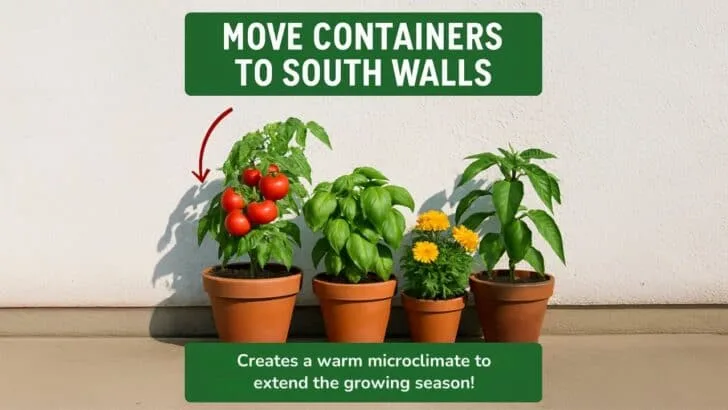
5. Move Containers to South Walls
If you’re growing in containers, you’ve got one of the best tools for season extension already. You can move them. And where you move them matters more than you think.
South-facing walls collect heat all day and radiate it back out at night. That warmth keeps roots active longer, encourages more flowering, and protects tender plants from early slowdown. It creates a pocket of summer, even when the rest of the yard starts cooling off.
This trick works especially well for basil, peppers, tomatoes, eggplants, and herbs that panic at the first chill. Keep them close to the house, soak up the heat, and stretch their season without any extra gear.
☀️ Heat Trap Tricks for Potted Plants
- Use light-colored walls to reflect both light and heat
- Group pots together to create a warmer microclimate
- Raise pots slightly with bricks or tiles to prevent heat loss into cold concrete
- Add a brick or rock inside large containers to hold warmth longer overnight
6. Prune Back Overgrowth to Let in More Light
By late July, some parts of the garden are just plain overgrown. Tomatoes are tangled. Vines are creeping across everything. Shady corners are getting darker by the day. And your plants are starting to act tired.
What they’re really missing is sunlight. As the days shorten, every extra hour of direct light counts. Pruning back crowding foliage gives late bloomers and heat lovers more of what they need to keep going. It’s not about forcing anything. It’s about making the most of what’s left.
Cut back what’s blocking the sun. Thin out the dense parts. Let light reach the soil. You’ll be shocked how fast things perk up once they’re not sitting in the shade pretending it’s fall already.
✂️ Where to Cut for Maximum Light
- Top off tomato vines that have outgrown their space
- Remove lower squash leaves that are yellowing and blocking airflow
- Snip faded flowers and seed heads that are hogging energy and casting shade
- Clear around root zones to expose soil and boost warmth at the base
7. Fake a Heatwave With Cloches
Just because the weather is cooling doesn’t mean your plants are ready to stop. A simple cloche can trick them into thinking the heat never left. It traps warmth during the day and holds onto it just long enough to keep things growing overnight.
You don’t need anything fancy. A cloche can be a mason jar, a milk jug with the bottom cut off, or an upside-down salad container from the grocery store. Place it over heat-loving crops in the afternoon and remove it in the morning. It’s a small move that makes a big difference.
This is especially useful for young basil, peppers that are still flowering, or tomatoes trying to finish one last cluster. With a little cover, they push through like summer never left.
🔥 DIY Cloche Options That Actually Work
- Plastic milk jugs with the caps removed for airflow
- Glass mason jars for individual seedlings or herbs
- Clear storage bins flipped upside down for larger plants
- Old cake domes or salad containers to reuse and repurpose without buying anything
8. Harvest Aggressively
If your plants are slowing down, one of the best ways to snap them out of it is to start picking. A lot. Not just what’s fully ripe, but anything close. Because when you harvest, the plant thinks it still has work to do.
Holding onto fruits and flowers signals the plant to wrap it up. But when you clear those off, the message changes. Time to make more. Time to keep going. You’re not stressing the plant. You’re giving it a reason to push out one more round.
This works especially well for beans, cucumbers, tomatoes, peppers, and cut flowers. Even herbs like basil respond by branching out and doubling down.
✂️ What to Pick Early and Why
- Tomatoes: Pick when just starting to blush and let them ripen indoors
- Beans: The smaller the harvest, the faster the next batch comes in
- Basil: Cut whole stems above a leaf node to encourage side shoots
- Zinnias and cosmos: Harvest every few days to trigger new blooms
9. Use Warm-Colored Tarps or Backdrops
Color matters more than people think. Plants respond to temperature, yes, but they also respond to light and how it’s reflected around them. Using red, orange, or even yellow surfaces can create a warmer microclimate and keep plants pushing out new growth.
Throw a red tarp behind your peppers. Set up an orange plastic backdrop near your tomatoes. Even stacking clay pots nearby adds warmth and color that signals it’s still grow time. It might look a little strange, but the plants don’t care. They’re just soaking up the vibe.
This trick shines in small spaces and container setups. It’s a little like mood lighting for your garden. Just the kind of trick that gets results without lifting a shovel.
🎨 How to Warm Things Up With Color
- Red plastic mulch under tomatoes has been shown to boost yields
- Orange tarps reflect heat and help with ripening in cooler corners
- Bright bricks or tiles near plants help radiate heat overnight
- Painted fence panels can redirect both warmth and extra light back into the garden
10. Swap Out Spent Annuals With Late-Blooming Replacements
Some plants are done. You know it, they know it, and the only thing left to do is make space for something that still wants to grow. Late July is the perfect time to rip out the tired stuff and plug in something fresh.
Think fast-growing flowers, leafy greens, or herbs that don’t mind shorter days. Calendula, nasturtiums, arugula, and Swiss chard are all solid replacements. They pick up quick, look great in a half-empty bed, and make you feel like the season’s still in full swing.
This trick works both visually and mentally. It gives your garden a second wind and gives you something to look forward to while everyone else is shutting things down.
🌼 Great Late-Season Replacements
- Calendula: Cold-hardy and blooms quickly in cooler weather
- Arugula: Grows in a flash and tastes best as the temps drop
- Swiss chard: Handles heat, cold, and everything in between
- Nasturtiums: Edible, cheerful, and totally unfazed by late planting
Summer’s Not Over Unless You Say It Is
Late July is when most people start pulling back. They assume the garden is winding down. But if you’re still paying attention, still planting, still making small moves — you can keep the momentum going.
Plants don’t follow the calendar. They follow light, warmth, and rhythm. And you’re the one setting that rhythm. Stretch the season. Trick the system. Squeeze every last bloom, leaf, and tomato out of it.
Because summer doesn’t end all at once. And with a few smart moves, your garden won’t either.


Daniel has been a plant enthusiast for over 20 years. He owns hundreds of houseplants and prepares for the chili growing seasons yearly with great anticipation. His favorite plants are plant species in the Araceae family, such as Monstera, Philodendron, and Anthurium. He also loves gardening and is growing hot peppers, tomatoes, and many more vegetables.