

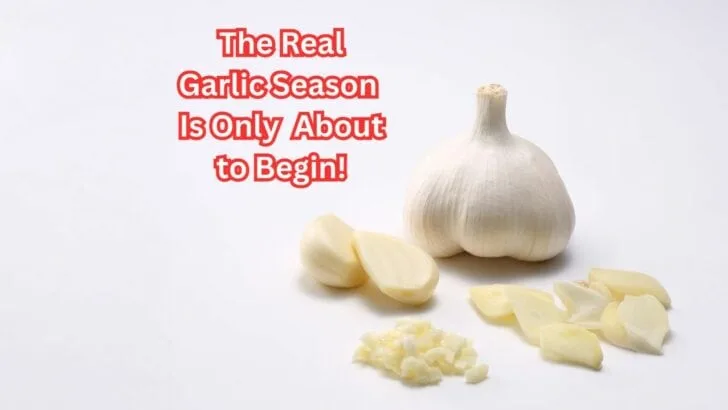
Most people think garlic season starts in spring. They’re wrong.
They’ll buy a bulb from the store, break it up, stick it in the ground, and wonder why the harvest is small, bland, or never happens at all. It’s not their fault. Garden centers don’t exactly shout about this.
But the best garlic? The kind that stores well, peels cleanly, and makes your kitchen smell like it knows what it’s doing? That garlic starts now.
Fall is garlic season. And if you miss the window, you miss the magic. Here’s why the cold matters, when to plant, and how to do it right the first time.
Why Fall Is the Right Time
Garlic is not a summer crop pretending to be something else. It’s a cold-season player. It needs the chill. It actually wants it.
What garlic does over winter is subtle but powerful. When you plant it in fall, the roots grow just enough to anchor in. Then winter hits, and the plant sleeps. That cold nap triggers something called vernalization — a biological reset button. Without it, your garlic won’t split into full cloves. It just becomes one fat lump pretending to be a bulb.
Spring-planted garlic misses this entirely. By the time it goes in, the clock is off. It rushes, struggles, or gives up early. You might get something, but it won’t be the kind of garlic you brag about.
Fall garlic plays the long game. It starts strong, rests, then explodes into growth the second spring arrives. Bigger bulbs. Better flavor. Lower maintenance. All because you planted it before the cold.
❄️ Why Garlic Loves the Cold
- Fall planting triggers root growth before the freeze.
- Winter dormancy activates vernalization so cloves can form properly.
- Spring garlic skips these steps and usually underperforms.
When Exactly to Plant
Too early, and the garlic might sprout above ground before winter hits. Too late, and it won’t have time to root. Garlic needs a sweet spot. And it’s probably coming up fast in your area.
The rule of thumb? Plant garlic about two to four weeks before your expected first frost. That gives it time to send out roots without wasting energy on green shoots that will just get frostbitten.
If you’re not sure when that is, check your local frost date using your ZIP code. Once you know the date, grab a calendar and count backwards. If you’re in colder zones, that might mean planting by mid-September. In milder areas, you’ve got a little more wiggle room into October or even November.
But don’t guess. Timing matters more than you think. Plant it once, plant it right, and then let nature do the rest.
📅 Garlic Timing Tips
- Plant 2 to 4 weeks before your first frost date for best results.
- Colder zones should plant earlier, often by mid to late September.
- Use a frost date tool to get the timing right for your location.
Hardneck vs. Softneck
All garlic is not created equal. Before you even think about planting, you need to choose a type. And that choice depends on where you live and what you want out of the harvest.
Hardneck garlic is the bold one. It has fewer cloves, but they’re big and packed with flavor. It also grows a flowering stalk called a scape, which you can harvest and eat in early summer. It handles cold winters like a pro, making it perfect for northern climates.
Softneck garlic is the storage champ. It has more cloves per bulb, doesn’t send up a scape, and stores for months. It likes warmer climates and milder winters. It’s also the type you’ll usually see braided in pretty kitchen bundles.
If your winters are cold and snowy, go with hardneck. If your winters are mild or unpredictable, softneck might be the safer bet. Or try both and see which one thrives in your yard.
🧄 Garlic Types at a Glance
- 🧊 Hardneck: Cold-hardy, fewer cloves, stronger flavor, produces scapes
- 🌞 Softneck: Heat-tolerant, more cloves, stores longer, no scapes
- 🧪 Try both: You’ll quickly see which one loves your soil more
How to Plant Garlic the Right Way
This is where most people mess it up. They peel the cloves. They plant them sideways. They skip the mulch. And then they wonder why the bulbs are puny in July.
Start with seed garlic, not supermarket garlic. Break apart the bulb into individual cloves, but don’t remove the skins. Pick the biggest cloves for planting and save the smaller ones for the kitchen. Bigger cloves make bigger bulbs.
Plant each clove with the pointy end facing up. Two inches deep is plenty. Space them four to six inches apart in rows. Garlic doesn’t like being crowded. It wants room to stretch over winter and explode in spring.
After planting, cover the bed with a thick layer of mulch. Straw, shredded leaves, or even dry grass clippings work. The mulch keeps the soil stable, insulates the cloves, and slows down early growth you don’t want yet.
Then walk away. Garlic doesn’t need babysitting. It just needs a cold winter and a little patience.
🧤 Garlic Planting 101
- Break bulbs into cloves and keep the skins on
- Plant pointy side up, about 2 inches deep
- Space 4 to 6 inches apart so each bulb has room
- Mulch generously to protect against frost and weeds
What Happens Over Winter
Once the garlic is in the ground, it gets quiet. Nothing dramatic. No instant results. Just a bed full of buried promise.
Below the mulch, the cloves settle in. Roots stretch out slowly while the soil is still warm. Then the cold comes. The surface freezes, the air dries out, and the top of your bed looks like nothing is happening at all.
But the garlic knows better. It’s not dead. It’s just waiting.
Winter triggers everything. The cold signals the cloves to divide. The roots dig deeper. The whole plant sets itself up for the spring sprint. And when that sprint begins, you won’t believe how fast it grows.
🌬️ Winter Isn’t Dormant
The garlic roots keep growing even when the surface freezes.
The cold triggers bulb development through a process called vernalization.
Spring garlic starts fast because the real work happened underground.
Don’t Use Grocery Store Garlic
Yes, it’s tempting. You’re already at the store. Garlic is cheap. And it looks like the same stuff, right?
Not quite. Most supermarket garlic is treated to prevent sprouting. That’s the opposite of what you want in the garden. It may also be grown for looks, not resilience. Or shipped from thousands of miles away and completely wrong for your climate.
And then there’s the mystery of what variety you’re even planting. Hardneck? Softneck? No idea. You’re just hoping it grows. Sometimes it does. Sometimes it rots. Sometimes you get one sad little lump that makes you give up on garlic forever.
Seed garlic is the way to go. You’ll get clean, untreated bulbs. You’ll know the variety. And you’ll know it was grown to survive in a real garden, not ride in a truck for three weeks. It costs a little more, but only once. After that, you can save your own.
🚫 Skip the Supermarket Garlic
- Store garlic may be treated to prevent sprouting
- You don’t know the variety or how it will handle your climate
- Seed garlic is fresher, stronger, and worth it
- You only need to buy it once if you save your best bulbs each year
Next Year’s Harvest Starts Now
You won’t see results tomorrow. You won’t see much of anything for a while. But that doesn’t mean nothing is happening.
Garlic rewards patience. You plant it once, walk away, and let time do the work. It asks for almost nothing. Just good soil, a little mulch, and the courage to plant when everyone else is quitting for the year.
And when summer rolls back around, you’ll pull those bulbs from the ground and remember this moment — the quiet decision to plant when it was cold, dark, and late in the season.
Next year’s garlic harvest starts now. Not in spring. Not in theory. Right now, while the ground is still soft and the window is still open.
🧄 Key Takeaways
- 📅 Plant garlic in fall, 2 to 4 weeks before your first frost
- 🧊 Cold triggers bulb formation and spring growth
- 🧄 Use seed garlic, not supermarket bulbs
- 🌱 Garlic needs little care, but rewards you big in summer
Garlic Season Is Quiet for a Reason
It doesn’t shout. It doesn’t bloom. It doesn’t ask for attention. But garlic season is one of the most important planting windows of the year.
It rewards the gardeners who keep going when everyone else packs it in. It pays back patience with flavor, size, and satisfaction that spring planting can’t touch. No chasing frost dates. No racing the heat. Just steady growth under the surface, right when you think the garden is done.
If you’ve never planted garlic before, this is your sign. Grab a few heads of seed garlic, get your hands in the soil, and tuck them in. You won’t see anything for a while. That’s the point.
The best things in the garden don’t always show up fast. But they always show up.
🌿 Key Takeaways
- 🧄 Fall is the real garlic season — not spring
- 📍 Plant 2 to 4 weeks before your first frost to give roots time to establish
- 🧊 Cold triggers proper bulb development through winter dormancy
- 🥶 Supermarket garlic may be treated and should be avoided
- 🌱 Garlic takes patience, but it delivers big when summer comes


Daniel has been a plant enthusiast for over 20 years. He owns hundreds of houseplants and prepares for the chili growing seasons yearly with great anticipation. His favorite plants are plant species in the Araceae family, such as Monstera, Philodendron, and Anthurium. He also loves gardening and is growing hot peppers, tomatoes, and many more vegetables.