

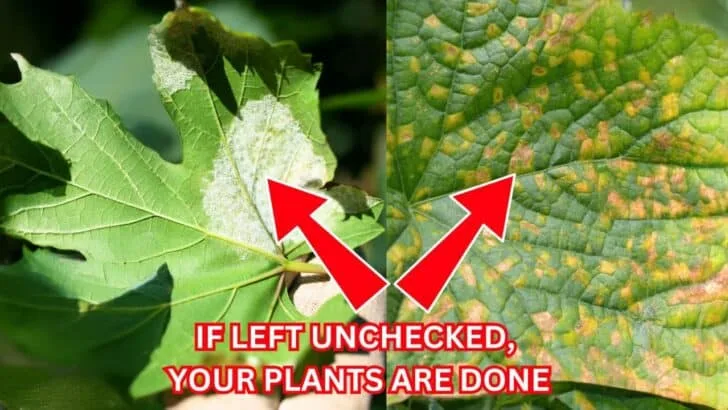
The garden still looks generous. Tomatoes are blushing on the vine, dahlias are throwing their best colors, and the air feels heavy with summer. It is the kind of scene that tricks you into thinking nothing could possibly go wrong.
But between the warm afternoons and the cooler nights, something else is at work. Invisible spores ride the breeze, landing quietly on leaves and stems. By the time you see the first spot, the first curl, or the first dusting of mildew, the damage may already be in motion.
This is the season when eight of the most persistent plant diseases make their move. Miss them now and they will not just spoil this year’s show, they will set the stage for next year’s problems too.
Why August is Peak Season for Plant Diseases
Late summer creates the perfect storm for garden diseases. Warm days keep plants growing, but cooler nights trigger condensation on leaves. This overnight moisture becomes the welcome mat for spores looking to settle in.
On top of that, late-summer rains or heavy evening watering can spike humidity levels around your plants. Damp foliage and still air make it easy for fungal and bacterial issues to spread quickly.
By this point in the season, plants are also tired. They have battled heat, pests, and nutrient loss for weeks, leaving them more vulnerable than ever. For many diseases, this is the exact moment they wait for.
- Warm days and cool nights create leaf condensation overnight.
- Humidity spikes from rain or evening watering encourage disease spread.
- Plants are stressed from heat, pests, and nutrient depletion.
- Air circulation often drops as plants grow thicker and denser.
Bonus Tip: Do an early morning garden check. Spotting discoloration or mold before the sun fully dries the leaves gives you a head start on stopping the spread.
1. Powdery Mildew

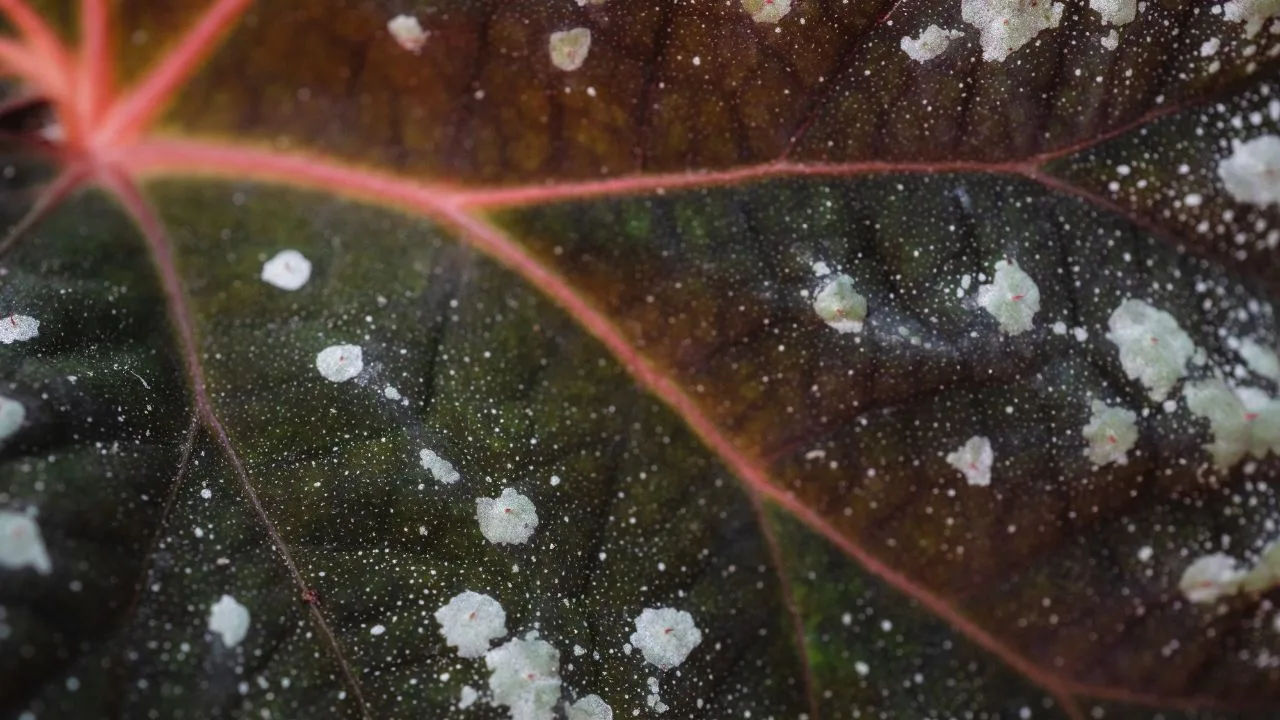
It starts as a faint white dust on leaves, the kind you might brush off without thinking twice. Within days, that dust thickens, coating stems, buds, and flowers like a layer of flour. The more it spreads, the more it starves your plants of light and energy.
Late summer gives powdery mildew the perfect stage. Warm days keep spores active while cooler nights create just enough moisture for them to cling and multiply. Stressed plants, already dealing with heat or pests, have little left to fight back.
While it rarely kills a plant outright, powdery mildew can ruin harvests, distort flowers, and leave perennials too weak to face winter. Catching it early and acting fast is the difference between a light dusting and a full takeover.
- ✂️ Remove and discard infected leaves immediately (do not compost).
- 💨 Improve air flow by spacing plants and trimming overcrowded growth.
- 💧 Water at the base in the morning to avoid wetting leaves overnight.
- 🧴 Try a simple spray of 1 tablespoon baking soda + 1 teaspoon liquid soap in 1 gallon of water once a week.
Pro Gardener Tip: Powdery mildew spores overwinter in plant debris. A thorough fall cleanup now means fewer problems next year.
2. Late Blight
This is the tomato and potato heartbreaker. It shows up as water soaked spots on leaves that turn brown and spread fast. Stems can blacken, and fruit develops greasy lesions that collapse in days.
Cool nights and wet foliage are its favorite conditions. Spores travel on wind and rain, so one sick plant can set off a chain reaction. Once established, it moves faster than most gardeners expect.
Early action is everything. Remove infected tissue the moment you see it and protect the remaining plants before the next wet spell. Waiting a week can mean losing the entire crop.
- ✂️ Prune out infected leaves and stems several inches into healthy tissue and bag the waste.
- 🌬️ Improve airflow by removing lower tomato leaves and staking or tying vines off the ground.
- 💧 Water at the base in the morning and keep foliage dry; skip overhead watering.
- 🧪 At first signs in your area, apply a protective fungicide labeled for late blight copper or phosphorous acid and reapply after rain.
Pro Gardener Tip: Do not compost infected plants. Pull and trash entire plants if more than a third is affected, then rotate nightshades out of that bed next season.
3. Downy Mildew
It starts as pale yellow patches on the upper side of leaves that many mistake for nutrient deficiency. Flip the leaf and you will see a fuzzy gray or purple growth underneath. That is the real giveaway.
Downy mildew thrives when nights are cool, days are mild, and humidity hangs in the air. It spreads through splashing water and wind blown spores, often after late summer rains or heavy dew.
If left unchecked, it will strip plants bare in weeks. Cucumbers, basil, and lettuce are especially at risk this time of year, and the damage can be sudden and severe.
- 🌿 Check the undersides of leaves every morning for fuzz or discoloration.
- ✂️ Remove affected leaves immediately and dispose of them in the trash.
- 💧 Water early in the day at soil level to keep foliage dry.
- 🧪 Use preventive sprays like copper or biological fungicides on susceptible crops when weather favors mildew.
Bonus Tip: Grow resistant varieties of cucumbers and basil next year, and avoid planting them in the same spot where mildew was present.
4. Leaf Spot Diseases

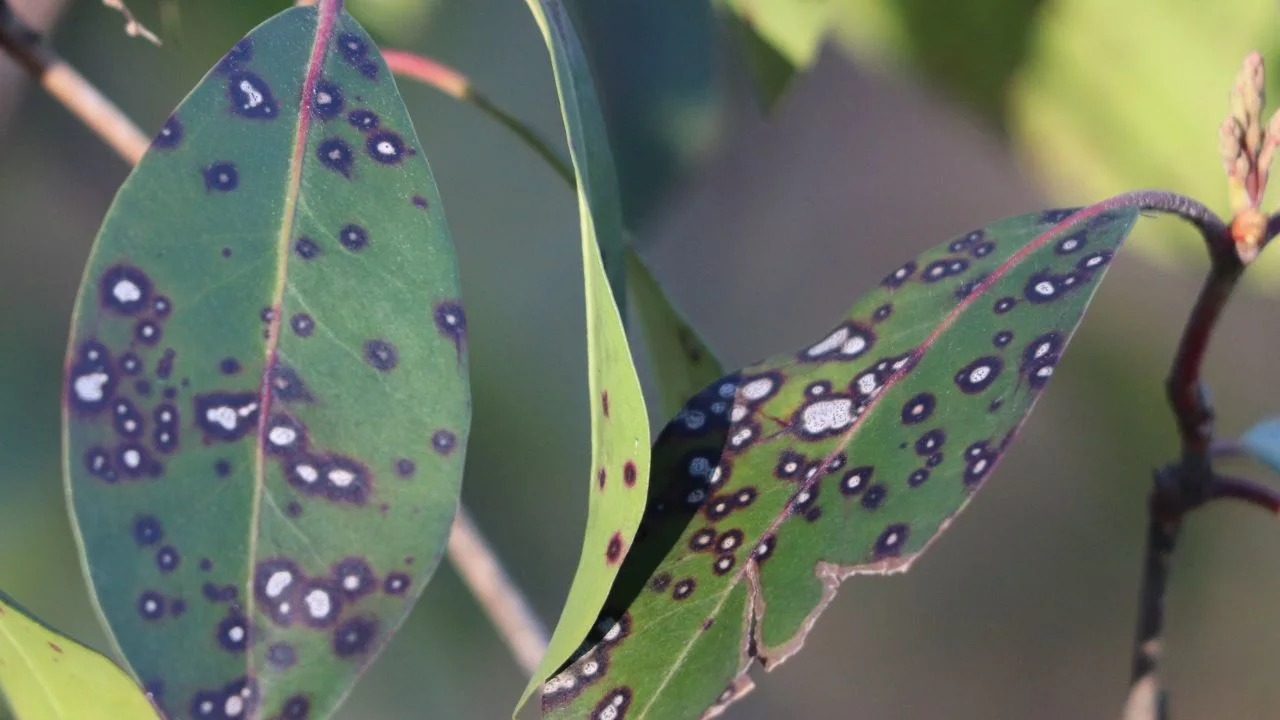
Small dark circles appear on leaves like someone tapped them with a fine-tipped marker. Over time, the centers of these spots may turn tan or fall out completely, leaving a lace-like pattern. This group includes culprits such as Septoria leaf spot and anthracnose.
Late summer is prime time for these infections because rain or overhead watering splashes spores from soil to foliage. Once they land, warm days and humid nights speed up the spread. Tomatoes, beans, and ornamental shrubs often show the first signs.
Leaf spots may look harmless at first, but they steadily weaken plants by reducing the leaf surface available for photosynthesis. If ignored now, they can defoliate a plant before the season ends.
- 🔍 Inspect lower leaves first, as these are often hit earliest.
- ✂️ Remove affected foliage and dispose of it away from the garden.
- 💧 Water at the base and mulch to prevent soil splash.
- 🌬️ Improve air circulation by spacing plants and thinning overcrowded stems.
Bonus Tip: Rotate crops each year to reduce disease carryover in the soil. A two to three year gap before replanting the same crop helps break the cycle.
5. Botrytis (Gray Mold)
It starts as a soft, fuzzy coating on petals, leaves, or fruit, looking almost like dust from an old attic. Within days, the affected tissue collapses into mush. Botrytis thrives in the still, damp air that late summer evenings often bring.
This fungus attacks flowers like dahlias and roses, as well as vegetables such as strawberries and lettuce. It loves blooms past their prime and wounded plant tissue. Once established, it can spread rapidly through an entire planting bed.
Late summer humidity, combined with cooler nights and heavy dew, creates perfect breeding conditions. If not handled quickly, Botrytis can wipe out late-season harvests and weaken perennials heading into winter.
- 🗑️ Remove and destroy any infected flowers or leaves immediately.
- 🌬️ Space plants for airflow and avoid dense, shaded arrangements.
- 💧 Water early in the day so surfaces dry before nightfall.
- 🌱 Keep mulch fresh and clean to reduce spore buildup.
Bonus Tip: When deadheading flowers, remove the entire bloom stem rather than just the petals. This prevents hidden infections from spreading down the stalk.
6. Rust Fungi
At first, it looks like harmless orange or yellow freckles on the undersides of leaves. Then you brush past a plant and see the dust-like spores rub off onto your fingers. Rust fungi can quietly weaken plants long before the damage becomes obvious.
It often targets ornamentals like hollyhocks, daylilies, and snapdragons, but vegetables such as beans and garlic are not safe either. Once infected, leaves lose their ability to photosynthesize efficiently, draining energy right when plants need it most.
Late summer’s warm days and slightly cooler, damp nights provide the ideal environment for rust to multiply. Left alone, it will spread from plant to plant until entire beds look tired and deflated.
- 🔍 Check the undersides of leaves weekly for small, discolored spots.
- ✂️ Remove and dispose of infected leaves — never compost them.
- 🌬️ Improve airflow by thinning crowded growth.
- 💧 Water at soil level to keep foliage dry.
Bonus Tip: Plant resistant varieties when possible and rotate annual crops to prevent rust from overwintering in the soil.
7. Verticillium Wilt
One day your plant looks fine, and the next it is wilting from the top down, even though the soil is moist. This sudden collapse is the calling card of Verticillium wilt, a soil-borne fungus that clogs the plant’s water transport system.
It affects a wide range of plants, including tomatoes, peppers, eggplants, maples, and even strawberries. The damage often shows first on one side of the plant, with leaves yellowing, curling, and eventually browning.
Late summer heat stresses roots, making it easier for the fungus to take hold. Once inside the plant, there is no cure, so early detection and prevention are key.
- 🪓 Remove and destroy infected plants immediately to prevent spread.
- 🔄 Rotate crops every 3–4 years, especially in vegetable beds.
- 🌿 Choose resistant varieties whenever possible.
- 🛡️ Maintain plant health with balanced watering and mulching to reduce stress.
Bonus Tip: Avoid planting susceptible crops in areas where wilt has occurred for at least 5 years.
8. Clubroot
If your cabbages, broccoli, or cauliflower are suddenly stunted and yellowing despite good care, you might be dealing with clubroot. This soil-borne disease attacks the roots, causing them to swell and deform into strange, knobby shapes.
The problem is often invisible until you pull up a plant and see the damage beneath the soil. By the time symptoms appear above ground, the root system is already compromised.
Late summer warmth speeds up the life cycle of the pathogen, and moist soils help it spread quickly. Once in your garden, it can persist for years without proper management.
- 🚫 Remove infected plants immediately and dispose of them (do not compost).
- 🔄 Practice long crop rotations, avoiding brassicas in the same bed for at least 7 years.
- 🧪 Test soil pH and raise it above 7.2 with lime to make conditions less favorable for the fungus.
- 💧 Improve drainage to reduce moisture that helps spores spread.
Bonus Tip: Start brassica seedlings in fresh potting mix and transplant into clean soil to reduce initial exposure.
Prevention Mindset Shift
It is easy to see August as the home stretch and let your guard down. The harvest is rolling in, the flowers are still putting on a show, and you might think the hard work is behind you.
But for plant diseases, this is the warm welcome they have been waiting for. Spores and pathogens thrive when gardeners are distracted, slipping in under the radar during the shift from summer heat to cooler nights.
Instead of winding down, think of late summer as the launch pad for next year’s success. The clean-up and prevention work you do now will decide how healthy your spring garden will be.
- 👀 Treat late summer like a second spring for inspections and clean-up.
- ✂️ Remove diseased leaves and stems before pathogens overwinter.
- 💨 Thin out crowded plants to boost airflow and reduce moisture buildup.
- 🌱 Start planning rotations and disease-resistant varieties for next year.
Bonus Tip: Keep a simple garden journal now to record what worked and what problems showed up. It will save you time and frustration when planting next season.
Do Not Give Them the Last Word
The final weeks of summer are when many gardeners start to relax. The harvest looks good, the flowers are still blooming, and it feels like the hardest work is behind you. That is exactly when late-season diseases make their move.
Every spotted leaf, fuzzy stem, or wilting patch is a warning sign that should not be ignored. The sooner you act, the less chance these pathogens have to overwinter and return stronger next year.
Think of this as the closing chapter of the season, not the end of the story. The steps you take now can decide how your garden looks next summer. Stay alert, act quickly, and protect your plants from silent invaders.
🌼 End-of-Season Challenge
- 📸 Walk your garden this week and take close-up photos of any suspicious spots or discoloration.
- ✉️ Send those photos to us — we may feature them in a future newsletter with diagnosis tips.
- 💪 Treat August as your garden’s health check before winter, not its retirement party.
🌿 Key Takeaways
- ⚠️ Late summer = peak disease risk due to temperature shifts and humidity.
- 🪲 8 major diseases to watch: powdery mildew, late blight, downy mildew, leaf spot, botrytis, rust fungi, verticillium wilt, clubroot.
- 👀 Early detection and fast removal are the best defenses.
- 🌱 Good airflow, clean-up, and rotation prevent future outbreaks.
- ⏳ A 10-minute garden walk today could save next year’s harvest.


Daniel has been a plant enthusiast for over 20 years. He owns hundreds of houseplants and prepares for the chili growing seasons yearly with great anticipation. His favorite plants are plant species in the Araceae family, such as Monstera, Philodendron, and Anthurium. He also loves gardening and is growing hot peppers, tomatoes, and many more vegetables.