

Cold snaps can hurt plants in quiet ways, and the damage often shows up weeks later. Let’s catch it early by checking a few specific signs that many gardeners overlook. We’ll look beyond obvious wilt or black leaves and focus on buds, bark, roots, and “mystery” dieback that seems to come from nowhere.
A quick walk through your beds and shrubs right now can save spring growth, and it can prevent bigger problems later.
1. Water Soaked Leaves That Turn Brown Overnight: Freeze Burn vs Drought


Leaves that look wet or glassy, then turn brown by morning, are often showing freeze burn. Cold ruptures leaf cells, so the tissue collapses fast.
Drought can look similar, but it usually starts with limp, papery edges and a slow fade to tan. Check the soil 2 inches down, if it is still moist, cold damage is more likely than dryness.
Look closely at the pattern, freeze burn often hits the most exposed tips and outer leaves first. Drought stress often shows up on the whole plant, especially during windy days, and the leaves perk up after a deep watering.
Do a gentle “thumb test” on a damaged leaf, freeze burned tissue feels soft at first, then turns brittle. If the crown and stems are still firm and green, leave the plant alone for a week, then trim only what is truly crispy and dead.
🧊 Quick Detective Checks Before You Prune
- Soil check: Feel 2 inches down. Moist soil points to cold damage more than drought.
- Damage pattern: Outer tips and exposed leaves first usually means freeze burn. Whole plant stress is more common with drought.
- Thumb test: Freeze burned leaf tissue often feels soft or “mushy” at first. It turns brittle later.
- Recovery clue: Drought stressed leaves often perk up after a deep watering. Freeze burn does not bounce back overnight.
- Wait-and-see rule: If stems and the crown stay firm and green, give it about a week. Then trim only what is truly crispy.
Bonus Tip: On cold nights, throw a light sheet over tender plants before sunset and remove it in the morning, once things warm up.
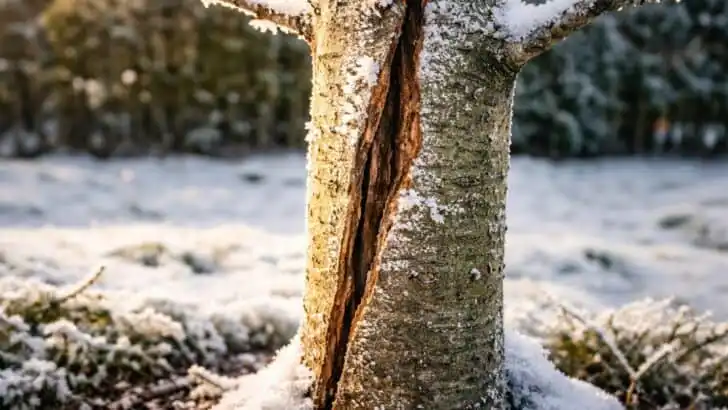
2. Split Bark and Long Vertical Cracks: Sunscald on Young Trees

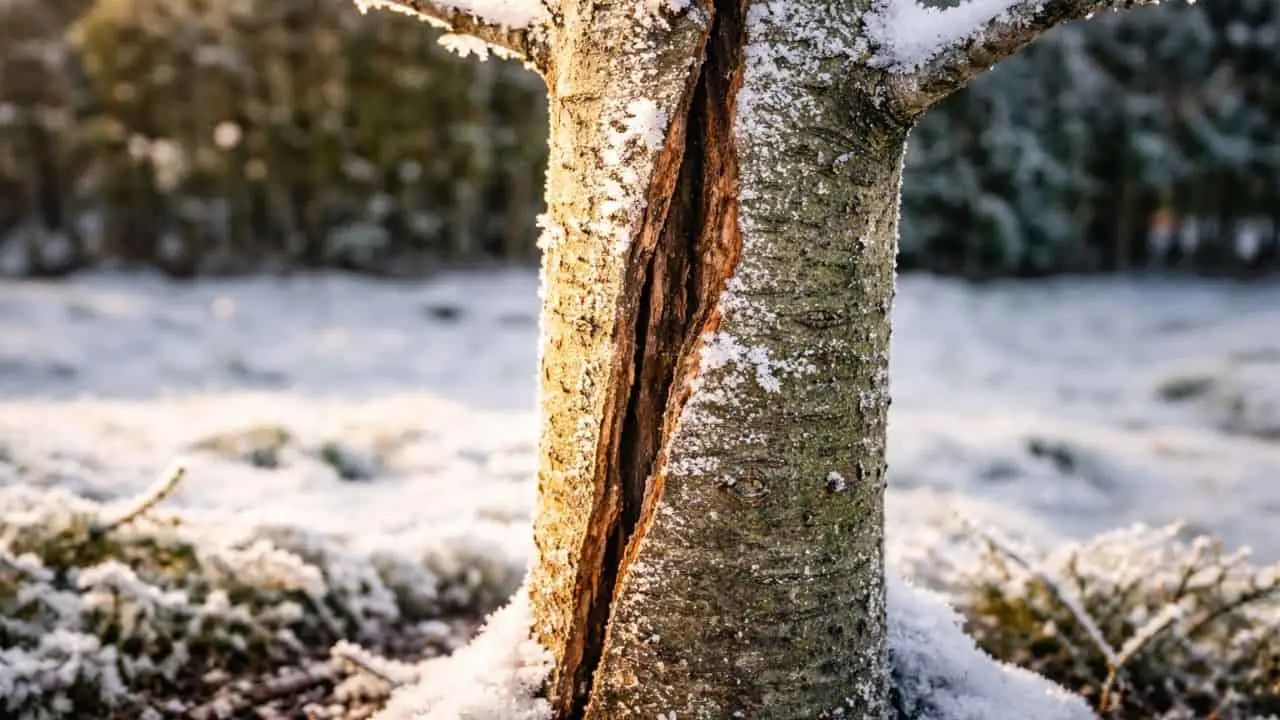
Long vertical cracks on a young tree trunk often point to winter sunscald. The south or southwest side is usually the worst.
On bright winter days, the bark warms up, then temperatures drop fast after sunset. That quick swing can kill inner bark and split the trunk open.
Check for loose bark edges, darkened tissue, or a dry, sunken strip running up the trunk. Mark the damage and watch it in spring, because some areas keep peeling as the tree starts growing.
For now, do not paint the wound or wrap it tightly with plastic. Support healing by keeping mulch a few inches away from the trunk, watering during dry winter spells, and using a light colored tree guard or trunk wrap next winter.
🧭 Quick sunscald check and next steps
- Best clue: Damage shows up on the south or southwest side of the trunk.
- What to look for: A long, dry, sunken strip, loose bark edges, or darker inner bark.
- What not to do: Skip wound paint and tight plastic wraps. They can trap moisture and slow healing.
- Mulch spacing: Keep mulch a few inches away from the trunk to reduce rot and stress.
- Winter watering: Water during dry spells when the ground is not frozen, especially for trees planted in the last two years.
- Prevention for next winter: Use a light colored trunk wrap or tree guard, put it on in late fall, then remove it in spring.
Bonus Tip: Take a clear photo now and add a small mark above and below the crack. It makes spring changes easy to spot.
3. Limp Evergreens With Bronze Tips: Winter Desiccation in Wind
Limp needles and bronzed tips on arborvitae, boxwood, and juniper often mean winter wind has dried them out. The roots cannot replace moisture when the ground is frozen.
Check the side facing the prevailing wind, the damage is usually worse there. Gently bend a few stems, if they snap and the inner tissue looks tan, that section is dead. If stems are still flexible and green under the bark, the plant may recover once spring warmth returns.
Water during winter thaws when the soil is workable, aim for a slow soak at the drip line. Add 2 to 3 inches of mulch to reduce freeze and thaw stress, but keep it off the trunk. In late winter, put up a burlap windbreak on the windward side, it beats wrapping the whole shrub tight.
🧣 Windburn detective checklist
- Most likely plants: Arborvitae, boxwood, and juniper are classic winter desiccation victims in exposed spots.
- Where to look first: Check the windward side, plus the outer tips that catch sun and wind all day.
- Quick life test: Bend a few twigs. Flexible usually means living tissue, brittle snapping often means that section is dead.
- Scratch test: Lightly scrape bark with a fingernail. Green beneath suggests it can rebound, tan or brown points to dieback.
- Best fix during a thaw: Give a slow soak at the drip line when soil is workable. Frozen ground blocks water uptake.
- Wind protection that works: Use a burlap screen on the windward side. It reduces drying without trapping as much moisture as tight wrapping.
Bonus Tip: Wait to prune until you see new growth in spring. You can remove only what stays brown, and you avoid cutting off live buds.

4. Blackened Buds That Won’t Swell: Hidden Flower and Fruit Loss
Blackened buds that stay tight are often flower buds killed by a hard freeze. They can sit there for weeks, so the loss stays hidden.
Check a few buds by gently slicing one open with a clean fingernail or a small knife. Green inside means alive, but brown or black inside means that bud is done. On fruit trees like peaches and plums, you may see fewer blossoms on one side of the tree, usually the side that faced the wind.
Do not prune heavily right away, since you can remove the few live buds you still have. Keep watering steady if the soil is dry, because drought stress makes bud drop worse once warm weather returns. If most buds are black, plan for a lighter crop and focus on tree health, then wait for spring growth to show which twigs truly survived.
🔎 Quick bud “autopsy” checklist
- Where to cut: Slice the bud lengthwise, right through the center, so you can see the core clearly.
- What “alive” looks like: Firm tissue that is pale green inside usually means that bud can still open.
- What “dead” looks like: Brown, black, or watery tissue means freeze damage, and that bud will not swell.
- How many to sample: Check 10 buds on different branches, including the windy side and the sheltered side.
- What it means for harvest: If many buds are damaged, expect fewer flowers, then fewer fruits, even if the tree leafs out.
Bonus Tip: Mark a few tested twigs with a soft ribbon. Recheck them in early spring, before you prune, so you do not cut off the survivors.
5. Heaved Roots and Raised Crowns: Freeze Thaw Uplift in Perennials
Freeze thaw cycles can push perennial roots and crowns upward, leaving them partly exposed. This is easiest to spot right after a cold snap followed by a warmer spell.
Check for crowns sitting above the soil line, roots showing at the surface, or a plant that rocks when you gently wiggle it. Look closely around shallow rooted perennials like heuchera (coral bells), mums, Shasta daisies, and young plantings. A raised crown dries out fast, and it can die even if the top growth looks fine.
Press the plant back into place on a mild day, then firm the soil around it without burying the crown. Add 2 to 3 inches of mulch (shredded leaves or straw work well) to buffer future temperature swings and keep the root zone stable.
🧤 Quick Rescue Plan for a Wobbly Perennial
- Best time to fix it: Pick a mild afternoon when the soil is workable, not frozen solid or muddy.
- Simple test: Gently wiggle the plant. If it rocks, the roots likely lifted and lost soil contact.
- How to reset it: Press the root ball down, then firm soil around the sides. Keep the crown at soil level.
- Mulch depth: Add 2 to 3 inches of shredded leaves or straw to soften future freeze thaw swings.
- What not to do: Do not bury the crown. A buried crown can rot once spring rains arrive.
Bonus Tip: If the plant keeps heaving up, add a small ring of compost around it in early spring, then re-mulch to hold moisture and stabilize soil.
6. Mushy Stems at the Base: Crown Rot After Snow Melt
Mushy, collapsing stems right at soil level often point to crown rot after snow melt. The crown stays cold and wet, then fungi move in fast.
Check by gently pressing the stem base and looking for tan, watery tissue that peels away. You may also notice a sour smell or a loose plant that rocks in the soil.
On a mild, dry day, pull wet mulch back from the crown so air can reach it. Cut away soft tissue with clean pruners, then discard it in the trash, not the compost.
Improve drainage where the plant sits and avoid early spring watering unless the top inch of soil is truly dry. If the crown is fully mushy, replace the plant and replant a little higher in well-drained soil.
💧 Quick Crown Check and Rescue Plan
- Press test: Gently squeeze the stem base. A healthy crown feels firm, not spongy.
- Look and sniff: Tan, watery tissue that peels away, plus a sour smell, usually means rot is active.
- Dry it out: Pull mulch back 2 to 3 inches from the crown so air and sun can reach it.
- Clean cut: Snip off soft tissue with wiped-down pruners. Discard the pieces in the trash.
- Drainage fix: Add grit or compost to improve soil structure, or replant a bit higher so water sheds away.
Bonus Tip: If you can rock the plant like a loose tooth, the roots may be gone. Replace it and avoid planting the new crown too deep.
7. Stems That Bend Then Snap: Brittle Cold Injury on Shrubs
Brittle cold injury shows up when shrub stems bend a little, then break with a sharp snap. The wood may look normal outside, but the inside can be dry and tan instead of moist and green.
Test a few twigs on the windward side and the sun-exposed side, since those spots often take the hit first. Use a clean pruner to make a small cut, and look for live tissue, which should be green and flexible.
If you find brittle sections, wait to prune hard until buds start to swell in early spring, so you can see what truly leafs out. For now, remove only broken pieces and any stems that are clearly split, then water on a mild day if the soil is not frozen. A light layer of mulch over the root zone helps steady moisture and reduces more stress during late-winter cold swings.
🧪 Quick twig check, before you grab the loppers
- Where to test: Try twigs on the windward side first. Also check the sunny side, since it often dries faster.
- What “alive” looks like: Fresh wood is green and slightly moist inside. It also bends a bit before it breaks.
- What “injured” looks like: The center looks tan and dry. It may snap sharply with very little bend.
- What to cut now: Remove only broken, hanging, or clearly split stems. Make a clean cut back to solid wood.
- When to prune more: Wait until buds start to swell in early spring. Then you can see what truly leafs out.
Bonus Tip: If you are unsure, tag a few questionable stems with yarn. Recheck them when buds swell, and prune only what stays lifeless.
Your 10 Minute Cold Check Can Save Spring
Pick two sunny midday moments this week to walk your beds and shrubs, and look for the seven signs you just learned. Mark problem spots with a bright stake, then take one simple action right away, water on a mild day, add mulch back over heaved crowns, or wrap windburned evergreens. Prune only what is clearly dead, and wait on “maybe” stems until buds tell the truth.
Snap a quick photo of anything you are unsure about, then compare it again after the next warm spell so you do not cut healthy wood by mistake.
Frequently Asked Questions About 7 Cold Damage Signs to Check Now, What Most Gardeners Miss
1. How can I tell freeze damage from underwatering on winter plants?
Freeze damage often shows up after a cold night as blackened, glassy, or mushy tissue, especially on tender tips. Underwatering usually looks like overall limpness and dry, crispy edges with dry soil a few inches down. Check stems too, frozen stems can split or turn dark inside.
2. Should I prune cold damaged branches now or wait until spring?
Wait until spring for most shrubs and perennials, since more dieback can appear later. For trees, remove only broken, dangling, or clearly dead limbs now for safety. Make clean cuts and avoid heavy pruning before the worst cold is over.
3. What do I do if a plant crown has heaved out of the soil?
Gently press the crown back to soil level on a mild day when the ground is workable. Firm the soil around it, then add a light layer of mulch to reduce more heaving. Water if the soil is dry and not frozen.
4. Can evergreens recover from bronzing, and how long does it take?
Yes, mild bronzing from winter wind and sun often fades as new growth starts in spring. Needles that are fully brown and brittle will not green up again. Recovery time depends on the plant, but improvement is usually noticeable by late spring or early summer.
5. Is sunscald permanent, and should I wrap tree trunks next winter?
Sunscald can kill patches of bark, so the damaged area will not truly heal back to normal. The tree may slowly wall off the injury over time, but cracks can remain a weak spot. Wrapping young or thin bark trees in late fall can help prevent it, remove wraps in spring.
6. When should I water outdoor plants during winter dry spells?
Water when the soil is thawed, temperatures are above freezing, and the top few inches feel dry. Aim for mid day so moisture can soak in before night. Focus on evergreens, new plantings, and containers first.
7. How do I protect buds and early bloomers during late winter cold snaps?
Cover plants before dusk with frost cloth, an old sheet, or a light blanket, then remove it the next morning. Watering the ground earlier in the day can help hold heat overnight if the soil is not frozen. Avoid plastic touching buds, it can worsen damage.
8. What is the safest mulch depth to prevent freeze thaw damage without causing rot?
For most garden beds, keep mulch around 2 to 3 inches deep, and pull it back an inch from stems and crowns. Too much mulch can trap moisture and invite rot and pests. Top up only after the soil has cooled and avoid piling mulch against trunks.


Daniel has been a plant enthusiast for over 20 years. He owns hundreds of houseplants and prepares for the chili growing seasons yearly with great anticipation. His favorite plants are plant species in the Araceae family, such as Monstera, Philodendron, and Anthurium. He also loves gardening and is growing hot peppers, tomatoes, and many more vegetables.