

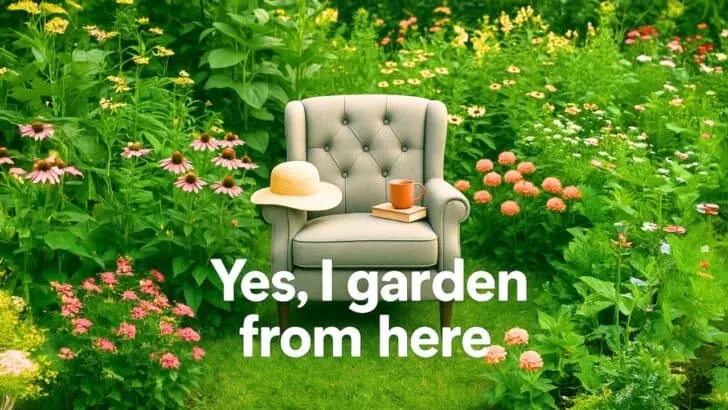
There’s a secret among the happiest gardeners. They’re not doing everything. They’re just doing the right things, and skipping the rest without guilt. No marathon weeding sessions. No triple-digging for fun. Just smarter choices, easier habits, and more naps in the shade.
Lazy gardening isn’t about being careless. It’s about being clever. If you’ve ever looked at your yard and thought, “I want it to thrive, but I also want my weekend,” this one’s for you.
Here are 12 practical ways to work less, grow more, and still look like you know exactly what you’re doing out there.
🪴 Key Takeaways
- 🌿 Plant what thrives without you — natives, sedum, and daylilies won’t text you for attention.
- 🌱 Crowd out the weeds — tighter spacing, living mulch, and ground covers do the heavy lifting.
- 🛋️ Shrink the lawn — swap turf for shrubs, perennials, or the world’s laziest hammock setup.
- 💧 Use soaker hoses — water the roots, not the sidewalk, and never think about it again.
- 🥕 Compost where you drop it — trench, chop, drop, done.
- 🌸 Go big with perennials — they’re the lazy gardener’s best friends.
- 🌀 Embrace controlled chaos — messy gardens are bee magnets and weed repellent.
- ☔ Weed when it rains — pull weeds while the soil’s soft and your coffee’s hot.
- 🌱 Reuse soil the smart way — top with compost, fluff it, plant again.
- 📦 Start a no-dig bed — cardboard, compost, and time. That’s it.
- 🪴 Pick the right containers — bigger, self-watering pots mean less stress and more thriving.
- 🦉 Let nature help out — birds and bugs do pest control while you watch from the porch.
1. Plant What Thrives Without You
If you have to babysit your plants every day just to keep them alive, you’re doing it wrong. Lazy gardening starts with knowing who can handle themselves. Sedum, yarrow, daylilies, and most native plants? They don’t need you checking in three times a day. They’re the hardy survivors of the plant world — and they like being left alone.
Choose the ones that don’t mind neglect, bounce back after drought, and won’t throw a tantrum if you forget to fertilize. These are your co-workers, not your houseplants on life support.
🌿 Lazy Gardener Tips
- Go native — native plants are already used to your climate and pests. They don’t need babysitting.
- Choose tough perennials like sedum, black-eyed Susan, Russian sage, and ornamental grasses.
- Group by needs — put drought-tolerant plants together so you’re not watering one needy diva.
- Skip the fragile stuff — no offense to delphiniums, but they belong in someone else’s garden.
2. Mulch Isn’t Optional. It Is Survival
Mulch isn’t just about making your beds look tidy. It’s your lazy best friend. Done right, it blocks weeds, holds moisture, keeps the soil cool, and breaks down into nutrients over time. Done wrong, it’s just expensive dirt confetti that blows away at the first sign of wind.
Want to water less, weed less, and look like a pro gardener with minimal effort? Slap on a thick, no-nonsense layer of mulch and let it do the heavy lifting while you sit in the shade pretending to Google “how to mulch.”
🌱 Lazy Gardener Tips
- Use 2–3 inches of mulch — any less and weeds will laugh at you.
- Pick smart materials — bark, wood chips, shredded leaves, or even straw (if it’s clean).
- Don’t mulch right up to stems — give plants some breathing room to avoid rot.
- Top it up once or twice a year — keep that weed-blocking armor strong and effective.
3. Let Your Lawn Shrink
The lawn is overrated. It drinks too much, demands constant mowing, and throws a tantrum the moment it gets a little dry. The less of it you have, the more time you get back. And no one’s ever said, “Wow, what a beautiful stretch of grass you’ve got there” — at least not with any real feeling.
Start thinking of lawn as optional. Every patch you replace with a low-maintenance ground cover, native shrub, or a hammock is one less place you’ll have to babysit with fertilizer and Sunday mornings.
🌿 Lazy Wins to Reclaim Your Yard
- Replace lawn with ground covers like creeping thyme, clover, or sedum — they look great and need almost no care.
- Swap in native shrubs or wildflower patches — less work, more wildlife, and you’ll never have to mow.
- Lay down mulch or gravel pathways for low-effort structure and style.
- Yes, add a hammock — it counts as landscaping if you squint.
4. Use Soaker Hoses
Dragging a hose around is a workout you didn’t sign up for. Spraying everything by hand? Fun for three minutes, then it’s just soggy shoes and uneven watering. Soaker hoses solve all of that. Lay them down once, hook them up, and boom — you’re watering like a pro while reading a book.
They get moisture straight to the roots without soaking your patio or encouraging weeds in the empty spots. It’s precise, lazy, and honestly kind of genius.
💧 Lazy Watering That Actually Works
- Snake a soaker hose through your beds — wind it around plants and cover lightly with mulch.
- Set a timer so it waters early morning before you even wake up.
- Adjust based on season — once or twice a week in cooler months, more often in summer.
- Connect multiple hoses with splitters if you have a larger area — no hauling required.
5. Compost Where You Drop It
Why walk across the yard to your compost pile when your plants are right there, waiting? Skip the trip and let nature do its thing where it counts. Trench composting, chop-and-drop, or just tucking scraps under mulch — it all works, and it saves time, steps, and effort.
Your garden bed becomes the compost pile. No stink, no wheelbarrows, no guilt. Just better soil and less hauling.
🍌 How to Compost Right in Place
- Chop kitchen scraps into small pieces and bury them 6–8 inches deep between plants (aka trench composting).
- “Chop and drop” garden trimmings — leave cut leaves, stems, and weeds to break down in place.
- Cover scraps with mulch or soil to avoid pests and smell — no need to stir or flip anything.
- Avoid meat, dairy, and oily food waste — they attract critters and take too long to break down.
6. Go Big with Perennials
Want a garden that takes care of itself while you take a nap? Perennials are your people. You plant them once, and they come back year after year, asking for very little in return. No replanting, no seed-starting chaos, no drama.
Even better, they often bloom early or late when annuals are still thinking about it — and they usually need less water once they’re settled in. Maximum payoff, minimum babysitting.
🌼 Lazy Gardening Win
- Choose dependable varieties like echinacea, black-eyed Susan, daylilies, and hostas — they’re tough and forgiving.
- Plant in groups for visual impact and fewer weeds between plants.
- Divide every few years to multiply your plants for free — and without trips to the garden center.
- Mix bloom times so something’s always showing off without needing constant replanting.
7. Embrace Controlled Chaos
Perfect rows and tidy symmetry look great on Instagram — but in real life, they’re a pain to maintain. Every little space between plants becomes an open invitation for weeds, pests, or guilt. The solution? Stop pretending your garden is a showroom and let it be a jungle with a plan.
Messy on purpose is not only beautiful — it’s functional. A mixed bed of flowers, herbs, veggies, and ground cover mimics nature, supports pollinators, shades the soil, and confuses pests. Also, bonus: you look like one of those artistic, wildly cool gardeners who “just lets things grow.”
🌀 How to Keep Chaos Productive
- Mix plant heights and types — tall, short, leafy, spiky — let them fill in every inch of soil.
- Use companion planting — tomatoes love basil, carrots get along with lettuce, and everyone benefits.
- Drop in self-seeders like calendula or dill — they’ll pop up where they’re happiest.
- Say yes to wildflowers — native mixes bring bees, butterflies, and zero fuss.
8. Weed When It Rains
Rainy days might seem like the perfect excuse to stay indoors, but if you’re aiming for lazy brilliance, this is when you strike. Wet soil is like nature’s “easy mode” for weeding — roots slide right out, and you don’t need a crowbar to pry up that dandelion that’s been laughing at you since April.
You don’t even have to go full gardener mode. Just stroll through the yard in your flip-flops, pluck a few weeds while sipping coffee, and boom — you’ve done your garden chores before breakfast.
☕ Lazy Gardener’s Tips
- Keep a “wet day” bucket near the door — grab it when you see rain clouds and collect weeds on the go.
- Use soft gloves or go barefoot — the squishier the soil, the easier it is on your hands (and soul).
- Focus on spots you walk past often — paths, borders, around the mailbox — tiny wins add up fast.
- Don’t overdo it — 5–10 minutes is enough. You’re lazy gardening, not training for a marathon.
9. Reuse Last Year’s Soil (the Right Way)
Dragging fresh soil bags around the yard every spring? Pass. If last year’s soil is still hanging out in your pots or raised beds, guess what — it’s not trash. It just needs a little love. The trick is to refresh it, not replace it.
So instead of shoveling out the old stuff, top it up with compost, fluff it with a fork, and keep it moving. Your plants won’t know the difference — but your back definitely will.
♻️ Quick Soil Refresh Tips
- Top off containers with 1–2 inches of compost to recharge nutrients without tossing the whole mix.
- Use a fork or cultivator to gently loosen compacted soil — don’t overmix.
- Sprinkle in slow-release fertilizer for a little lazy insurance boost.
- Rotate what you grow — herbs one year, leafy greens the next, flowers for fun after that.
10. Start a No-Dig Bed
You know what’s a fun way to waste your weekend? Digging. Turning over a garden bed like it’s a CrossFit session. But if you’d rather not pretend your shovel is a gym membership, meet your new best friend: the no-dig bed.
No-dig gardening is exactly what it sounds like. You don’t dig. You layer. Nature handles the rest. You lay down cardboard to smother weeds, toss compost and mulch on top, and walk away. The soil stays intact, the worms stay happy, and your back doesn’t throw a tantrum.
🛏️ Lazy Genius Tips
- Use cardboard, not plastic — it smothers weeds and breaks down like a champ.
- Stack it thick — cardboard, then compost, then mulch. Don’t skimp.
- Water it once so the layers settle and microbes get to work.
- Plant directly on top — dig little pockets if needed, and let the roots do their thing.
11. Pick the Right Containers
If you’re still using tiny pots that dry out faster than your morning coffee, it’s time to upgrade. Little containers look cute… until they turn into high-maintenance divas that need watering twice a day. The solution? Bigger, better, smarter containers.
Think of them like garden assistants that don’t talk back. Large pots hold moisture longer. Self-watering containers do the job for you. And anything with a built-in reservoir? That’s basically cruise control for your basil.
🪴 Container Wisdom
- Go big or go dry — larger containers keep roots cooler and happier.
- Choose self-watering options for balconies, hot zones, or busy lives.
- Avoid metal in hot climates — they cook roots like a skillet.
- Use pot feet or bricks to boost drainage and avoid soggy bottoms.
12. Let Nature Help You Out
Look, you’re not alone out there. Your garden already has thousands of tiny helpers — some just need an invitation. Birds eat pests. Bees pollinate. Worms aerate and compost while you sleep. But if you’re spraying everything that moves or chasing off every critter, you’re basically firing your dream team.
The lazy gardener knows when to step back. Build a habitat, not a battlefield. Give the good guys a reason to stay — and you’ll be shocked at how little effort it takes when nature’s pulling half the weight.
🐛 Let the Wild Work for You
- Put out shallow water dishes — for birds, bees, and helpful insects.
- Plant native flowers to attract pollinators without extra fuss.
- Leave some ground bare or mulched so worms and beetles can do their thing.
- Skip the harsh pesticides — they kill the good bugs first.
Your Garden Doesn’t Need a Hero
I used to think I had to do it all — that if I missed a watering or forgot to deadhead something, the garden police would show up and revoke my trowel. But turns out? Plants are more forgiving than we think. Especially the right ones.
This isn’t about being lazy. It’s about being smart. About planting with purpose, skipping the fuss, and letting the garden do more of the work while we enjoy the view (preferably with an iced tea in hand). Every trick in this list is about balance — yours, not just your garden’s.
So go ahead. Shrink that lawn. Let things sprawl a little. Pretend you’re being productive while actually napping in the hammock. That’s not cheating. That’s gardening like a genius.


Daniel has been a plant enthusiast for over 20 years. He owns hundreds of houseplants and prepares for the chili growing seasons yearly with great anticipation. His favorite plants are plant species in the Araceae family, such as Monstera, Philodendron, and Anthurium. He also loves gardening and is growing hot peppers, tomatoes, and many more vegetables.