

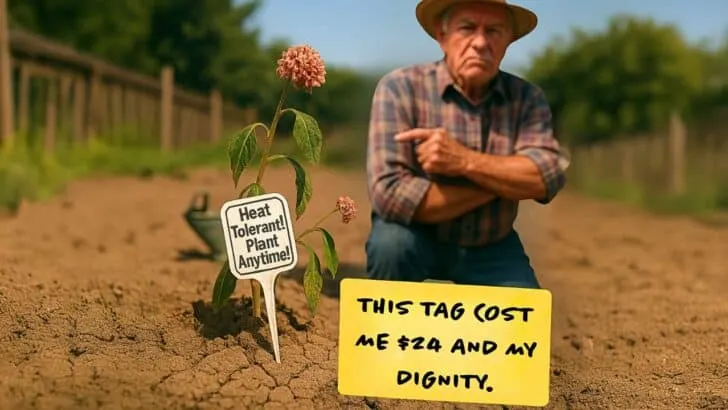
You’re walking through the nursery. It’s sweltering, but the petunias are perky. The hydrangeas are calling your name. You pick up a pot, flip the tag, and there it is in friendly type: “Plant anytime during summer.”
Sounds reassuring. Almost like permission. But there’s a catch — and it’s the kind that doesn’t show up until your garden looks like a sunburnt regret.
Because just like you wouldn’t trust a sunscreen ad in the middle of a heatwave without checking the UV index, you shouldn’t trust that little plastic tag without checking your local conditions, your soil, and the month on your calendar.
It’s not that the plant is wrong. It’s that July is a liar. It whispers, “There’s still time,” while it quietly bakes your roots into compost.
And if you’ve ever watched a $24 perennial go limp within 48 hours, you know exactly what kind of betrayal we’re talking about.
The Deceptive Promise of the Plant Tag
Plant tags don’t lie — but they don’t exactly tell the whole truth, either.
When it says “Plant in spring or summer,” it’s not wrong. Technically, you can plant in July. The question is whether you should.
Those tags are written for the ideal scenario: average temps, healthy soil, no stress, daily watering, perfect drainage. But unless you garden in a brochure, that’s not reality in July. In real life, you’ve got compacted soil, heatwaves, surprise thunderstorms, and a few weekends when life gets in the way. And those innocent-looking plants? They’re fresh from climate-controlled greenhouses. They don’t know how to handle a Midwest July or an Arizona afternoon.
So, what looks like a safe bet turns into a transplant tantrum. Roots shrivel. Blooms drop. And you’re left blaming yourself when the truth is: you were set up.
📋 What Plant Tags Don’t Mention
- Tags aren’t zone-specific — they’re written for national markets, not your exact climate.
- “Summer” isn’t a single thing — July in Oregon is not July in Texas.
- Tags assume ideal care — daily watering, mulch coverage, and perfect planting technique.
- They don’t warn about transplant shock — which is brutal in hot, dry soil.
Why July Is Brutal on New Plants
It’s not just hot. It’s stress on every level — for you and your plants. July brings blazing sun, crusty soil, thirsty roots, and a kind of heat that bakes the top layer of your garden bed into a crusty, seedling-scorching shell.
New plants just aren’t ready for that. Their roots are tender. Their systems are shallow. They need time to settle, stretch out, find their rhythm. But in July, they’re thrown straight into survival mode. No time to settle. Just endure.
And here’s the worst part: stressed plants don’t grow. They stall. They sit in the ground like sulking toddlers — not dying, not thriving, just wasting time and water. That flashy new perennial you picked up? It might survive. But it won’t thrive until September. Which means you paid for beauty and got a garden statue.
☀️ Why It’s So Rough Out There
- Soil dries out faster than roots can reach — especially in raised beds and containers.
- Sunburn is real — tender leaves fry in direct sun before they harden off.
- Watering becomes tricky — too little and they wilt, too much and they rot.
- Heat halts root growth — and no roots means no stability, no flowers, no payoff.
These Plants Hate Being Planted Now
Not every plant tag knows what it’s talking about. Some say “plant anytime,” which sounds great in theory — until your $12 shrub wilts like hot lettuce three days after planting. Truth is, some plants are just poor choices for July, no matter what the label says.
The worst offenders? Anything that needs time to root before showing off. Anything bred for cool-season blooms. And anything labeled “moisture-loving” in a month when moisture vanishes before lunchtime.
If you’ve got the urge to plant something this month, make sure it’s not one of these heat-haters:
🚫 Plants That Struggle in July
- Hydrangeas — root poorly in heat and sulk for weeks.
- Bleeding hearts & hostas — cool-season lovers that go limp by noon.
- Delicate herbs like cilantro — bolt fast and die faster in hot soil.
- Peonies, daylilies, and irises — need cool nights to establish well.
- Shallow-rooted perennials — like coral bells or astilbe, which fry easily in dry spells.
Planting them now is like sending a snowman to Phoenix. They won’t thank you for it.
What to Do Instead This Month
Just because you *can’t* plant everything in July doesn’t mean you have to sit on your gloves. There are better moves to make right now — moves that won’t leave you with wilted regrets and crispy edges.
This is your prep month. Your support month. The time to think ahead, clean up, and get ready for a late-summer win. Instead of impulse-planting something doomed, invest your energy where it actually pays off.
🌿 Smart Moves for Mid-Summer
- Prep fall beds now — clear space, enrich soil, and mulch to keep it cool and ready for autumn planting.
- Start seeds indoors — crops like broccoli, kale, or cabbage do better when they begin in trays now for fall transplanting.
- Focus on watering routines — get deep soaking habits in place, and use soaker hoses or drip irrigation to conserve water.
- Use shade cloth — protect sensitive spots or new seedlings with light fabric to avoid heat shock.
- Divide spring-blooming perennials — iris clumps, for example, are ready to be split after flowering.
Gardening in July is less about adding and more about adapting. The plants don’t need more stuff. They need steadiness. And a gardener who knows when to act — and when to wait.
When You Can Plant Again
Right now, it’s a waiting game. But the good news? You won’t have to wait long. For many gardeners, the window opens back up by the second half of July — once the worst of the heat begins to ease off. But timing isn’t one-size-fits-all. Where you live makes a big difference.
If you’re gardening in Zones 3 to 6, you’ll likely get a welcome planting window by late July or early August. These regions tend to cool a little sooner, and the shorter growing season means it’s smart to get fall crops going early.
In Zones 7 to 9, hold off until mid to late August or even early September, when nights start to cool. Your longer season gives you a bit more flexibility, but high summer heat is still brutal on transplants.
Zone 10 and up? You’re in a world of your own. Many plants will actually grow better in your fall and winter, so now is a great time to plan and prep for a big seasonal switch. Skip the July planting rush and let your soil rest a bit.
📅 Watch for These Fall Planting Clues
- Daytime temps dip below 85°F — especially with cooler nights in the 60s or lower.
- Rain returns to the forecast — gentle moisture is perfect for root-setting.
- Your summer crops start looking tired — a sign it’s time to flip the bed.
- Seed packets suggest “late summer” or “early fall” — now you know they mean it.
Use this short pause wisely. Make a garden map. Pick your fall stars. Stock up before the rush. Because once that first breeze of relief hits? You’ll be ready to plant smart, not hot-headed.
What You *Can* Plant in July (No, Really)
Not everything fears the July sun. Some plants were built for it — or at least tough enough to handle it. If your gardening hands are itching, here are a few strong contenders that actually do well when planted in midsummer.
But, as always, your USDA hardiness zone matters. What thrives in Zone 9 might flop in Zone 5. Here’s a quick cheat sheet to help you plant smart even when the heat’s high.
🌞 Heat-Loving Crops That Work in July
- Beans (Zones 3–10) — bush beans and pole beans germinate fast and thrive in heat. Soak seeds before planting for a head start.
- Okra (Zones 6–11) — practically begs for heat. Direct sow in southern zones or transplant in cooler zones with a few months left.
- Summer squash (Zones 4–9) — zucchinis and yellow squash grow fast and love warm soil. Just watch for squash vine borers.
- Malabar spinach (Zones 7–11) — a heatproof green that thrives when regular spinach wilts. Beautiful, too.
- Sunn hemp and buckwheat (Zones 5–10) — great fast-growing cover crops to prep beds for fall and suppress weeds in the meantime.
If you’re in Zones 8 and up, you’ve also got the option to start heat-tolerant herbs like basil, lemongrass, and even culantro. They germinate quickly and don’t flinch at strong sun.
In cooler zones (3–6), now’s your moment to start planning your fall brassicas — broccoli, cabbage, kale — indoors or in a shaded nursery bed. You’ll transplant them later when the heat eases up.
🌱 Bonus Tip
Use shade cloth or row covers for new plantings. Even heat-loving crops need protection until they’re rooted. And water deeply — new plants dry out fast in summer soil.
Just because most plants are off the July menu doesn’t mean you have to hang up your trowel. Focus on what thrives now, and you’ll keep growing while others sit out the heat.
I’ve Learned to Stop and Read the Tag Twice
I used to treat plant tags like a green light. If it said “plant anytime,” I did. If it promised “heat tolerant,” I believed it. July? August? Didn’t matter. Into the soil it went. And more often than not, it flopped.
Now I know better. I’ve learned that gardening isn’t about racing the season. It’s about knowing when to hold back — and when to wait. The hottest days of summer don’t care what the label says. They’ll burn up a hopeful seedling in a single afternoon.
That’s not failure. That’s timing. That’s patience. That’s learning to listen to your garden, not just the marketing department at the nursery.
These days, I still bring home plants in July. But I park them in the shade, give them water, and wait. Sometimes until August. Sometimes until fall. Because that little plastic tag might be printed in bulk, but your garden? That’s personal.
🌿 Key Takeaways
- 📆 July is not ideal for planting — heat stress and transplant shock are more likely to ruin your efforts.
- 🪧 Don’t trust plant tags blindly — they’re designed for sales, not your local conditions.
- 🌡️ Know your zone — what works in Zone 4 might crash and burn in Zone 9B.
- ⏳ Hold off when in doubt — waiting a few weeks can mean the difference between thriving and dying.
- 🌱 Exceptions exist — quick growers and heat lovers like okra or zinnias might still be fair game in warm zones.
- 🛑 Skip planting midday — even if you must plant, do it early morning or evening and baby those roots.
- 🧠 Smart gardening is patient gardening — trust timing more than impulse or packaging promises.
Daniel has been a plant enthusiast for over 20 years. He owns hundreds of houseplants and prepares for the chili growing seasons yearly with great anticipation. His favorite plants are plant species in the Araceae family, such as Monstera, Philodendron, and Anthurium. He also loves gardening and is growing hot peppers, tomatoes, and many more vegetables.