

We’ve all been there. You spot a bug in your garden, you grab a trowel (or shoe, or hose, or flamethrower-level pesticide), and whack! Another one bites the dust. But what if the bug you just obliterated was actually the one saving your roses from aphids? Or keeping your lettuce safe from a slug invasion?
Turns out, some of the creepiest-looking crawlies are actually the heroes of your garden. They are harmless and doing pest control, pollination, and even soil improvement—quietly, for free, and without a union.
This article is your gentle (but firm) reminder that not every insect is the enemy. In fact, if you’re gardening in May in the U.S.—especially if you’re in zones 5 to 9—there are seven bugs you should never, ever kill. Seriously. They’re weird. They’re wonderful. They’re wildly misunderstood.
Let’s walk through each one—and if you’ve ever said “Ew!” at a lacewing larva, this might just change your mind.
1. Ladybugs (a.k.a. Aphid Terminators)
You already know these ones, right? Tiny red beetles with black spots, fluttering around like the Disney princesses of the insect world. But don’t let the cute polka dots fool you—ladybugs are stone-cold killers.
They specialize in aphid annihilation. A single ladybug can eat up to 50 aphids a day. That’s not a typo. Fifty. Per day. And if you think that’s impressive, wait until you meet their babies.
Ladybug larvae—those weird, alligator-shaped things you might have freaked out about and squashed by accident—are even hungrier. They’re like the teenage boys of the bug world: always eating, kind of scary looking, and growing at alarming speeds.
If you see a ladybug or one of its bizarre offspring, do not panic. Do not spray. Do not squish. Instead, thank them for their service, and let them continue their noble quest to keep your garden aphid-free.
Bonus trivia: Not all ladybugs are red. Some are yellow, orange, or even black. It’s like Pokémon, but for pest control.
2. Lacewings (Don’t Judge a Bug by Its Larva)
Lacewings are the quiet geniuses of the garden. Adult lacewings look like tiny green fairies—delicate wings, polite demeanor, probably sip chamomile tea. But their babies? Whole different story.
Lacewing larvae are nightmare fuel. They’ve been nicknamed “aphid lions” and honestly, it fits. These spiny little monsters skitter around devouring aphids, thrips, mealybugs, and even small caterpillars. It’s like the Xenomorph from Alien, but helpful.
And here’s the kicker: some lacewing larvae wear disguises. They’ll glue the hollowed-out bodies of their victims to their backs as camouflage. Yes. That’s a thing that happens in your backyard.
Bottom line: If you see a strange, bug-shaped dust bunny crawling on your plants—leave it. It’s probably a lacewing larva doing its best Hannibal Lecter impression, and your tomatoes will thank you.
Bonus trivia: Adult lacewings are also pollinators, so they multitask like champions. Beauty, brains, and body count—what’s not to love?
3. Ground Beetles (The Midnight Pest Patrol)
These guys don’t get nearly enough credit. Maybe it’s because they work the night shift. Maybe it’s because they look like your standard creepy beetle. But ground beetles are absolute workhorses when it comes to garden defense.
They hang out under rocks, logs, mulch—basically anywhere shady and damp. And when the sun goes down, they clock in and start munching. Slugs, cutworms, caterpillars, maggots, even other beetles—gone.
They don’t mess around. No wings. No glamour. Just solid murder energy and six fast legs.
Important note: They’re not interested in you or your picnic. If you flip over a stone and one scurries away like it just remembered an appointment, let it go. That little sprinter is protecting your dahlias.
Bonus trivia: There are over 2,000 species of ground beetles in North America alone. It’s like a tiny army under your mulch, and they don’t even ask for snacks.
4. Spiders (Nature’s Pest Control, Free of Charge)
Look, we get it. Spiders are not winning any popularity contests. They’ve got too many legs, too many eyes, and a vibe that screams “I live in your nightmares.” But here’s the truth: spiders are some of the best pest control you’ll ever get, and they work for free.
They eat mosquitoes, flies, gnats, beetles, moths, wasps, and yes—other spiders. They don’t ask questions. They just sit in their webs, chill, and wait for trouble to come to them. When it does? Boom. Dinner.
And let’s be clear: the vast majority of garden spiders are totally harmless to humans. Orb weavers, jumping spiders, wolf spiders—they’re all out there, quietly doing pest management while you’re sipping iced tea on the porch.
Pro tip: If you see a web in your garden, consider it a tiny “Do Not Disturb” sign. The owner is on duty.
Bonus trivia: Spiders eat an estimated 400–800 million tons of insects each year globally. That’s more than the weight of all humans on Earth. Sleep tight!
5. Parasitic Wasps (The Silent, Surgical Assassins)
If the words “parasitic” and “wasp” just made you recoil slightly—fair. But hear us out, because these unassuming little wasps are garden superheroes with a disturbingly effective resume.
Parasitic wasps don’t sting humans. They don’t make nests in your shed. They’re barely visible. But what they do is locate your garden’s worst pests—like tomato hornworms, aphids, cabbage loopers—and lay their eggs inside them.
Yes. Inside. The baby wasps hatch, eat the host from the inside out, and exit like tiny horror movie villains. It’s gruesome. It’s effective. And it saves your broccoli.
If you ever see a big green caterpillar with a row of white rice-looking cocoons on its back—do not squish it. That’s a parasitized pest. The cavalry has already arrived. All you have to do is stand back and let nature handle it.
Bonus trivia: Some gardeners actually buy parasitic wasp eggs online and release them like tiny drones. This is a real thing. And yes, they ship in the mail.
6. Hoverflies (The Unsung Heroes That Look Like Bees)
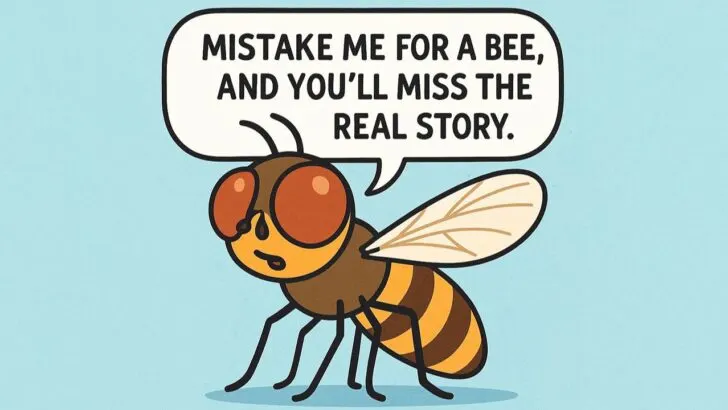
At first glance, you might think you’re looking at a small bee or maybe a yellowjacket on a coffee break. But take a closer look—hoverflies don’t sting, don’t bite, and don’t cause any drama. They just get stuff done.
The adults float around your flowers like little humming helicopters, pollinating as they go. But the real magic happens during the larval stage. Hoverfly larvae are ravenous aphid-eating machines. One larva can eat hundreds of aphids before pupating into a chill adult fly that just wants to sniff flowers.
They’re like mullet bugs: business in the front (aphid destruction), party in the back (pollination).
How to ID them: Look for a tiny fly with bee-like colors, hovering in place like it’s practicing yoga. If it lands and doesn’t have a waist (like a wasp does), you’re looking at a hoverfly.</p
7. Assassin Bugs (The Garden’s Tiny Ninjas)
With a name like “assassin bug,” you’d think these guys would be famous by now. But somehow, they’re still flying under the radar—possibly because they’re too busy impaling garden pests with their needle faces and sucking out their insides.
Yeah. These things are brutal. And exactly the kind of ally you want if your garden is overrun with aphids, caterpillars, beetles, or anything else soft-bodied and dumb enough to wander into the open.
Assassin bugs don’t spin webs or chase down prey. They ambush. They wait. They stab. Efficient. Unapologetic. Metal as hell.
But a word of caution: unlike parasitic wasps or ladybugs, assassin bugs can and will bite you if you mess with them. The bite isn’t deadly, but it’s not a fun time either. So observe from a distance, and let them do their thing.
Bonus trivia: Some assassin bugs disguise themselves by gluing dirt and carcasses to their backs. Stealth mode: engaged.
Who’s the Real Pest Here?
It’s easy to think of bugs as the enemy—especially when they show up uninvited and start crawling across your lettuce. But not every insect is out to sabotage your summer harvest. In fact, some of the best garden allies look downright horrifying until you learn what they actually do.
So before you reach for the spray or do your best ninja-swat impression, take a second. That “gross” bug might be the one keeping your roses aphid-free, your tomatoes thriving, and your sanity intact.
Garden smarter, not harder. And maybe—just maybe—start saying thank you to the tiny hitmen patrolling your plants at night. You don’t have to like them. But you should let them live.


Daniel has been a plant enthusiast for over 20 years. He owns hundreds of houseplants and prepares for the chili growing seasons yearly with great anticipation. His favorite plants are plant species in the Araceae family, such as Monstera, Philodendron, and Anthurium. He also loves gardening and is growing hot peppers, tomatoes, and many more vegetables.