

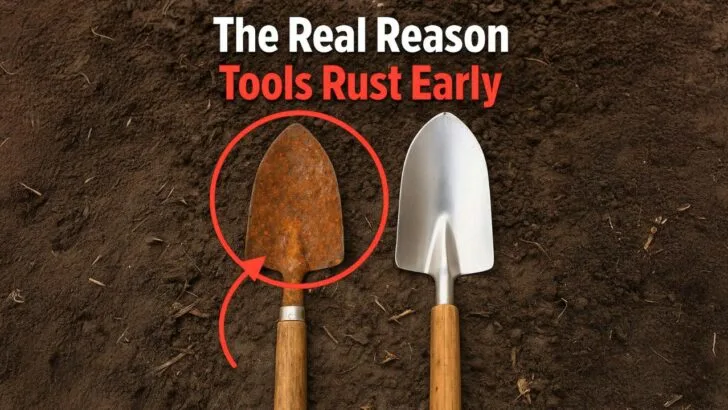
Your tools didn’t ghost you. You just left them out in the rain. Again.
Rusty pruners. A splintered shovel handle. That weird smell coming from the bottom of the bucket. It’s not sabotage. It’s just bad storage.
But don’t worry. You don’t need a workshop, a degree in woodworking, or a Pinterest wall of pegboard to fix it. Just a few smart habits that take less time than finding where your trowel wandered off to.
Let’s give your tools the kind of care that keeps them sharp, solid, and ready to dig — for years to come.
🌿 Key Takeaways
- 🧽 Clean tools after every use to stop rust and rot from building up.
- 🪝 Hang tools, don’t pile them so air can circulate and damage stays minimal.
- 🪣 Use a sand-and-oil bucket for fast daily cleaning and protection.
- 🪵 Oil wooden handles regularly to prevent cracking and splinters.
- 💧 Keep tools in a dry spot to avoid mold, rust, and nasty surprises.
- 🪓 Sharpen blades once a season to save your wrists and your plants.
1. Stop Putting Them Away Dirty


Yes, we’re starting with the obvious. Most gardeners don’t actually do this.
Soil holds moisture and salts that slowly corrode metal and rot wooden handles. It looks innocent. It’s not.
Just give your tools a quick rinse and wipe before you call it a day. It takes 30 seconds and saves you hours of scrubbing later.
Got sap or sticky grime? A little vegetable oil or WD-40 on a rag will clean it up without a fight.
🧽 Extra Tip
- Keep an old towel or rag by your hose or shed door. If it’s visible, you’re more likely to use it.
- Add a drop of dish soap to your rinse bucket to help break up grime faster.
- Don’t forget handles. Dirt stuck in the grain can hold moisture just like metal seams do.
2. Hang Them Up, Don’t Heap Them

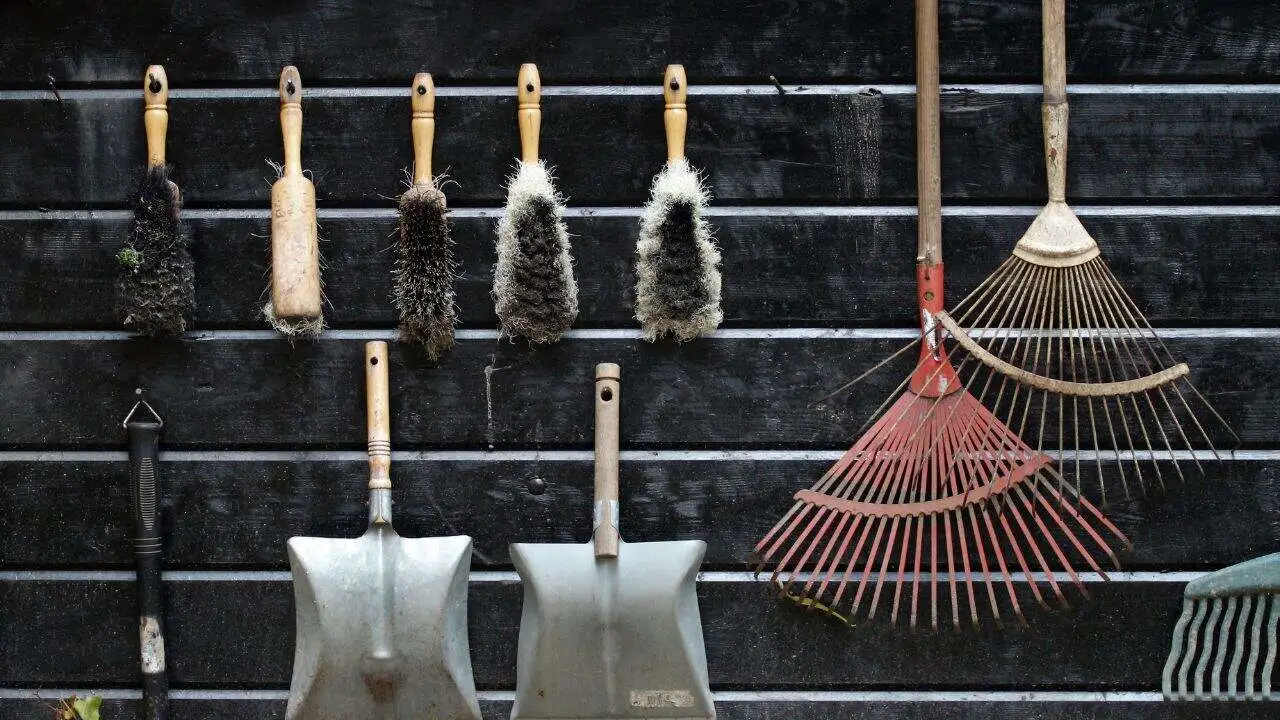
Tools aren’t meant to live in a pile. Especially not sharp ones. Gravity chips the edges, cracks the handles, and buries the one thing you’re actually looking for.
Hanging your tools isn’t about aesthetics. It’s about airflow. When tools stay off the ground, they stay dry. No rust. No mildew. No mystery goo.
A pegboard is great, but a row of nails in a 2×4 works just as well. The goal is simple: every tool gets a spot, and no one ends up buried under a tangled hose.
Bonus? You’ll stop buying duplicates because you lost the original in a heap of disappointment.
🧰 Handy Tip
- Use old broom handles or curtain rods screwed into a wall as a DIY hanging bar.
- Add labels or outline shapes if you’re the kind of gardener who thrives on order.
- Keep a small bin under your hooks for gloves, twine, or mystery screws you’ll eventually need again.
3. Use a Sand + Oil Bucket for Hand Tools
This trick is old-school and brilliant. Most people have never tried it, which is a shame, because it works better than half the fancy cleaning sprays out there.
Here’s what you do. Grab a sturdy bucket, fill it with coarse sand, and pour in enough mineral oil or linseed oil to make it slightly damp. Not soggy. Just enough to coat the grains.
Now every time you’re done with your hand tools, stab them into the bucket a few times. The sand scrapes off gunk. The oil coats the metal. It’s fast, easy, and weirdly satisfying.
You’ll wonder why you didn’t start doing it five years ago.
🪣 Bucket Basics
- Use play sand or builder’s sand. Avoid anything too fine or powdery.
- Store the bucket in a dry spot so the oil stays effective.
- Top it off with fresh oil every few weeks if it starts to dry out.
4. Protect Wooden Handles with Oil
If your shovel handle is rough, cracked, or gives you splinters every time you grab it, it’s not just age. It’s neglect. Wood needs care just like metal does.
A quick rub with oil once or twice a year keeps handles smooth, strong, and less likely to split. It also helps repel moisture, which is what ruins most tools in the first place.
Use raw linseed oil or tung oil. Just wipe it on with a cloth, let it soak in, and wipe off any excess. No need to overthink it. Your handles will look better and last longer instantly.
If it feels too dry, oil it. If it feels too rough, sand it first, then oil it. Easy.
🪵 Handle Help
- Avoid boiled linseed oil. It contains additives. Go raw or use pure tung oil.
- If your handles are moldy or blackened, scrub with vinegar before oiling.
- Let the oil dry completely before storing the tool to avoid sticky buildup.
5. Don’t Store in Damp Places (Unless You Like Rust)
Moisture is the silent killer of garden tools. Even a tiny bit of dampness in a shed can lead to rusted blades, swollen handles, and mildew that creeps into everything.
If your tools live in a leaky corner or next to a pile of wet gloves, they’re going to suffer. Get them out of the splash zone and into a spot with airflow and dryness.
If your shed or garage stays humid, throw in some cheap moisture absorbers. Bowls of rice, charcoal, or even baking soda can help. So can leaving the door cracked for air when the weather’s dry.
The goal is simple. Dry tools stay sharp. Wet tools turn orange and flaky.
💧 Moisture Control Tips
- Never store wet gloves or hoses in the same bin as metal tools.
- Use plastic totes with lids for long-term storage during the off-season.
- If you can smell mildew, so can your tools. Time to ventilate.
6. Sharpen Once a Season (or at Least Once a Year)
Dull tools are dangerous. They slip more, bruise stems, and make you work twice as hard for half the result. Most people wait until a blade is useless before they sharpen it. By then, it’s usually too late.
You don’t need a sharpening service or fancy gear. A basic file or whetstone is enough for pruners, loppers, and even shovel edges. Sharpen just a little, just enough to feel a clean edge.
Pick one day a year and call it Tool Day. Do it in the spring before planting or in the fall after cleanup. Either works. Put on some music, oil the hinges, tighten loose screws, and touch up the edges.
Your plants will get cleaner cuts. Your wrists will hurt less. And your tools will last longer.
🪓 Sharpening Tips
- Use a flat metal file for big blades and a carbide sharpener for pruners.
- Always file in the same direction, following the blade’s original angle.
- Clean the tool before sharpening. Dirt and rust will just wreck your edge.
How You Store Tools Is How Long They Last

You don’t need a spotless shed or a wall full of labeled hooks to take care of your tools. You just need to stop tossing them in a pile and forgetting they exist until next spring.
Clean them. Dry them. Give them a quick oil rub now and then. Sharpen when you remember. That’s it. No fancy systems. No thirty-step maintenance routine.
And the next time you reach for your pruners and they actually work like they’re supposed to? You’ll be glad you took five minutes to treat them like they matter.


Daniel has been a plant enthusiast for over 20 years. He owns hundreds of houseplants and prepares for the chili growing seasons yearly with great anticipation. His favorite plants are plant species in the Araceae family, such as Monstera, Philodendron, and Anthurium. He also loves gardening and is growing hot peppers, tomatoes, and many more vegetables.