

You’ve seen the tags. You’ve read the signs.
But when you’re staring at that garden bed, the difference between a perennial and an annual somehow gets fuzzy.
One comes back. One doesn’t.
And then there’s the one that lives two years but let’s not start that argument again.
What’s the Real Difference Anyway?
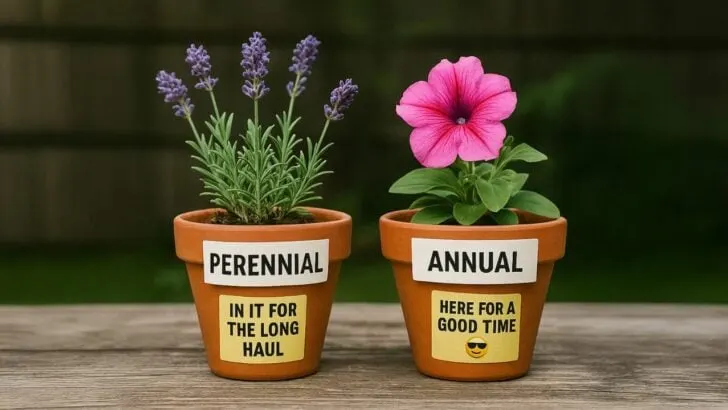
In case it’s been a while since garden club talked about it, here’s the short version. Perennials are plants that come back year after year. You plant them once, and they return — sometimes stronger, sometimes sassier, sometimes a little sleepy — but they come back. Annuals, on the other hand, are here for a good time, not a long time. One season, one show, then poof. Done.
There’s also a thing called a biennial — plants that live two years — but we’re not opening that can of botanical weirdness today.
🌸 Quick Comparison
- Perennials – Live for multiple years, bloom seasonally, take time to establish, lower long-term cost
- Annuals – Complete their life cycle in one season, bloom fast and hard, high color impact, replanted each year
🍃 Key Takeaways
- 🌿 Perennials come back each year and offer structure, pollinator support, and long-term savings.
- 🌺 Annuals bring fast color and flexibility, perfect for containers, empty spots, and seasonal drama.
- 🪴 Each works best in different spaces — use annuals for bold pops, perennials for long-term beauty.
- 🧤 Mixing both gives you the best of all worlds — flexibility, reliability, and year-round interest.
- 🌱 Don’t believe the myths — both types need care, and both can surprise you when used well.
Why Some Gardeners Swear by Perennials
Perennials are the old friends of the garden. They show up every year, maybe a little bigger, maybe a little bossier, but they’re there. You don’t have to replant them. You don’t have to baby them (most of the time). And once they’re settled in, they hold their own through heat, drought, and nosy rabbits.
They’re especially great for filling up space without constant effort. Plant them once, mulch them well, and let them get to work. Many are also pollinator magnets, pulling in bees, butterflies, and all the little garden helpers that make your flowers bloom and your vegetables productive.
If you like structure, stability, and plants that don’t disappear just when you start to like them — perennials might be your people.
🌿 Classic Perennials Your Garden Might Already Love
- Hosta – Loves the shade, hates the slugs
- Coneflower – Drought-tolerant and butterfly-approved
- Black-eyed Susan – Tough as nails and blooms forever
- Sedum – Thrives on neglect, turns pink in fall
- Daylily – Multiplying machine, and cheerful about it
Why Annuals Keep Winning Our Hearts
If perennials are your solid, reliable garden friends, annuals are the ones who show up loud, colorful, and ready to party. They grow fast, bloom hard, and throw a floral fireworks show right up until the frost pulls the plug.
They’re also the queens of flexibility. Have an empty container? Stick an annual in it. Want instant curb appeal? Grab a tray of petunias. Need color while your perennials are still waking up? Annuals don’t ask questions. They just bloom.
Yes, they’re short-lived. But that’s part of the charm. With annuals, you get to experiment. Change your palette. Try something new every season. And sometimes, that burst of color is exactly what your garden — and your mood — needs.
🌺 Beloved Annuals That Bring the Drama
- Zinnia – Bright, bold, and a pollinator buffet
- Petunia – Classic containers, endless colors
- Cosmos – Wispy and romantic, with nonstop blooms
- Snapdragon – Upright, elegant, and hummingbird-friendly
- Marigold – Cheerful and pest-repelling (or so we hope)
Which Ones Work Best Where?
If you’ve ever stood in the garden center staring at a wall of blooms and wondering what goes where, you’re not alone. Both annuals and perennials have their strengths — but they shine in different roles.
Think of it like casting a play. Some plants are the dependable supporting actors, always showing up, holding the scene together. Others are the scene-stealers, bursting onto the stage with color, then vanishing before intermission. The trick is knowing where each one fits.
🌼 Where They Really Shine
- 🪴 Containers and window boxes – Annuals rule. Fast color, endless combos, easy to swap out.
- 🏡 Foundation beds and borders – Perennials create long-term structure and repeat bloomers.
- 🦋 Pollinator gardens – Both shine. Perennials feed bees year after year, annuals bring variety.
- 🌾 Low-maintenance landscapes – Perennials are your go-to. Less replanting, more staying power.
- 🎨 Seasonal color pops – Annuals deliver drama. Great for entrances, walkways, and spots you stare at every day.
When Mixing Them Makes the Most Sense
The real magic happens when you stop picking sides. Annuals and perennials might have different styles, but together they cover each other’s weak spots. Perennials bring the bones. Annuals bring the sparkle. It’s like pairing a comfy old cardigan with a bright new scarf — suddenly the whole outfit works.
Perennials can leave gaps when they go dormant or when their bloom time ends. That’s where annuals step in, filling the empty spots with color and energy. Annuals can also soften the edges of a stiff perennial layout, adding a little chaos in just the right way.
And if a perennial doesn’t come back the next year? No problem. An annual can hold its place until you decide what to do with the empty space. Flexible, forgiving, and just a little bit fun — that’s the beauty of mixing the two.
Common Misunderstandings
Gardeners have opinions. And over time, those opinions can turn into “facts” — even when they’re not quite true. Let’s clear up a few common mix-ups that keep popping up in plant tags and porch conversations.
- 🌼 “Perennials are low-maintenance.” – Eventually, yes. But in the first year? They still need watering, mulching, and a little patience before they hit their stride.
- 🪻 “Annuals are cheaper.” – At first glance, maybe. But if you replant 20 pots every year, it adds up fast.
- 🌱 “Annuals die. Perennials live forever.” – Not exactly. Some perennials give up after a few years, and some annuals reseed like it’s their full-time job.
- 🧤 “Once it’s planted, I’m done.” – No matter what you grow, there’s always a little pruning, dividing, deadheading, or replacing involved. But that’s half the fun, right?
You Don’t Have to Pick a Side
Gardening isn’t about following rules. It’s about figuring out what works in your yard, with your hands, and for your peace of mind. Some folks swear by the loyalty of perennials. Others can’t resist the color bomb of a fresh tray of annuals.
The good news? You don’t have to choose. You can plant a zinnia next to a coneflower and call it a masterpiece. You can go full annual one year, then let the perennials take over the next. That’s the beauty of a garden. It changes. So can you.
So the next time you find yourself at the nursery with a cart full of both, don’t stress. You’re not indecisive. You’re just planting smart.


Daniel has been a plant enthusiast for over 20 years. He owns hundreds of houseplants and prepares for the chili growing seasons yearly with great anticipation. His favorite plants are plant species in the Araceae family, such as Monstera, Philodendron, and Anthurium. He also loves gardening and is growing hot peppers, tomatoes, and many more vegetables.