

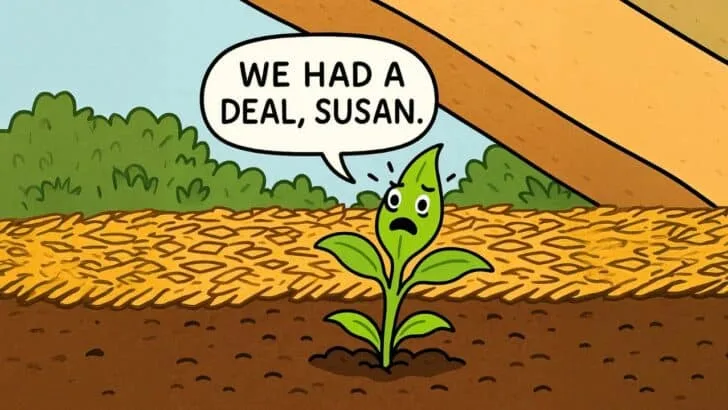
You’re staring at a patch of bare soil, trowel in hand, thinking: “Didn’t I just weed this last week?”
Same spot. Same weeds. Same story. You pull and pull, but they always come back — stronger, sassier, and somehow smug about it. Mulch helps. A bit. But unless you want to live in that flower bed with your gloves on, something has to change.
That’s when you hear about a trick so simple it feels like a joke. Cornmeal? Cardboard? You almost laugh. But the weird part is… it works. No chemicals. No crouching. No dramatic blowtorch sessions at 7 a.m.
Today’s article walks you through two surprisingly effective weed-control methods that gardeners swear by. You won’t just cut your weeding time — you’ll keep those weeds out for weeks.
🌿 Key Takeaways
- 🧠 Weed prevention beats weed reaction — the best time to act is before they even sprout.
- 🌽 Corn gluten meal isn’t garden voodoo — it’s a natural pre-emergent that starves weed seeds before they root.
- 📦 Cardboard + mulch creates a slow-release, soil-feeding weed barrier that’s as lazy as it is effective.
- 🪓 Forget the gimmicks — landscape fabric and constant pulling often cause more trouble than they solve.
- 🎯 The magic is in the combo — layer strategies to fight both today’s weeds and tomorrow’s sprouts.
- 🛋️ Less kneeling, more blooming — because the only thing you should be picking all season is flowers.
✅ Corn Gluten Meal – The Weed Seed Stopper
It sounds like something you’d find on a weird diet label, not in a gardener’s toolkit. But corn gluten meal has quietly built a fanbase for one reason: it stops weeds before they’re even born.
This golden powder is a byproduct of corn processing. It’s completely safe around pets, kids, and existing plants — as long as you’re not trying to grow anything from seed in that spot. Because that’s where the magic kicks in.
Corn gluten meal acts as a pre-emergent herbicide. It doesn’t kill weeds already growing. Instead, it keeps new ones from sprouting roots. The seed might split. It might swell. But without a root? It’s toast.
Timing is key. Apply it in early spring or just before those pesky summer weeds start showing up. And make sure you’ve got a few dry days after application — water too soon, and you lose the effect. Think of it like sprinkling fairy dust and then walking away quietly.
Bonus: it’s also a natural fertilizer, with about 10% nitrogen. So while it’s stopping weed seeds, it’s feeding your lawn or bed at the same time. Win-win.
🌱 Bonus Tip: Use it on lawns, gravel paths, or flower beds where you don’t want surprise seedlings popping up.
✅ Cardboard Layering – The Lazy Mulch Trick That Works
When in doubt, smother it. That’s the heart of sheet mulching, also known as the cardboard trick. It’s a lazy gardener’s dream — and somehow still a permaculture favorite. Why? Because it actually works.
Here’s the move: first, flatten any existing weeds. You don’t have to dig. You don’t even need to pull them all. Just knock them back a bit. Then lay down overlapping sheets of cardboard like shingles, covering every inch of the problem area.
Next, soak the cardboard lightly to help it settle into place and kick-start decomposition. Then top it off with your favorite mulch — wood chips, compost, straw, whatever you’ve got.
The result? You’re blocking light, suffocating weeds, and slowly feeding the soil as the cardboard breaks down. It’s tidy, chemical-free, and weirdly satisfying.
Just avoid glossy or colored boxes. And if you’re lucky, earthworms will move in and start tilling the soil for you. No extra charge.
📦 Bonus Tip: Try this under tomatoes, pumpkins, or along fence lines where weeds like to throw surprise parties.
✅ Why Most Anti-Weed Hacks Don’t Work
Let’s get real. Most weed “solutions” sound good until you’ve tried them for a full season. Weed barrier fabric? It tears, shifts, and eventually becomes a tangled mess of roots and regret. Herbicides? Sure, they’ll zap weeds — and maybe a few of your good plants too. Plus, there’s the lovely bonus of chemical runoff and sad-looking soil.
Then there’s hand-pulling. Therapeutic the first time. Exhausting by the fiftieth. And guess what? Every time you disturb the soil, you’re waking up new weed seeds just waiting to sprout. It’s a rigged game if you rely on brute force alone.
Even mulch — while helpful — doesn’t always cut it. A light layer of bark chips might look nice, but aggressive weeds laugh and push right through unless you pair it with something smarter underneath.
This is why cardboard and corn gluten work so well. One blocks light and movement. The other stops seeds from growing roots. They don’t just hide weeds — they keep them from starting in the first place.
✅ Combine Both for Ultimate Weed Control
Here’s the magic move: don’t pick between cardboard and corn gluten — stack them. Together, they form a tag-team that tackles both types of weed threats: the ones already lurking and the ones still dreaming of sprouting.
Start with corn gluten meal early in the season. Get it down before the weather warms too much — this blocks weed seeds from ever forming roots. Then, add your cardboard mulch trick in the areas where weeds tend to party the hardest: fence lines, between rows, or neglected corners of your yard. Top it with compost or wood chips, and you’ve created a fortress.
The best part? You’re not just preventing weeds — you’re feeding your soil, attracting worms, and creating moisture-retaining layers that make everything easier. Fewer weeds, fewer chores, and better soil health. That’s the dream.
💡 Bonus Tip
If you’ve got a brand new garden bed to set up, this combo is gold. You’ll knock out weed seeds and feed the soil in one go — no tilling, no stress.
🕵️ Bonus Section: Sneaky Spots Weeds Love (and How to Outsmart Them)
Even with great prevention, weeds always find a way — especially in overlooked spots. Think cracks along the driveway, edges of raised beds, or the awkward gaps between paving stones. These mini jungles seem to sprout overnight, and they’re usually where weed seeds blow in and settle without competition.
To shut them down, keep an eye on these trouble zones and hit them with spot-prevention. A sprinkle of corn gluten in cracks after sweeping, or a piece of flattened cardboard tucked along the edge of a bed, can save you hours later. You can also use boiling water or a vinegar solution for hardscape weeds — just aim carefully so nearby plants don’t get splashed.
Weed control isn’t about being perfect. It’s about being strategic. Cut them off where they’re weakest — and laziest.
🚧 Quick Fix
Keep a cheap bucket of mulch or gravel nearby to patch any bare soil after weeding. If sunlight can’t reach it, weeds can’t either.
🌱 You Deserve a Garden That Doesn’t Fight Back
Look, nobody wakes up excited to weed. It’s the task we all secretly hope will somehow go away on its own. But that doesn’t mean you need to spend your summer hunched over pulling crabgrass every weekend.
What we gave you today isn’t just about control. It’s about taking the upper hand — with tools that actually work, even if you’re not out there with a horticulture degree and a toolbelt full of fancy gear. Corn gluten meal and cardboard might not sound glamorous, but they’re clever. They quietly change the game in your favor.
And the best part? They give you back time. Time to actually enjoy your garden instead of battling it. Because less weeding means more blooming, more sitting, more admiring — and that’s the kind of gardening we’re all here for.


Daniel has been a plant enthusiast for over 20 years. He owns hundreds of houseplants and prepares for the chili growing seasons yearly with great anticipation. His favorite plants are plant species in the Araceae family, such as Monstera, Philodendron, and Anthurium. He also loves gardening and is growing hot peppers, tomatoes, and many more vegetables.