

You water. You mulch. You shade. And still, your plants wilt under the July sun like soggy spaghetti. It’s not your fault. Heatwaves don’t care how early you set your alarm or how deeply you soak the soil. Sometimes, the rules of summer gardening just stop working.
But what if there were a way to cheat the heat? Not a gadget. Not a product. Just a trick — so simple and so old-school that it feels almost silly. Except it works. Especially when everything else fails.
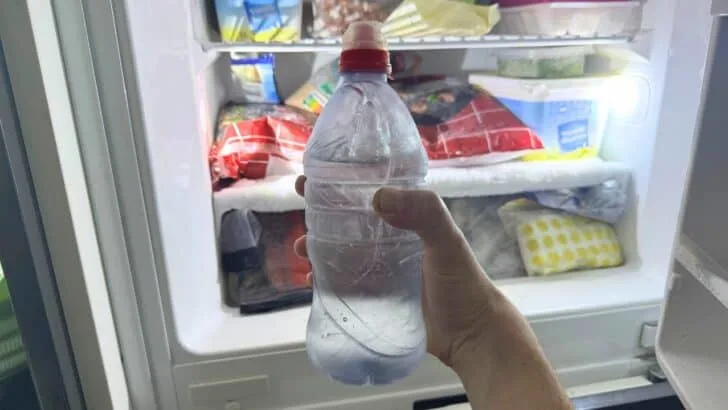
It starts with a plastic bottle. The kind sitting in your recycling bin right now. And once you know what to do with it, you’ll wonder why every plant in your garden doesn’t already have one.
🧊 Key Takeaways
- ❄️ Freeze bottles of water and use them to gently cool soil during extreme heat.
- 📍 Place bottles near roots but never let them touch plant stems directly.
- ⏱️ Use early in the day so roots benefit from slow, steady thawing over hours.
- 🚫 Don’t bury the whole bottle — keep part exposed so water can escape as it melts.
- 🌱 Ideal for raised beds, containers, and young transplants — where water stress hits hardest.
- ⚠️ Avoid overuse — it’s a heatwave helper, not a daily fix. Save it for when your plants need relief most.
A Backyard Trick Worth Its Ice
When the thermometer climbs and your soil turns to dust by noon, watering becomes a guessing game. How much? How often? And why does everything still look like it’s gasping for air?
This is where the freeze bottle trick steps in. It’s not flashy. It’s not new. But it’s been passed quietly from gardener to gardener — especially those in scorching climates who’ve had to get clever or give up.
The real magic? It doesn’t just cool things down. It slows evaporation. It delivers moisture more gently. And it gives plants something they desperately need in July: a break. A chance to breathe, reset, and keep going without getting slammed by heat and stress all at once.
If you’ve ever lost a tomato plant overnight during a heatwave, or watched your cucumber leaves fry despite your best efforts, this trick is for you. No fancy tools. No deep digging. Just a frozen helper tucked into the right place at the right time.
How to Use the Freeze Bottle Trick the Right Way
It’s simple in theory — but like most garden hacks, the devil’s in the details. A frozen water bottle can be a lifesaver during heatwaves, but how you prep it, place it, and cap it makes all the difference. Some setups give a slow, steady release. Others cool the roots. And some just leave you with a soggy mess or bone-dry soil.
Below are your best options, depending on what you’re growing and how scorched your summer has been lately.
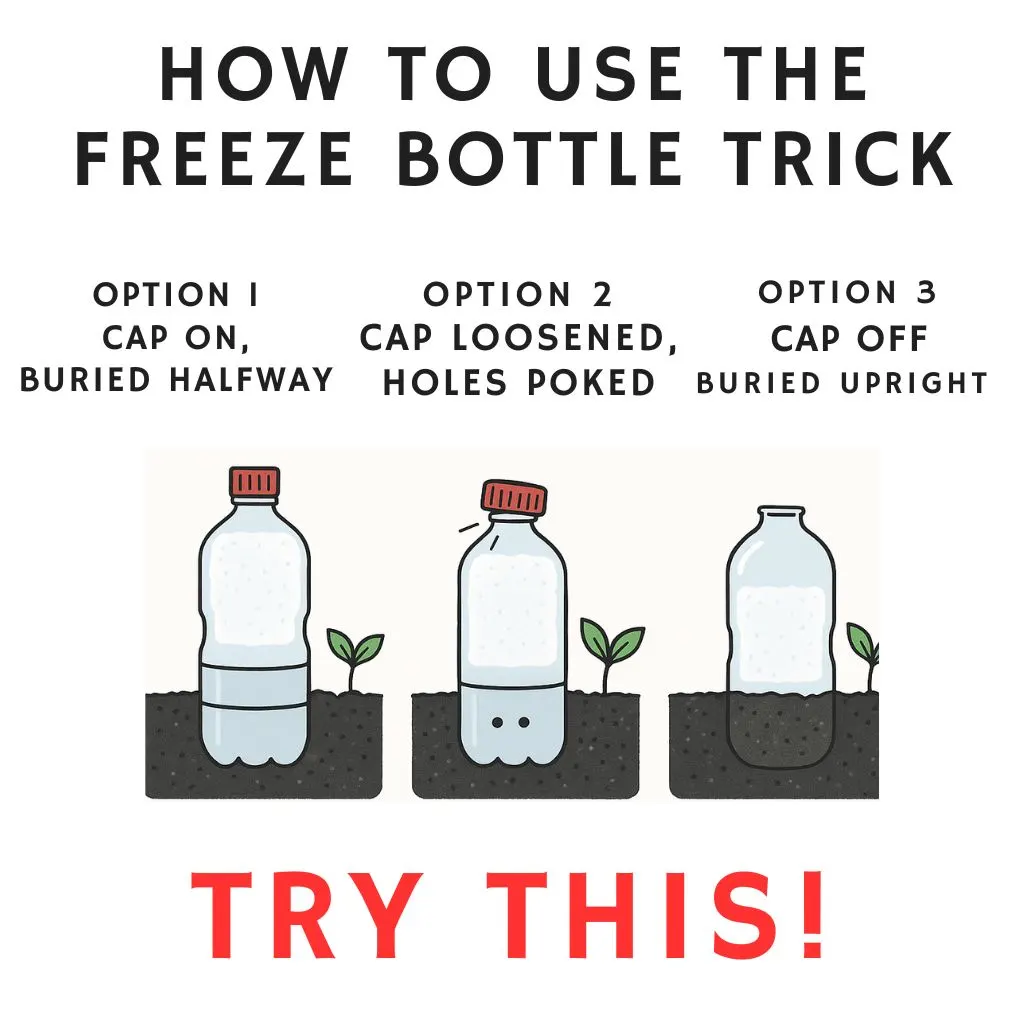
🥶 Option 1: Cap On, Buried Halfway
Best for: Keeping roots cool and stable in heat-prone plants like tomatoes, peppers, and cucumbers.
- Fill a 1-liter or 2-liter plastic bottle nearly to the top with clean water.
- Screw the cap on tightly.
- Freeze solid, then bury the bottle halfway into the soil near the plant’s root zone.
- Let it melt slowly over 6–12 hours, cooling the surrounding soil.
Why it works: It acts like a root-zone ice pack, reducing soil temp and slowing stress without adding moisture.
💧 Option 2: Cap Loosened, Holes Poked
Best for: Slow-release watering for thirsty summer crops like squash or container plants.
- Use a small bottle (500ml to 1L) and fill it almost to the top.
- Loosen the cap slightly or use a pin to poke 2–3 tiny holes in the bottom.
- Freeze overnight.
- Place upright near the plant base — no need to bury it fully.
Why it works: Combines the benefits of a drip irrigator and cooling device. Water drips out gradually as it melts, perfect for daily temperature spikes.
🌡️ Option 3: Cap Off, Buried Upright
Best for: Emergency hydration for severely stressed or wilting plants.
- Fill a 1-liter bottle and freeze with the cap off.
- Once frozen, bury it upright with just the neck sticking out.
- Water will melt quickly and flood the immediate area.
Why it works: Acts fast — but less controlled. Great in emergencies, but not ideal for ongoing use since it can lead to soil compaction or runoff.
Each of these setups has its own sweet spot. Try them out. Rotate them. Combine methods if your garden is facing an all-out heat siege. The goal isn’t just to water — it’s to do it in a way that supports recovery, not just survival.

📌 Wait! Don’t Bury the Whole Bottle
This might sound obvious, but it trips up a lot of gardeners the first time: don’t push the whole bottle into the soil. You’re not planting it like a seed — you’re installing a slow-release watering system.
- Keep the bottle vertical — not sideways. This allows for controlled melt or drip.
- Bury it about halfway to two-thirds deep — the base is in the soil, but the neck and cap stay visible.
- Leave the top accessible — for adjusting caps, adding holes, or refilling if needed.
- Cap placement matters: cap-side up for cooling bottles, cap-side down for drip bottles with small holes.
This position ensures the water releases effectively, roots stay cool, and you don’t lose track of your bottle until fall cleanup.
Where the Freeze Bottle Trick Shines (and Where It Flops)
Before you start cramming frozen bottles into every square inch of your garden, pause. This hack isn’t one-size-fits-all. It works brilliantly in some setups — and falls flat or makes things worse in others. Here’s when to say “yes please” and when to walk away.
🌿 Great for These Setups
- Raised Beds: The soil heats up fast, so the frozen bottle helps cool it down and keep moisture consistent.
- Container Gardens: Pots dry out quickly. A half-buried bottle regulates both temperature and hydration.
- Small Vegetable Patches: Especially useful for shallow-rooted crops like lettuce, spinach, and herbs in direct sun.
- Polytunnels or Greenhouses: Where airflow is limited, this trick adds a low-cost cooling buffer without overwatering.
- Urban Balconies or Patios: When you can’t water twice a day, a slow-melt bottle is your lazy best friend.
🚫 Not So Great For
- Heavy Clay Beds: These already struggle with drainage. Adding water slowly can still cause pooling and rot near roots.
- Large In-Ground Gardens: One or two bottles won’t do much here. The cooling effect is too localized to matter at scale.
- Deep-Rooted Trees or Shrubs: Their roots sit way below where the bottle has any influence. Use mulch and deep watering instead.
- Sandy Soil in Full Sun: It’ll melt too fast and vanish before it helps — better to focus on mulch and morning soakings.
Bottom line? This trick isn’t going to irrigate an orchard or save a dying rose bush with five feet of root depth. But if you’ve got stressed-out summer veggies, thirsty patio plants, or raised beds crying out for relief — it just might be your coolest move yet.
What to Avoid When Using the Freeze Bottle Trick
Like any clever shortcut, the freeze bottle trick can backfire if you skip the details. A few missteps, and you’ll either flood your soil, stress your plants, or waste a perfectly good water bottle for nothing. Here’s what not to do — and why it matters.
⚠️ Freeze Bottle No-Gos
- Don’t use boiling hot plastic bottles — If your bottle’s been sitting in the sun for hours before freezing, the plastic may release chemicals. Use clean bottles, rinsed and cooled.
- Don’t bury the whole bottle — The cooling effect needs air contact. Burying too deep traps the cold where it can’t help and slows melting to a crawl.
- Don’t forget the drainage — In heavy soils or containers without good drainage, the extra moisture can lead to soggy roots or fungus problems.
- Don’t rely on it for deep watering — This trick is for surface cooling and mild hydration only. It won’t replace a proper deep soak.
- Don’t use flavored water or bottles with residue — Sugar = ants. Residue = mold. Only use plain, clean water every time.
- Don’t crowd the plant — Keep the bottle 3–6 inches from the main stem or root crown to avoid sudden cold shock.
A frozen bottle is a tool — not a miracle. If you treat it like an irrigation system or assume it’ll fix sunburnt leaves, you’ll be disappointed. But used right, it’s a cool assist during brutal summer stretches.
Cold Bottles, Cool Roots
July is rough on gardens. The sun doesn’t just scorch leaves, it bakes the soil from the inside out. Roots slow down. Growth stalls. And the daily watering routine turns into a chore most folks dread.
This trick doesn’t fix everything. But it helps. It’s simple, cheap, and surprisingly effective. Whether you’re cooling roots or keeping a bed from drying out between waterings, a frozen water bottle in the right spot can buy your plants time — and you some peace of mind.
And that’s really what it’s about. Less stress. Fewer burnt leaves. One less thing to worry about while your garden rides out the heat.


Daniel has been a plant enthusiast for over 20 years. He owns hundreds of houseplants and prepares for the chili growing seasons yearly with great anticipation. His favorite plants are plant species in the Araceae family, such as Monstera, Philodendron, and Anthurium. He also loves gardening and is growing hot peppers, tomatoes, and many more vegetables.