

You walk outside, coffee in hand, and the soil looks damp. It rained last night. Maybe not a downpour, but enough to leave puddles on the patio. You think, “Well, that saves me a job.”
So you skip watering. And by mid-afternoon, your tomatoes are wilting. The marigolds look like they just got bad news. Your squash? Pretending they were never thirsty to begin with — right before collapsing in protest.
But here’s the thing. It’s not your plants being dramatic. It’s your soil lying to you.
This isn’t a rare mistake. It’s one of the most common, quietly damaging habits gardeners fall into every summer. And it all starts with a little rain and a false sense of relief.
If your garden’s been acting weird after a storm — stunted growth, early yellowing, mystery wilting — this might be the trick you’re falling for. And once you understand how it works, you’ll never trust “wet-looking” soil again.
☔ The Soil Looks Wet… But Isn’t
Rain can be deceiving — especially in summer. A light shower might soak the first half inch of soil and leave everything looking refreshed. But just beneath the surface? Still dry as toast.
This is especially true if you’ve had sun, wind, or compacted soil. The top layer gets wet and dark, while deeper down, the moisture never makes it past the crust. Roots stay thirsty, even while the surface looks muddy.
💧 Quick Test for Real Moisture
Don’t trust your eyes — trust your fingers. Stick one in the soil up to your second knuckle. If it’s still dry down there, your plants didn’t get enough water — rain or not.
🕵️♂️ How to Tell if Rain Helped Your Plants
Not all rain is equal. A ten-minute sprinkle isn’t going to save your tomatoes — even if the mulch looks soggy and the patio’s soaked. The key is how deep that water actually went.
Most summer crops need water to reach at least 6 inches deep. That’s where their roots are drinking from. If the water didn’t make it there, it’s just a surface rinse — not hydration.
🌱 Two Easy Ways to Check
- The Finger Test: Push your finger or a stick into the soil. If it’s dry below the second knuckle (about 2 inches), you probably need to water.
- The Trowel Peek: Gently dig a small hole beside a plant. Check if the soil is moist several inches down. If not — time to grab the hose.
Bonus tip: check under your mulch. Sometimes the top of the mulch looks wet, but the soil underneath stayed bone dry. That’s why mulch is a double-edged sword in rain — it protects, but it also blocks.
💧 How Much Rain Was “Enough” (in-depth version)
Here are a few more tricks to actually see whether the rain was enough or not.
📏 Try the Rain Gauge Trick
Put out a simple straight-sided container — a tuna can, jar, or proper rain gauge — before the rain hits. Check the depth after:
- Under 0.5 inches = barely counts. You still need to water.
- 0.5–1 inch = enough for shallow roots (like herbs or lettuce).
- 1 inch+ = useful if it fell slowly. Otherwise, much of it probably ran off.
Pro tip: One inch of rain over an hour is better than one inch in 5 minutes. Slow and steady always wins the soil race.
🪵 Use a Chopstick (Yes, Really)
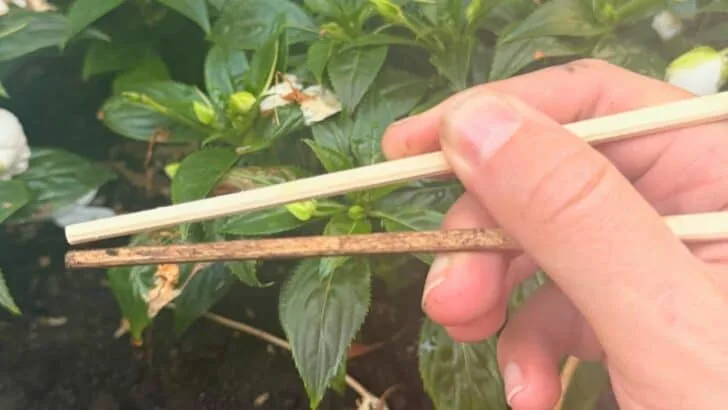
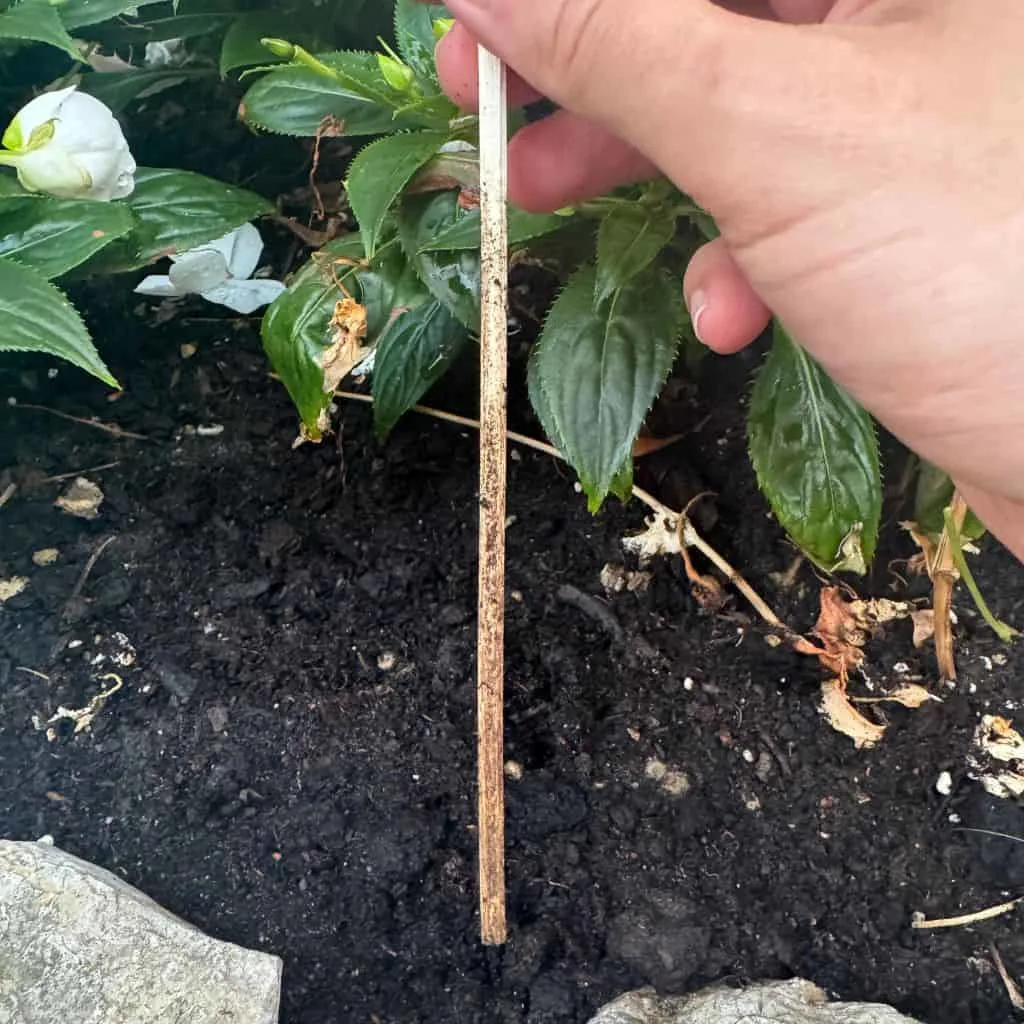
Push a wooden skewer or chopstick into the soil after rain. Pull it out and check the wet mark:
- Wet 1–2 inches? That’s barely the crust. Water your plants.
- Wet 4–6 inches? Now we’re talking — your roots actually felt that rain (as in the picture below!)
Bonus: this method works just as well for container plants and raised beds. No guessing, no overwatering.

⚠️ A Quick Downpour Isn’t a Free Pass
Storms that drop an inch in ten minutes might look impressive, but a lot of that water runs off hard surfaces and compacted soil. If your ground is dry the next day, don’t trust the puddles — trust your soil check.
Also, remember: most veggies have roots that reach 6 to 12 inches deep. A surface sprinkle or light rain barely touches them. It’s like giving someone a glass of water and expecting it to fill a bathtub.
That’s why so many plants wilt after rain. The gardener thought they were covered. The plant? Still waiting on a drink that never came.
🌧️ What to Do After It Rains
Rain came, skies cleared, and the garden looks fresh. But before you sit back and skip today’s watering, there’s one thing left to do: check the soil. Looks can be deceiving — especially with summer storms that dump water fast and leave before the roots catch a drop.
Once the storm passes, take five minutes to:
- 👆 Check under the mulch — peel it back and press your fingers into the soil. Wet mulch ≠ wet soil.
- 🌡️ Feel the temperature — if the soil is hot and dry an inch down, the rain didn’t reach your roots.
- 🪣 Decide plant by plant — raised beds dry faster than in-ground gardens. Some may need a top-up even if others don’t.
This little ritual after every rainfall can save you from surprise wilt, blossom drop, and stunted growth — all from roots that stayed thirsty while the leaves got fooled by a drizzle.
💧 How to Water After Rain — The Smart Way
Think of rain as a head start, not a finish line. Most summer storms soak the surface, skip the root zone, and leave your plants thirsty two days later. The trick? Top off while the soil is still cool and damp.
This gives you better water absorption, less evaporation, and way more impact with less effort.
✅ Smart Watering Tips Post-Rain
- 🔄 Skip the sprinkle, go deep — use a slow soak or drip to push moisture down where roots need it.
- 🕓 Water in the morning — it’s cooler, less wasteful, and helps plants handle rising temps later.
- 🍂 Re-fluff your mulch — wet mulch can mat down and block airflow. Loosen it to help moisture move through evenly.
Don’t think of it as extra work — think of it as locking in the rain’s benefits. Your plants just went through a storm. Now give them a little backup support while conditions are still in your favor.
Don’t Let the Rain Fool You
I get it — the sky opens up, your patio floods, and for a moment you think, “Well, that’s one chore off my list.” But summer rain is a trickster. It looks like relief. Sometimes it is. But more often? It’s a surface act. The kind that wets your mulch, but leaves your roots parched underneath.
If you’re anything like me, you’ve probably skipped a watering or two after a storm, only to find your plants wilting the next day like drama queens in a soap opera. It’s not your fault. The rain made promises it couldn’t keep.
So don’t play by sight. Trust your soil. Stick a finger in, stab a chopstick, check your rain gauge. The weather might be unpredictable, but your garden doesn’t have to suffer for it. And once you get the hang of reading between the raindrops? You’ll never fall for the wet-top trick again.


Daniel has been a plant enthusiast for over 20 years. He owns hundreds of houseplants and prepares for the chili growing seasons yearly with great anticipation. His favorite plants are plant species in the Araceae family, such as Monstera, Philodendron, and Anthurium. He also loves gardening and is growing hot peppers, tomatoes, and many more vegetables.