

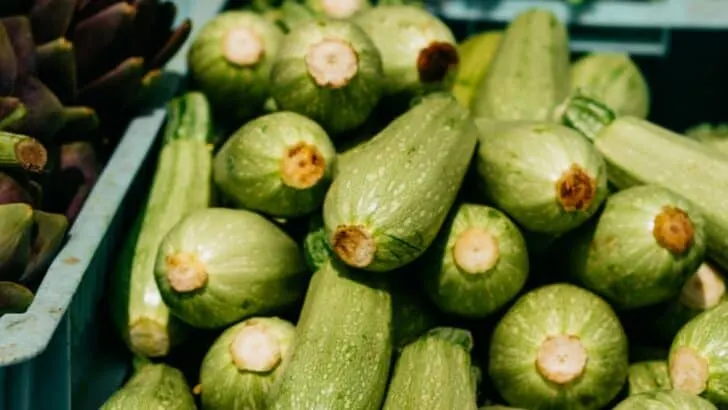
When it comes to harvesting courgettes the right way, few people explain it as clearly — or as casually — as the gardener behind the YouTube channel Huw Richards. Surrounded by lush plants and a jungle of green, he walks us through exactly what to do, what to avoid, and what happens when you miss a zucchini for just a couple of days.
This isn’t some overly technical breakdown. It’s hands-on, dirt-under-the-nails advice from someone who actually grows the stuff. From baby courgettes with the flower still attached to full-blown marrows hiding under leaves, this video shows it all — including the one mistake that can ruin shelf life before the courgette even leaves your garden.
We’ve pulled the best tips from the video and laid them out below. Whether you’re new to courgettes or drowning in them already, this is the harvest guide you’ll wish you had last week.
Harvest Early or Regret It
You walk past your courgette patch and spot a baby one with a flower still attached. It looks too small to pick. You tell yourself, “Tomorrow.” But by tomorrow, it’s doubled in size. Give it a few more days, and it’s halfway to becoming a marrow. Welcome to the fastest-growing vegetable in your garden.
In the video, Huw holds up a perfect courgette. About the length of his hand, just starting to lose the flower. That’s the sweet spot. Pick it then, and you get a tender, flavorful fruit that cooks in minutes and barely needs seasoning. Wait too long, and the flesh turns watery and bland, the seeds get chewy, and the plant starts slowing down.
It’s not just about size. It’s about momentum. Harvesting early tells the plant to keep producing. Leaving big courgettes on the vine signals that it’s time to wrap it up. One overgrown fruit can stall the whole show.
The takeaway is simple. If it looks good enough to eat, it probably is. Don’t overthink it. Don’t wait. Grab a knife, not your hands, and clip it clean from the stem. The fridge can hold it, but the garden is where it tastes best.
🌿 Key Points
- 🥒 Pick courgettes when they’re about the length of your hand
- 💡 Smaller fruits are sweeter, firmer, and better for cooking
- ⛔ Avoid pulling by hand — use a sharp knife to avoid breaking the stem
- 🧊 Harvested early, courgettes keep better in the fridge
- 🔁 Frequent picking encourages more flowers and better yields
What Happens When You Forget One
You think you’re on top of it. You’re harvesting regularly. You’re checking the plants every couple of days. But then it happens. One courgette hides under a leaf, laughs at your confidence, and grows into a small submarine overnight.
Huw pulls out a beast of a courgette in the video. It’s more marrow than veg at that point. Still edible, sure. But the texture is spongy, the seeds are huge, and the flavor has taken a walk. It’s not a waste, but it’s not a win either.
This is how a productive courgette plant starts slowing down. It thinks it did its job. It made seeds. Mission accomplished. The plant shifts focus and stops pumping out new flowers. You don’t just lose one good fruit. You lose a week of potential harvests.
If you like marrows, that’s fine. Let a few go. But do it on purpose, not by accident. Keep an eye on your jungle. Courgettes love to hide, especially when it’s hot. And once they start getting away from you, they don’t stop.
🌿 Reminder
- 🔍 Courgettes hide easily, especially under large leaves
- 📏 Overgrown fruit becomes a marrow — edible but less flavorful
- ⏳ Missed harvests slow future production
- 📉 Larger courgettes drain energy from the rest of the plant
- 🧁 If you do get a giant one, use it in cakes or stuffing recipes
How to Harvest Zucchini the Right Way
Let’s get one thing straight. Twisting zucchini off the plant is a bad habit. It feels quick and easy, but it often snaps the stem in the wrong place. That broken stem shortens the zucchini’s shelf life and sometimes damages the plant itself.
In the video, Huw shows the proper way. He grabs a sharp knife and makes a clean cut through the stem just above the fruit. No stress, no snapping, no mangled ends. The zucchini comes off clean and keeps longer in the fridge if needed.
There’s also a bit of spatial awareness involved. When you reach in to harvest, be careful not to slice through any of the main stems or nearby fruit. These plants tend to sprawl, and the productive stems can run in weird directions. One careless snip and you’ve lost next week’s dinner.
Bottom line: don’t rush it. Knife in hand. Cut with care. The plant will keep producing longer, and your zucchini will stay fresh past dinner if needed.
🌿 Best Harvest Practices
- 🔪 Use a clean, sharp knife to harvest zucchini
- 🚫 Never twist or pull by hand — it can break the stem
- 🌿 Avoid cutting through nearby vines or young fruit
- 🧊 Clean cuts help zucchini last longer in the fridge
- 🌱 Harvest regularly to keep the plant productive
The Flowers Are Food Too
Most gardeners walk right past the zucchini flowers without thinking twice. Big mistake. Those bright yellow blossoms aren’t just pretty. They’re edible, versatile, and ridiculously good when stuffed, battered, or tossed into a skillet.
In the video, Huw points out that these flowers are at their best when they’re fresh and just opened. That’s when they’re firm, flavorful, and easy to work with. Wait too long, and they wilt or start to rot around the edges. At that point, your only option is compost.
You can harvest both male and female flowers, but the male ones are the best for the kitchen. They grow on long thin stems and don’t produce fruit. Female flowers are the ones attached to baby zucchinis. If you’re short on squash, leave those alone. If you’re swimming in zucchini, go ahead and pick them too.
Just like with the fruit, don’t yank. Use scissors or a small knife and cut gently at the base of the stem. Rinse and use them the same day if you can. Stuff them with cheese. Dip them in batter. Or just sauté them with garlic and olive oil. They’re fast food with actual flavor.
🌿 Quick Flower Facts
- 🌼 Zucchini flowers are edible and highly prized by chefs
- 👨🌾 Male flowers grow on long stems and don’t produce fruit
- 🌱 Female flowers are attached to baby zucchinis
- ✂️ Always harvest with scissors or a sharp knife, not by hand
- 🍽️ Use the flowers the same day for best flavor and texture
What Powdery Mildew Really Means
It shows up like a bad rash. White blotches on the leaves. A dusty film across the surface. You panic, thinking your zucchini plant is done for. But hold up. Powdery mildew looks scary, but it’s not the end of the world.
In the video, Huw shows a classic case. Mid to late summer, big fleshy leaves, warm days, and just enough moisture in the air — that’s all powdery mildew needs to take off. Zucchini, pumpkins, marrows, all of them get hit. It’s a rite of passage, not a full-blown emergency.
If the leaves are heavily covered and starting to yellow, you can remove them. But don’t toss them in your compost. That’s like inviting the mildew spores to come back for round two. Bin them. Burn them. Just get them out of your garden.
Most of the time, the fruit is still fine. Powdery mildew doesn’t usually touch the zucchini itself. It just makes the leaves look tired. Keep harvesting. Keep watering at the base. And don’t waste time spraying unless it’s really spreading fast. A healthy plant can take a few spots and keep on going.
🌿 Mildew Management Tips
- ⚪ Powdery mildew is common in mid to late summer
- 🍃 Remove affected leaves only if heavily covered
- 🗑️ Never compost mildew-covered leaves — dispose of them as trash
- 🌞 Improve airflow and avoid overhead watering
- 🥒 The fruit is still safe and totally edible
Too Many Zucchini? Here’s What to Do
It happens fast. One day you’re thrilled to spot your first zucchini. The next day your kitchen is overflowing, your neighbors are avoiding eye contact, and you’re Googling “can chickens eat zucchini” at 2 AM. You are not alone.
Huw nails it in the video. Zucchini are generous, sometimes too generous. But that doesn’t mean you’re stuck eating soggy squash for the next three weeks. There are better ways to handle the flood.
First, start giving them away. Friends, coworkers, random delivery people — most folks are happy to take home free homegrown produce. Just don’t wait until they’ve turned into marrows. The smaller ones go faster and taste better.
Second, start baking. Zucchini bread, zucchini muffins, chocolate zucchini cake. You can grate and freeze them in pre-measured bags for later. You’ll thank yourself when it’s cold out and your freezer smells like summer.
And finally, pick often. The more you harvest, the more flowers the plant will send up. You’re not stuck with a glut. You’re just a few recipes away from being very popular at potlucks.
🌿 Zucchini Overflow Plan
- 🎁 Give small zucchini to friends and neighbors — they taste better and look more appealing
- 🧁 Bake them into bread, muffins, or even brownies
- ❄️ Grate and freeze extras in 1-cup portions for winter recipes
- 🥒 Harvest often to keep plants producing manageable amounts
- 🍴 Explore recipes that use zucchini raw, roasted, or spiralized
Let Your Zucchini Keep the Party Going
Zucchini doesn’t care if you’re tired. It doesn’t care if you’ve already harvested five this week. It just keeps growing. Fast. Relentless. Sneaky. But that’s what makes it great. You don’t need perfection. You just need to stay one step ahead of the plant.
Pick early. Pick often. Use a knife, not your hands. Keep an eye out for powdery mildew, but don’t panic when it shows up. And don’t forget the flowers — they’re not just decorations, they’re dinner.
This whole system only works if you work with the plant, not against it. Miss a few harvests, and it will slow down. Stay on top of things, and it’ll keep producing right through the end of summer.
You don’t have to be a zucchini master. You just have to show up. The plant is already doing the hard part. Your job is to keep the rhythm going — one clean cut at a time.
🌿 Key Takeaways
- 🥒 Pick zucchini when they’re about hand-length for the best flavor and texture.
- 🔪 Use a sharp knife to harvest — never twist or yank by hand.
- 🌼 Zucchini flowers are edible and taste best when freshly opened.
- 📏 Missed fruit turns into marrows and slows the whole plant down.
- ⚪ Powdery mildew is common and not a harvest killer — just don’t compost the leaves.
- 🧁 Too many zucchini? Grate, freeze, bake, or gift them before they take over the kitchen.


Daniel has been a plant enthusiast for over 20 years. He owns hundreds of houseplants and prepares for the chili growing seasons yearly with great anticipation. His favorite plants are plant species in the Araceae family, such as Monstera, Philodendron, and Anthurium. He also loves gardening and is growing hot peppers, tomatoes, and many more vegetables.