

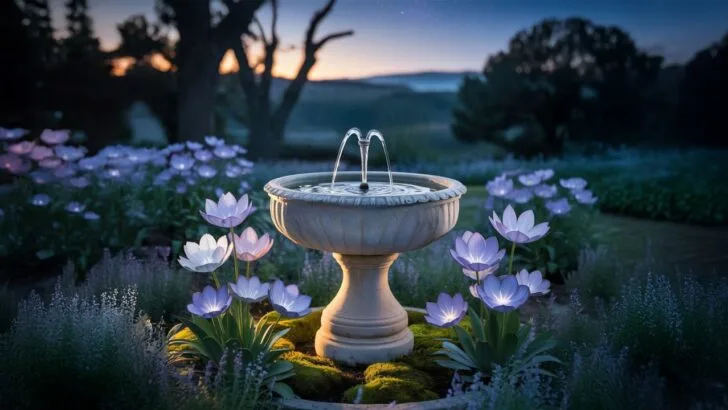
It’s 9pm. The hose is coiled. The sun’s down. And your bean plants look like they’ve had enough. Leaves droop. Petals fold. The whole bed seems to exhale.
Is something wrong? Are they thirsty? Or are they just… resting?
Turns out, plants don’t sleep the way we do. But they do have their own version of rest — a natural rhythm that kicks in every night whether you’re watching or not. And it might change how you think about watering, pruning, or even flipping on that patio light after dark.
🍃 Key Takeaways
- 🌙 Plants don’t sleep like animals — but they do shut down at night
- 🕒 Most follow a circadian rhythm to manage growth, rest, and energy use
- 💡 Artificial lights can throw them off and affect blooming or growth
- 💧 Water early when stomata are open and the plant is fully active
- ✂️ Prune and transplant at the right time to avoid stressing a “resting” plant
What Does ‘Sleep’ Even Mean for a Plant?
Plants don’t have brains, pillows, or dreams. But they absolutely take breaks. At night, many plants slow down their metabolism, pause photosynthesis, and shift into energy conservation mode.
Some close their flowers. Others droop their leaves. A few even fold up entirely, like they’re clocking out for the day. This behavior is called nyctinasty — and no, you don’t have to pronounce it in front of anyone.
Scientists have found that plants track light, temperature, and time using internal systems that work a lot like biological clocks. Even in total darkness, they keep following their rhythm for days before starting to drift.
It’s not sleep the way we know it. But it’s a kind of daily shutdown that keeps the whole system in balance.
Circadian Rhythms in the Garden
Just like us, plants run on a roughly 24-hour cycle. It’s called a circadian rhythm, and it tells them when to grow, rest, bloom, and breathe.
These rhythms aren’t just reactions to sunrise and sunset. They’re internal. Even if you stick a plant in total darkness, it will still “wake up” and “go to sleep” on schedule — at least for a while.
But light does play a role. Plants use special proteins to sense light and keep their internal clocks synced. Which means your floodlights, porch lamps, or even streetlights might be messing with your garden’s sense of time.
Some species handle this better than others. But for light-sensitive plants, constant brightness can delay flowering, reduce growth, or just leave them confused. Plants don’t like insomnia either.
Why It Matters for Gardeners
Knowing your plants have a daily rhythm isn’t just a fun fact. It can actually help you time your garden tasks better.
- Watering: Early morning is best. That’s when stomata (the tiny pores on leaves) are open and ready. Water at night and you risk fungus and waste.
- Pruning: Avoid trimming when the plant is in rest mode. Late afternoon or early morning is gentler on the system.
- Transplanting: Evening moves reduce heat stress. The plant has all night to settle in before the sun shows up again.
- Indoor plants: Respect their dark hours. Don’t blast them with LEDs or leave grow lights running 24/7 unless they’re built for it.
Your plants aren’t robots. They’re on a schedule. Working with that rhythm makes everything smoother — and helps your garden run more like a system and less like a guessing game.
They’re Not Snoring, But…
If your flowers close up at night or your beans droop like they’ve given up, it’s not drama — it’s routine. Plants rest. They reset. And most of the time, they wake up ready to grow again.
Understanding this rhythm helps you time your watering, your pruning, and your late-night garden strolls. It also reminds you that your plants are quietly doing a lot more than just sitting there.
They don’t need lullabies. But they do need a little respect for the night shift.
Wrap-Up with a Nudge
Your plants aren’t throwing tantrums. They’re just clocking out.
If the beans are flopped over and the marigolds look like they’ve emotionally checked out, don’t panic. That’s their night mode. You don’t jump out of bed at midnight and photosynthesize either.
The smarter move? Work with their rhythm. Let them rest. Turn off the floodlights. And stop poking them after hours.
Seen your plants do something weird after sunset? Hit reply and spill it. We’re building a library of strange bedtime behaviors.


Daniel has been a plant enthusiast for over 20 years. He owns hundreds of houseplants and prepares for the chili growing seasons yearly with great anticipation. His favorite plants are plant species in the Araceae family, such as Monstera, Philodendron, and Anthurium. He also loves gardening and is growing hot peppers, tomatoes, and many more vegetables.