

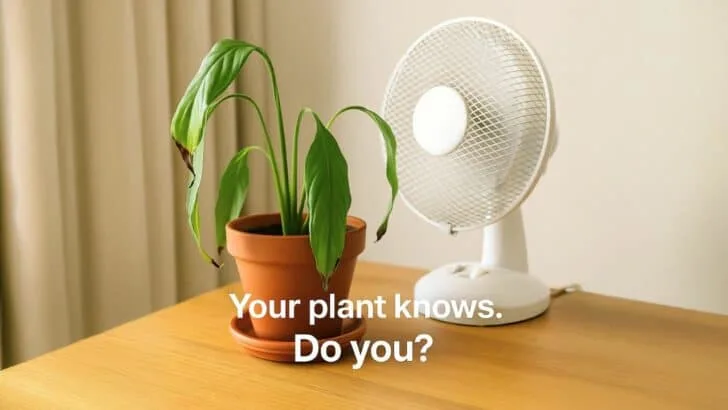
They’re fine one morning… and wilted the next. Leaves droop, colors fade, and that one fern by the window starts dropping fronds like it’s quitting the job entirely.
You didn’t change the watering. The pot looks fine. Nothing seems “wrong”—but the plant clearly disagrees.
Welcome to July, when houseplants start acting up for reasons that have nothing to do with bugs, rot, or neglect.
There’s one thing they hate more than anything this month. And you might be doing it right now—without even realizing.
What’s the Culprit? Sudden Swings
Houseplants are drama queens — but with good reason. They evolved in stable environments: rainforests, deserts, alpine valleys. The key word? Stable.
Indoors in July? Stability is a fantasy. One minute, it’s 68°F with a humidifier humming. The next, the AC shuts off, the sun shifts, and suddenly your living room feels like Nevada.
These rapid changes in temperature, humidity, and light don’t just annoy your plants — they confuse their entire system. Growth slows. Leaves crisp. Roots start sulking.
And they don’t always tell you right away. A sudden environmental swing might show up as leaf drop a week later, or spotting that looks like disease but isn’t.
AC Blasts, Then Sahara Heat
Your thermostat says it’s 72°F. Your houseplant says it’s in the middle of a wind tunnel one minute and the Mojave the next.
Most indoor plants can handle warmth. What they can’t handle is being blasted with cold air and then suddenly baked when the AC cycles off. It’s like being dropped into an ice bath and then tossed into a sauna — over and over again.
Leaves closest to vents will show it first. Curling, browning, or mystery droop. It’s not overwatering. It’s not bugs. It’s climate chaos, plant edition.
If your AC vents point directly at your plants, it’s time for a new seating chart. And no, setting the thermostat lower won’t fix it. The problem isn’t the number — it’s the swing.
Drafts and the Fan Death Spiral
They don’t call it “fan death” for nothing. Okay, maybe that’s an urban legend, but for houseplants, it might as well be real.
Cool breezes feel great to you, but your plant isn’t trying to air out its leaves. Constant airflow from a nearby fan, vent, or open window can dry them out fast — especially in the height of summer. Leaves get crispy. Soil dries too fast. And before you know it, your fern thinks it’s living in a dehydrator.
Drafts are sneaky, too. It’s not just ceiling fans. It’s the swing of a screen door. The open crack in a bedroom window. That charming floor vent from 1987.
If your plant seems fine one day and crunchy the next, check what’s blowing nearby. Then consider moving it out of the line of fire. Plants need fresh air — not a full-blown wind tunnel.
Bright, Then Bleached
Light is life for plants — but only when it’s consistent. If your plant was thriving in filtered sun and suddenly gets thrown into a spotlight, it’s not going to break into photosynthetic applause. It’s going to panic.
One day behind gauzy curtains. The next day front row at a solar rave. That kind of whiplash leads to bleached leaves, brown tips, or a plant that suddenly looks like it gave up.
This often happens in July when you move plants around chasing the “best light” — or when you throw open the blinds without warning. Even rotating the pot too much can cause trouble if one side gets scorched while the other was living in shade.
The fix? Pick a good spot, and let it be. If you must move it, do it gradually. Plants aren’t housecats. They don’t love a surprise sunbeam.
Water Whiplash
One day your plant’s parched. The next day it’s sitting in a puddle. That kind of back-and-forth? It’s not hydration — it’s chaos.
Houseplants need consistency more than heroics. When you forget to water for a week and then drown them out of guilt, the roots go into shock. They can’t adapt fast enough. The result? Yellowing leaves, root rot, or a plant that just looks confused.
This gets worse in July, when heat speeds up evaporation and makes us second-guess every dry inch of soil. But more watering isn’t the answer. Better watering is.
💧 How to Avoid Water Shock
- 🪴 Check soil moisture with your finger — water only when the top inch is dry.
- 📆 Stick to a schedule — weekly or biweekly is better than surprise soakings.
- 🚿 Water slowly so the roots have time to absorb, not panic.
- 🪟 Adjust for heat — plants in bright, warm spots may dry faster.
How to Keep Conditions Steady
You don’t need a lab-grade climate chamber. Just a little awareness and a few smart habits. The goal isn’t perfection — it’s reducing drama. Because your plant doesn’t want excitement. It wants peace, shade, and a cup of water now and then.
Think of your home as a mini jungle biome. Every swing — temperature, humidity, light — is a small earthquake to your plants. But when you take control of the environment, your plant can stop bracing for impact and finally start growing again.
🌡️ 5 Ways to Stabilize Your Plant’s World
- 🧊 Don’t blast the AC directly onto plants — redirect vents or move pots away.
- 🪟 Use sheer curtains to soften intense sunlight during the hottest part of the day.
- 💧 Group plants together — they create a pocket of stable humidity.
- 🌀 Avoid frequent shuffling — pick a good spot and let them settle.
- 📆 Be boring — regular water, regular checks, no drama. Plants love boring.
What Your Plants Really Want This Summer
It’s not more misting. It’s not fancy fertilizer. And it’s definitely not a beach vacation. What your houseplants crave in July is one thing: stability.
No plot twists. No surprise heatwaves. Just quiet, boring consistency. Give them that — a little shade, a little water, and no drama — and they’ll reward you by staying alive, upright, and leafed out. Which, for a houseplant in July, is basically a standing ovation.
🪴 Key Takeaways
- 🌡️ Sudden changes in temperature (like AC blasts or heatwaves) can stress your houseplants fast.
- 🌬️ Drafts and fans dry out leaves and confuse your plant’s sense of stability.
- ☀️ Light shifts — especially bright sun after shade — can bleach or burn sensitive plants.
- 💧 Inconsistent watering (overcorrecting or skipping) leads to root confusion and rot risk.
- 🧘 Keep it steady: stable light, temps, and a regular watering rhythm are your best defense.


Daniel has been a plant enthusiast for over 20 years. He owns hundreds of houseplants and prepares for the chili growing seasons yearly with great anticipation. His favorite plants are plant species in the Araceae family, such as Monstera, Philodendron, and Anthurium. He also loves gardening and is growing hot peppers, tomatoes, and many more vegetables.