


Peak tomato season feels like winning the garden lottery. Vines are heavy, fruits glow, and you reach for a perfect slicer only to find the skin split like a grin that went too far. Instant heartbreak. It looks like you did something wrong, or like the plant betrayed you at the finish line.
Here is the truth. Cracking is a late summer classic and it happens to careful growers all the time. Heat builds, rain arrives after a dry spell, the fruit gulps water faster than the skin can stretch, and the surface gives way. It is not a moral failing. It is plant physics.
This guide shows what kinds of cracks you are seeing, why August invites them, what you can do right now to save the next wave of fruit, and how to set yourself up for fewer splits next year.
1. The Two Types of Tomato Cracks
Not all tomato cracks are created equal. Some look like your fruit has been hit with lightning, others like it tried to grow a second bullseye. Both are common, and both have their own story to tell.
Radial splits: These are the dramatic ones — cracks that run from the stem downward, like spokes on a wheel. They happen when the tomato swells quickly and the skin just can’t keep up. Think of it like ripping your jeans after a big meal. Sadly, these are the ones most likely to invite rot and ruin.


Concentric cracks: These form rings around the stem, almost like growth rings on a tree. They are slower-developing splits, caused by repeated cycles of growth spurts. While not pretty, they often heal over with a corky scar, leaving the tomato edible if caught before infection sets in.


2. Why August Is Peak Crack Season


August is when tomatoes throw their biggest tantrums. The fruits are fat and juicy, the weather is unpredictable, and your watering schedule is probably less than perfect. It’s the perfect storm for splitting skins.
- Fluctuating rains: Dry spells followed by sudden summer downpours act like a water balloon experiment gone wrong. The fruit swells too fast, and the skin tears.
- Heat stress: Hot days make plants gulp water like marathon runners, then struggle when that water suddenly runs dry. The cycle weakens skins over time.
- Peak ripeness: Late summer tomatoes are at maximum size, which makes them the most vulnerable. It’s like stretching a rubber band until it finally snaps.
3. The Watering Mistake Behind Cracks
The biggest culprit isn’t the weather—it’s us with our hoses. Letting the soil dry out completely, then flooding it with a deep soak, is like making your tomatoes ride a rollercoaster they didn’t sign up for. The inside of the fruit swells faster than the skin can stretch, and pop, you’ve got a cracked tomato.
Tomato skins simply can’t keep pace with sudden water surges. They’re built for steady sipping, not feast-or-famine binges. If you’re seeing cracks right after a rain or a heavy watering, that’s the giveaway.
4. Do Fertilizers Make It Worse?
In short—yes, they can. Piling on the nitrogen in August is like giving your tomato plants an energy drink right before a marathon. The sudden growth spurts stretch skins thin, making fruits more prone to splitting. Instead of plump and juicy, you end up with fragile balloons that burst under the slightest pressure.
Overfeeding late in the season is especially risky. At this point, your tomatoes should be finishing strong, not bulking up like bodybuilders in training. A balanced feeding schedule earlier in the season keeps plants healthy without putting their skins under too much stress when it matters most.
The rule of thumb: feed smart, not heavy, especially when the fruits are already sizing up. Your tomatoes will thank you by staying intact.
5. Can You Still Eat Cracked Tomatoes?
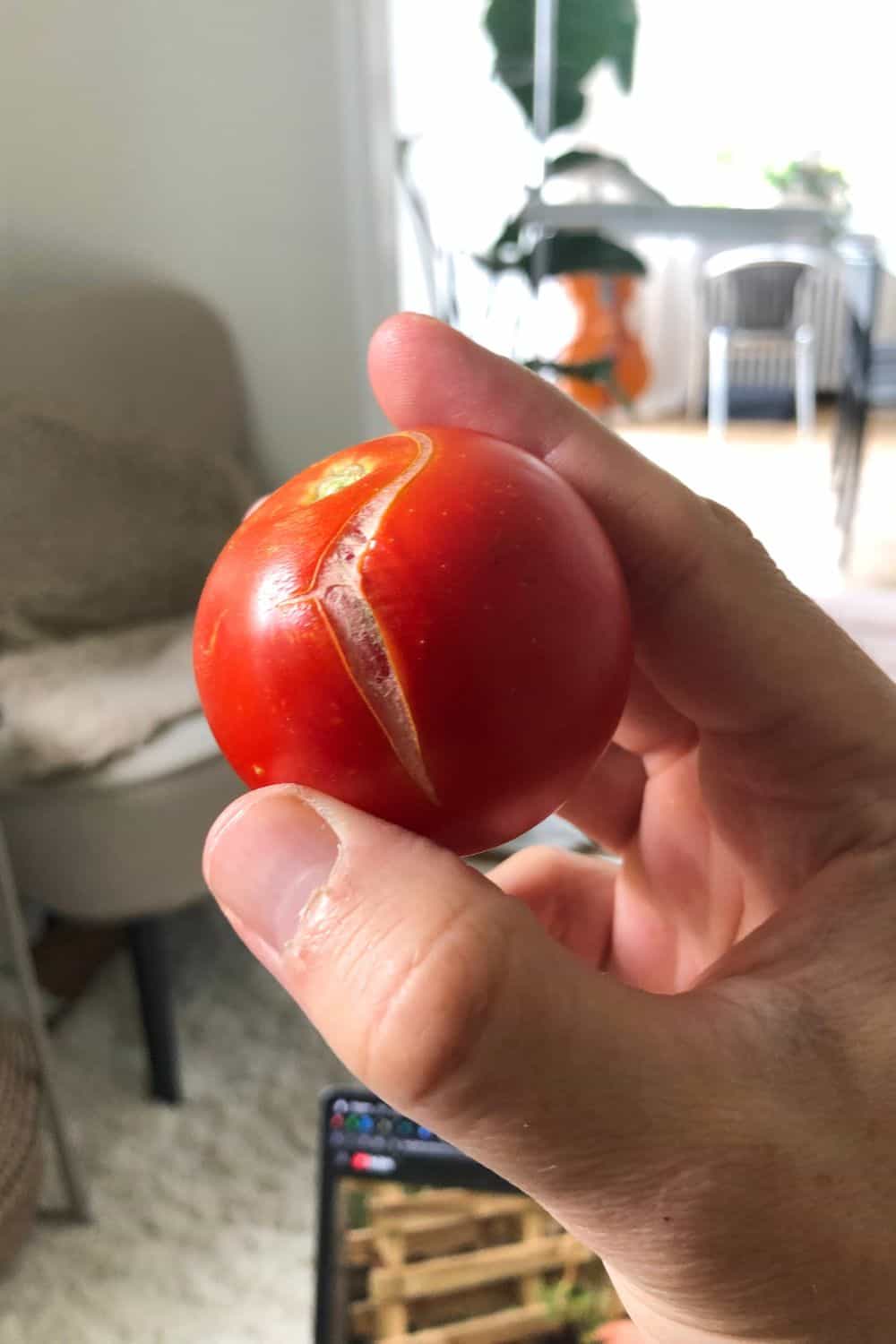

Yes, most of the time. A cracked tomato might not win a beauty contest, but it is usually still safe to eat. Radial cracks can let in rot or insects, so check carefully before slicing. Concentric cracks, on the other hand, often heal over naturally, forming a sort of “scar tissue” that keeps the fruit edible.
The main risk is mold or soft spots that creep in once the protective skin is broken. If you see white fuzz or the tomato feels mushy around the crack, toss it. Otherwise, just cut away the damaged area and use the rest. Cracked tomatoes are perfect for recipes where looks don’t matter: salsa, sauces, or roasted dishes.
The key is speed. Don’t leave cracked fruits lingering on the vine or the counter. Eat them quickly, and you won’t lose the harvest you worked so hard for.
6. Quick Fixes You Can Try Right Now
If your tomatoes are splitting as we speak, don’t panic. There are a few immediate tricks that can cut down on further damage this season. The first and simplest is mulch. A nice 2–3 inch layer around the base helps lock in soil moisture and prevents the wild swings that lead to cracks.
Another quick fix is picking tomatoes a little earlier than usual. If they’re just starting to blush, bring them indoors and let them finish ripening on the counter. This takes some of the pressure off the fruit while still giving you that homegrown flavor. And if your plants are bushy and holding moisture after rain, a light trim of the lower leaves can improve airflow, helping fruits dry faster and reducing the chance of rot creeping into any cracks.
- 🌱 Mulch now to steady moisture
- 🍅 Pick fruits at first blush
- ✂️ Light pruning for airflow
7. The Long Game for Next Year


If tomato cracks are driving you nuts this August, the best solution is to think ahead. Some varieties are simply less prone to splitting. Hybrids like ‘Celebrity,’ ‘Juliet,’ and ‘Mountain Fresh’ are famous for shrugging off crack pressure, while giant heirlooms will always be drama queens no matter how carefully you water.
For the soil side of things, a steady drip irrigation system is worth its weight in gold. Instead of the feast-or-famine watering cycle, drip lines keep moisture consistent, which means fewer split skins. And when those triple-digit heat waves roll in, a bit of shade cloth can make the difference between intact fruit and a harvest full of cracks.
Tomato Varieties That Resist Cracking
Some tomatoes split if you look at them funny. Others shrug off surprise rain and uneven watering. The difference is in skin elasticity, fruit shape, and how fast the flesh swells. Thick-skinned or smaller-fruited types usually hold together better, while big, juicy heirlooms are the drama club.
- Hybrids bred for toughness tend to resist splitting even when the weather yo-yos.
- Paste and grape types have thicker walls and smaller seed cavities, which helps the skin keep up.
- Large heirlooms can taste incredible but often crack when rains follow a dry spell.
🍅 Variety cheat sheet
- ✅ Steady performers Juliet, Celebrity, Mountain Fresh, Mountain Magic, Jasper, Sakura. These are known for good crack resistance and reliable skins.
- ✅ Paste and sauce types Roma, Viva Italia, Plum Regal. Thicker skins and firmer flesh mean fewer splits in surprise rain.
- ⚠️ Can crack under swings Brandywine, Cherokee Purple, Black Krim, Mortgage Lifter. Incredible flavor but quick to split after drought followed by a soak.
- 🫐 Cherry and grape notes Many cherries hold well, but some sweet types can split after storms. Sun Sugar tends to resist better than ultra juicy cherries. Grape shapes usually fare best of the bite-size bunch.
- 🌧️ Rainy climate tip favor Juliet, Sakura, Jasper, and grape types. Pair with mulch and consistent watering to keep pressure off skins.
- ⏳ Pick strategy harvest at first blush and finish ripening indoors to dodge storm cracks on big slicers and heirlooms.
- 🪴 Container growers go for crack resistant hybrids and drip watering. Containers swing faster than beds, so steady moisture matters even more.
You do not have to quit heirlooms if you love them. Grow a few for flavor, then back them up with a crack resistant workhorse row. When August plays games, you still bring in baskets of intact fruit.
🌿 Key Takeaways
- 🍅 Tomato cracks are not random accidents — they are a direct result of water swings, heat, and timing.
- 🌧️ August is the high-risk month because fruits are fully swollen just as rains and heat compete to stress the skins.
- 💧 A steady watering rhythm plus mulch is worth more than any spray or quick fix. Tomatoes love consistency above all.
- 🌱 Variety choice matters. Crack resistant hybrids and paste types are your safety net, while heirlooms demand more babysitting.
- 🥗 A cracked tomato is not wasted unless rot sets in. Many of them can be salvaged immediately for sauces, salsa, or roasting.
- 🪴 Long term, the gardener who plans for even moisture and selects the right varieties ends up with fewer heartbreaks and fuller baskets.


Daniel has been a plant enthusiast for over 20 years. He owns hundreds of houseplants and prepares for the chili growing seasons yearly with great anticipation. His favorite plants are plant species in the Araceae family, such as Monstera, Philodendron, and Anthurium. He also loves gardening and is growing hot peppers, tomatoes, and many more vegetables.